

June 22, 2026 - Farmer Services
By Kimberly Koogler
Kimberly Koogler is a Farmer Services Program Specialist at Georgia Organics.
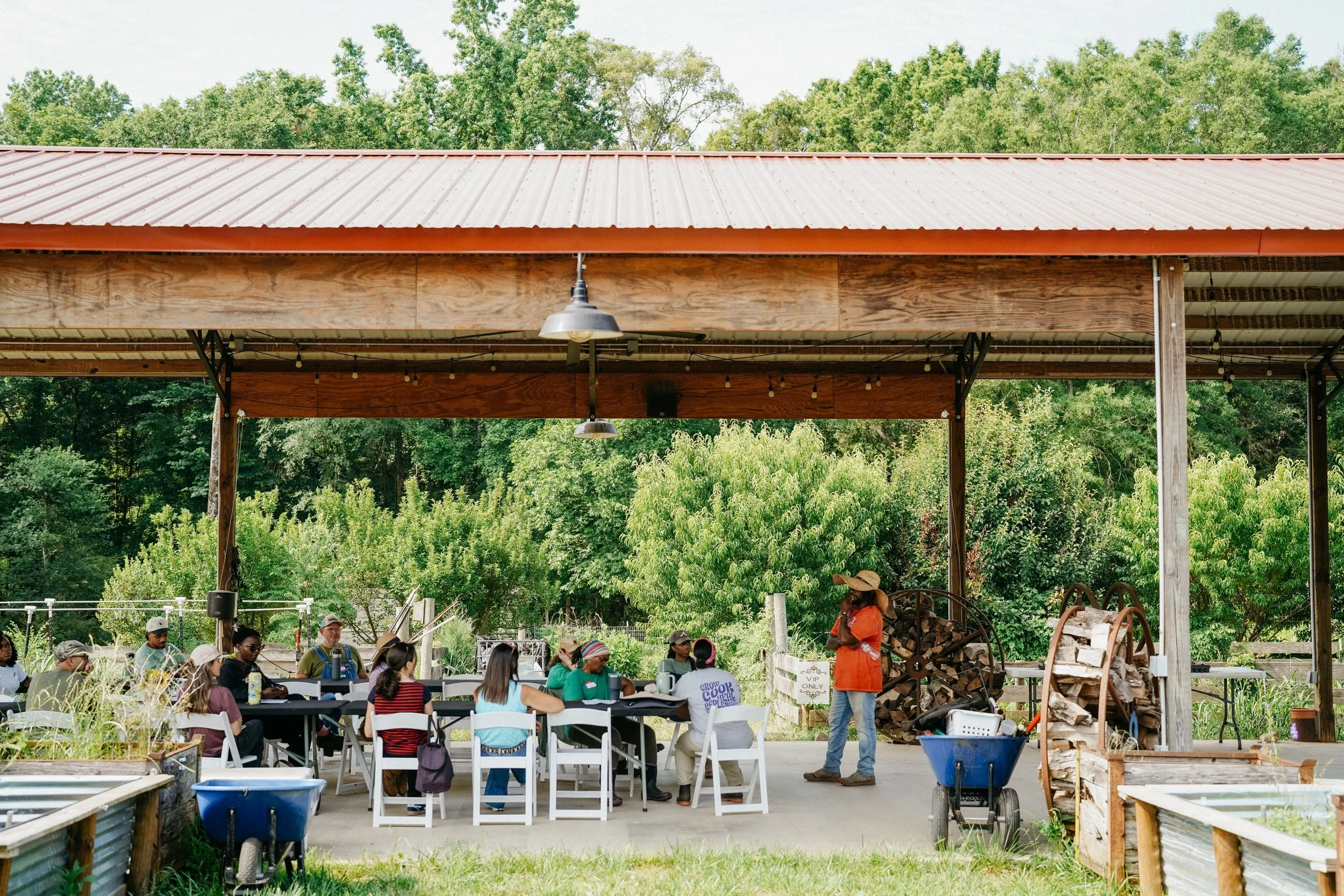
On May 21, 2026, 27 farmers and farmer advocates gathered in Milledgeville, Georgia at Jon Jackson’s Comfort Farms, to learn about his non-profit, Stag Vets, his perspective on closed loop systems, and the interplay between history and heritage in livestock and vegetable farming.
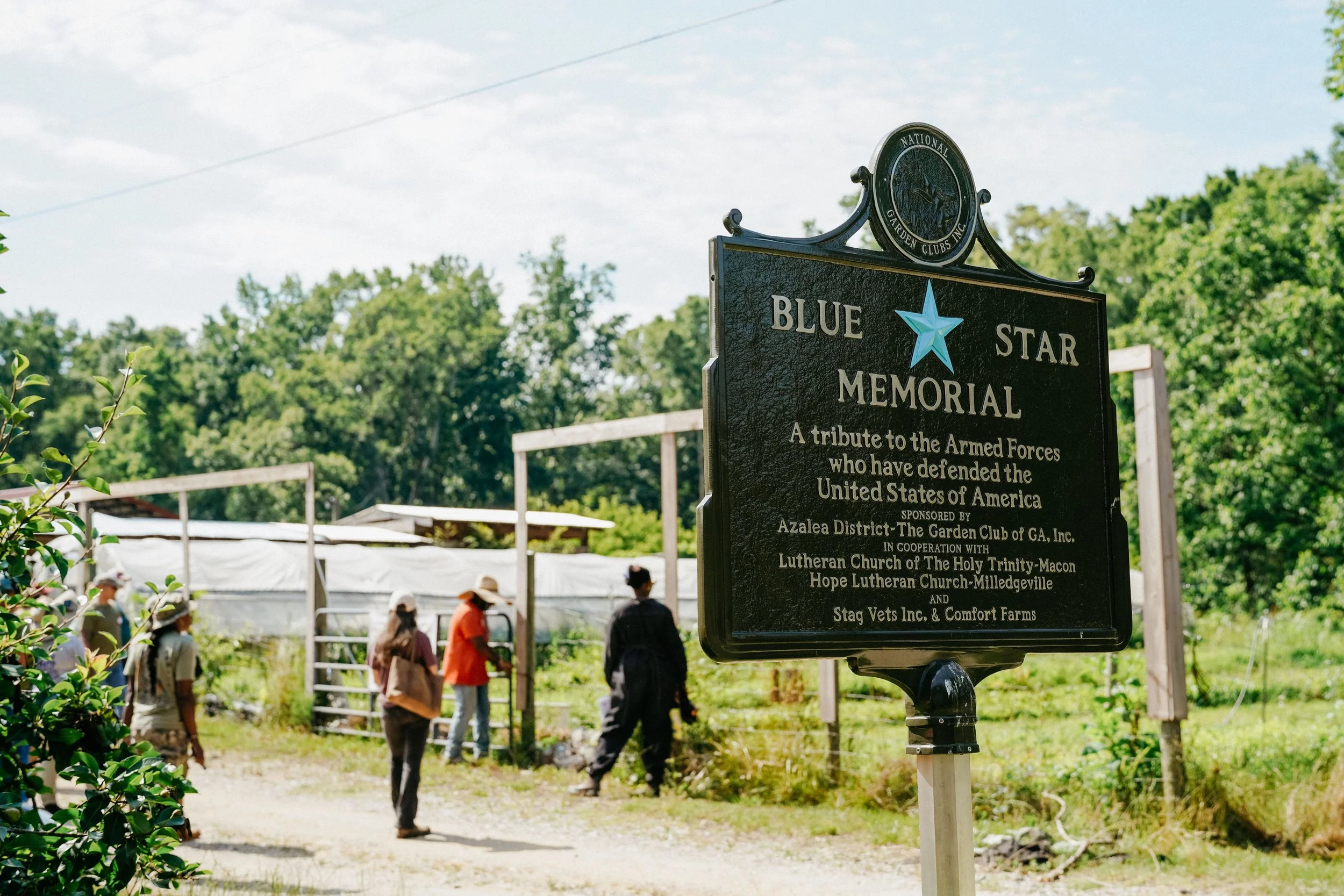
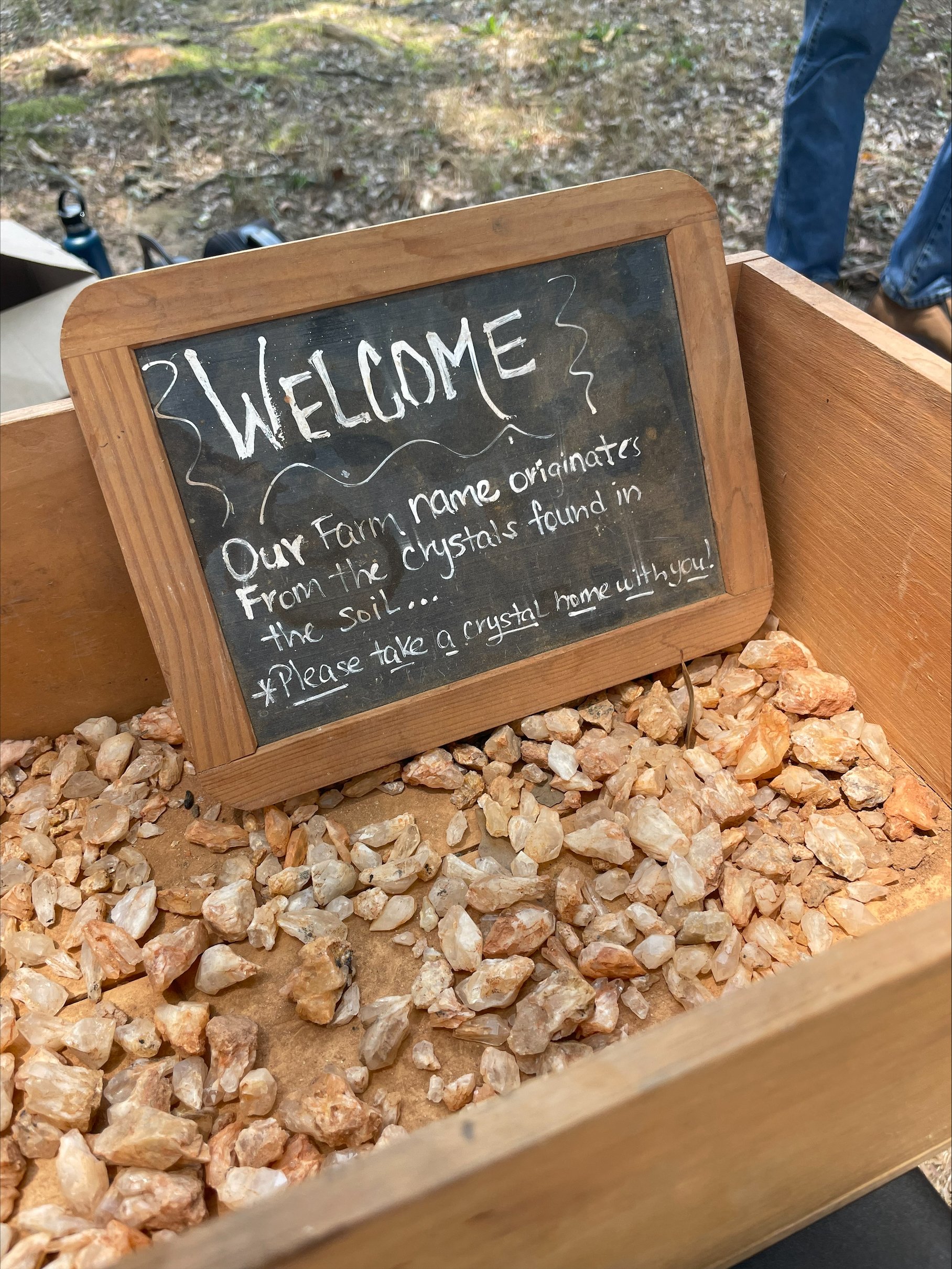
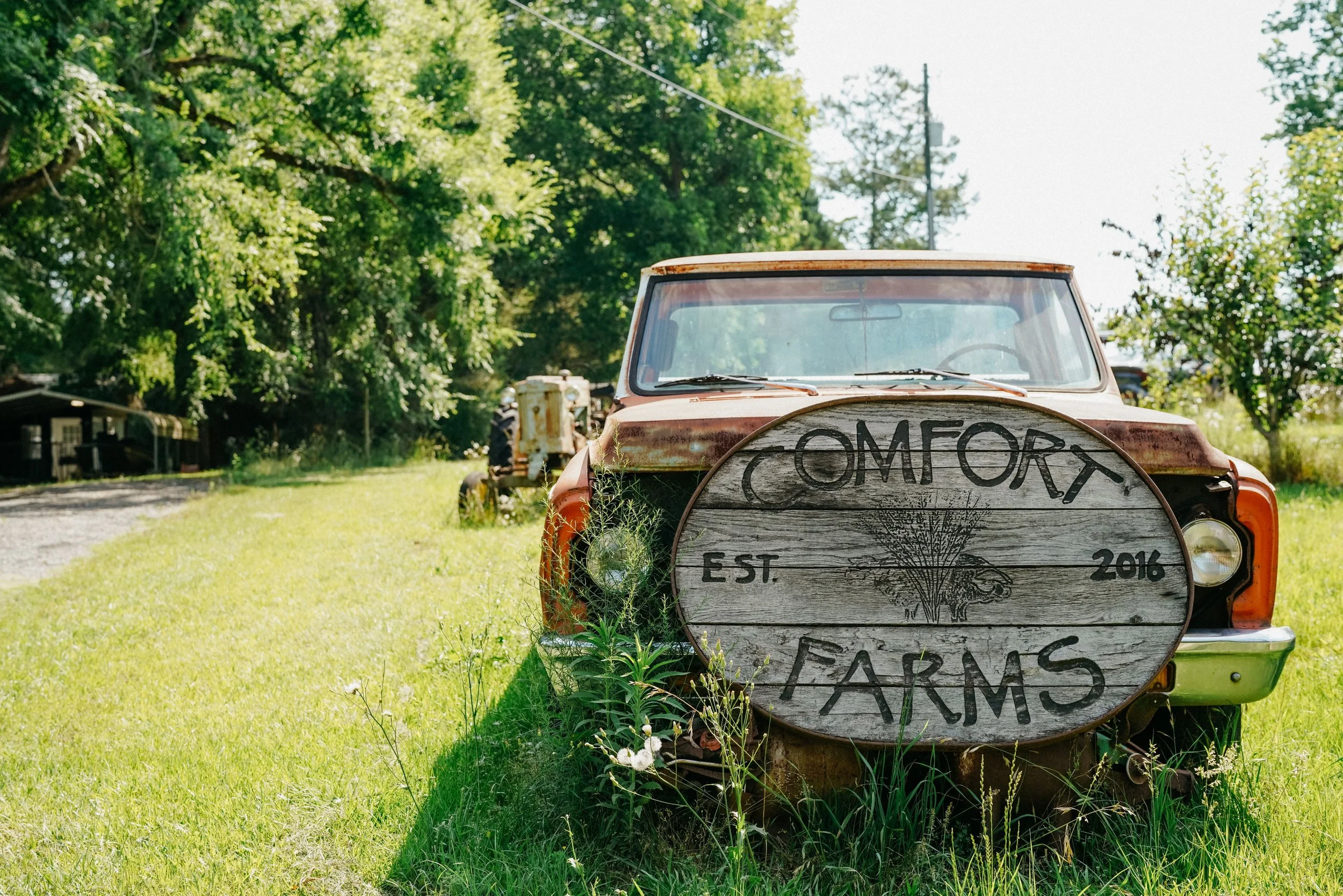
Comfort Farms was founded by Army Ranger veteran Jon Jackson as part of his non-profit Stag Vets (Stag stands for "Strength to Achieve Greatness") and named in honor of fellow Ranger and friend Kyle A. Comfort, who passed in May of 2010. The farm is equal parts working farm, community hub, and living classroom. It's also the 177th Blue Star Memorial in Georgia, a public landmark open to anyone who wants to visit (although we’d recommend reaching out first!)
Closed Loop Systems
Closed-loop farming systems, which trace back to ancient traditional agricultural practices, mimic natural ecosystems, where waste from one process becomes the resource for another. By recycling nutrients, water, and energy on-site, farms implementing a closed-loop system minimize their reliance on external, synthetic inputs, reduce overall waste, and are therefore, more sustainable. This system often finds success within diversified farms where livestock and vegetable production take place, like at Comfort Farms.
When Jon started the farm, he was working with hardpan clay and serious erosion issues. His solution was simple and nearly free: he had the city dump woodchips on his fields at no cost, then let them break down slowly to add organic matter over time. Jon summarized his approach to working with soil the same way he speaks about everything on the farm- “Treat it as a living organism that needs to be fed.”
Soil amendments are made on the farm as often as possible and include:
Fish fertilizer made from discarded fish byproducts that come directly from the farm and/or are given to the farm
Bone char- a biochar made by incinerating discarded bones, particularly effective for treating blossom end rot on squash and tomatoes
Rabbit manure tea- a concentrated liquid fertilizer made by steeping rabbit droppings in water and then fermenting it
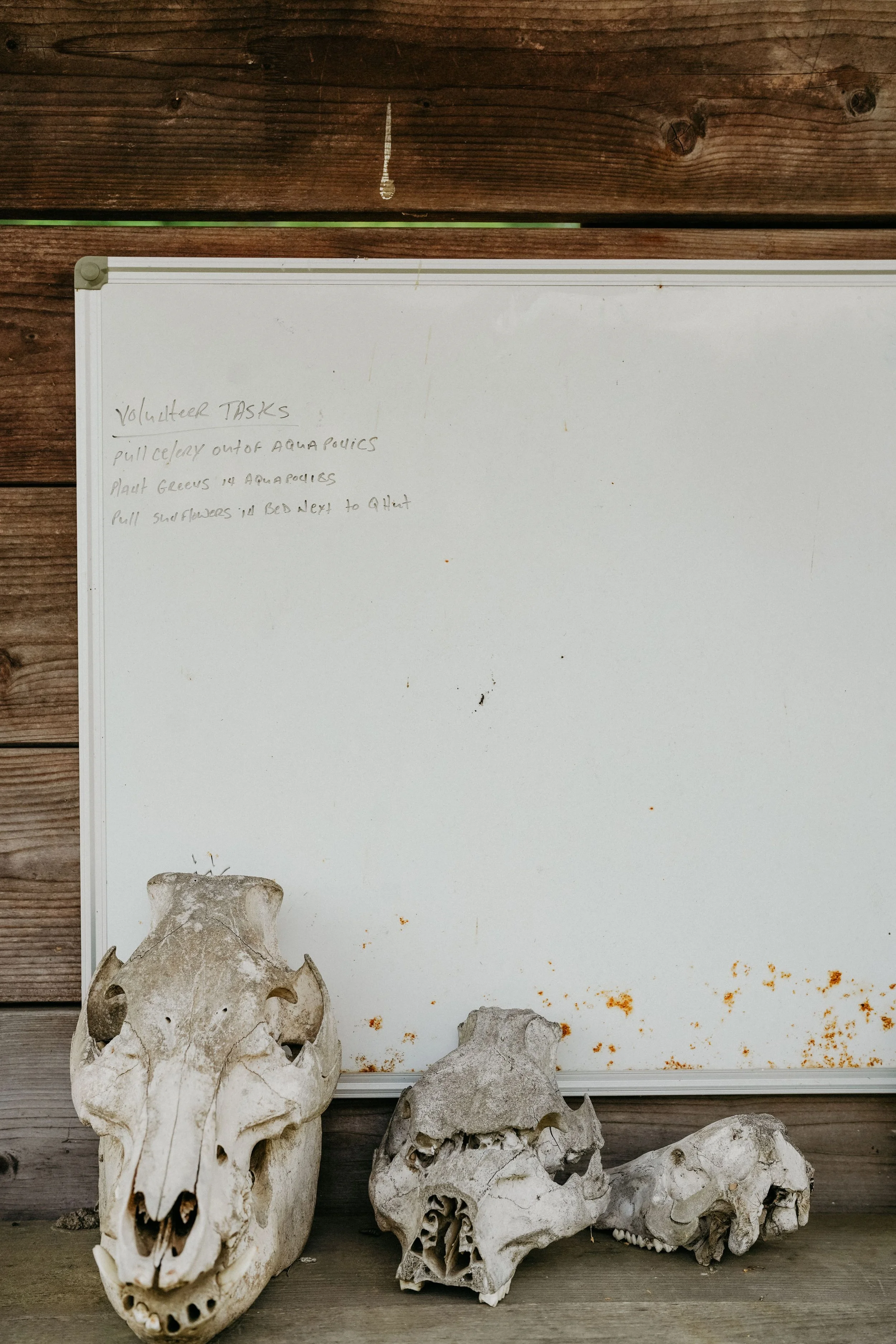
Because these inputs come from what he produces on his farm, they're part of a closed-loop system. The highest additional cost to this process is the labor spent in transforming these products into useable inputs and the initial infrastructure requirements to do that.
Jon also uses damp raw sheep wool (from his sheep), along with compost when transplanting on the farm to help with moisture retention. The wool slowly releases nutrients, which is particularly helpful during periods of drought in the Spring.
Additional Considerations
The Farmer Field Day, which was part of our “Consider this...” partner series, also gave attendees the chance to hear about Jon and Comfort Farm’s evolution. Jon shared his perspective and strategies on everything from pest control to direct marketing. Here are some of the gold nugget takeaways:
Consider seasonal pest pressure when building your planting calendar. If you have other means of income to support the farm during that time, you might want to opt out of growing at certain times.
After years of fighting insects on his Spring vegetables, Jon made a strategic decision to plant only late summer and early fall crops for vegetable production. The hope is that this will significantly reduce pest pressure without the cost of pesticides, and his livestock and heritage seed business can support that shift.
Consideration: Sometimes working around pests rather than against them is the more economical choice. Evaluate whether shifting your planting window could reduce losses and inputs.
Diversify your revenue streams so that you have flexibility.
Jon's livestock income gives him the freedom to pull back on vegetable production without financial strain. He sells two to three hogs per week at roughly $1,000 per hog. He also sells whole animals to customers who need them for cultural ceremonies, though he always handles the slaughter himself. Raising pigs eventually led him to raising rabbits, and he learned quickly that freezing rabbit to sell during the summer, when supply from Mississippi (the largest rabbit selling state in the country) is low, would allow him to sell to chefs at better prices.
Consideration: Diversified revenue streams create operational flexibility. Strong livestock income can subsidize the learning curve (or reduced scale) of vegetable production.
Keep your on-farm market simple and open, and consider bringing the community together around it.
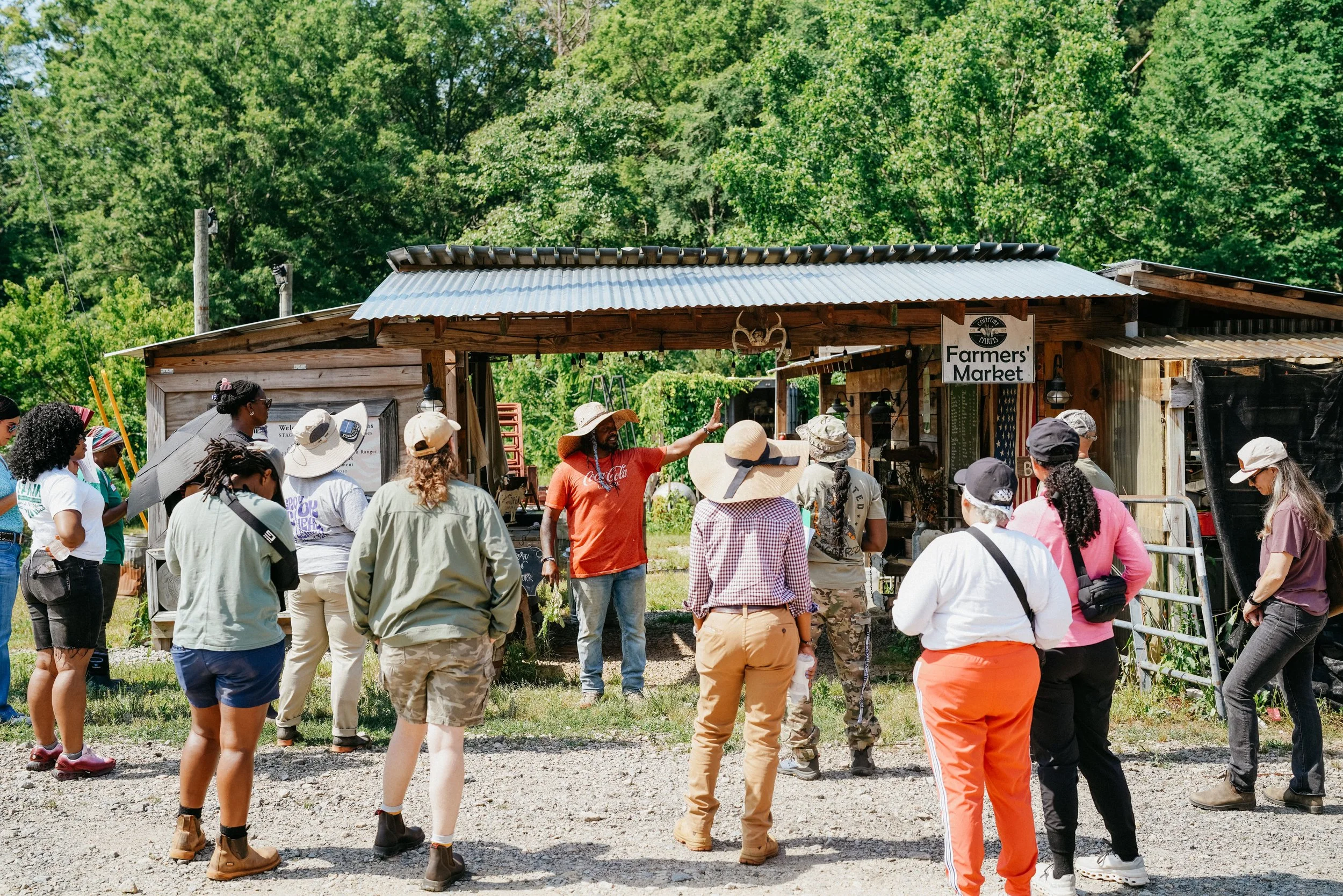
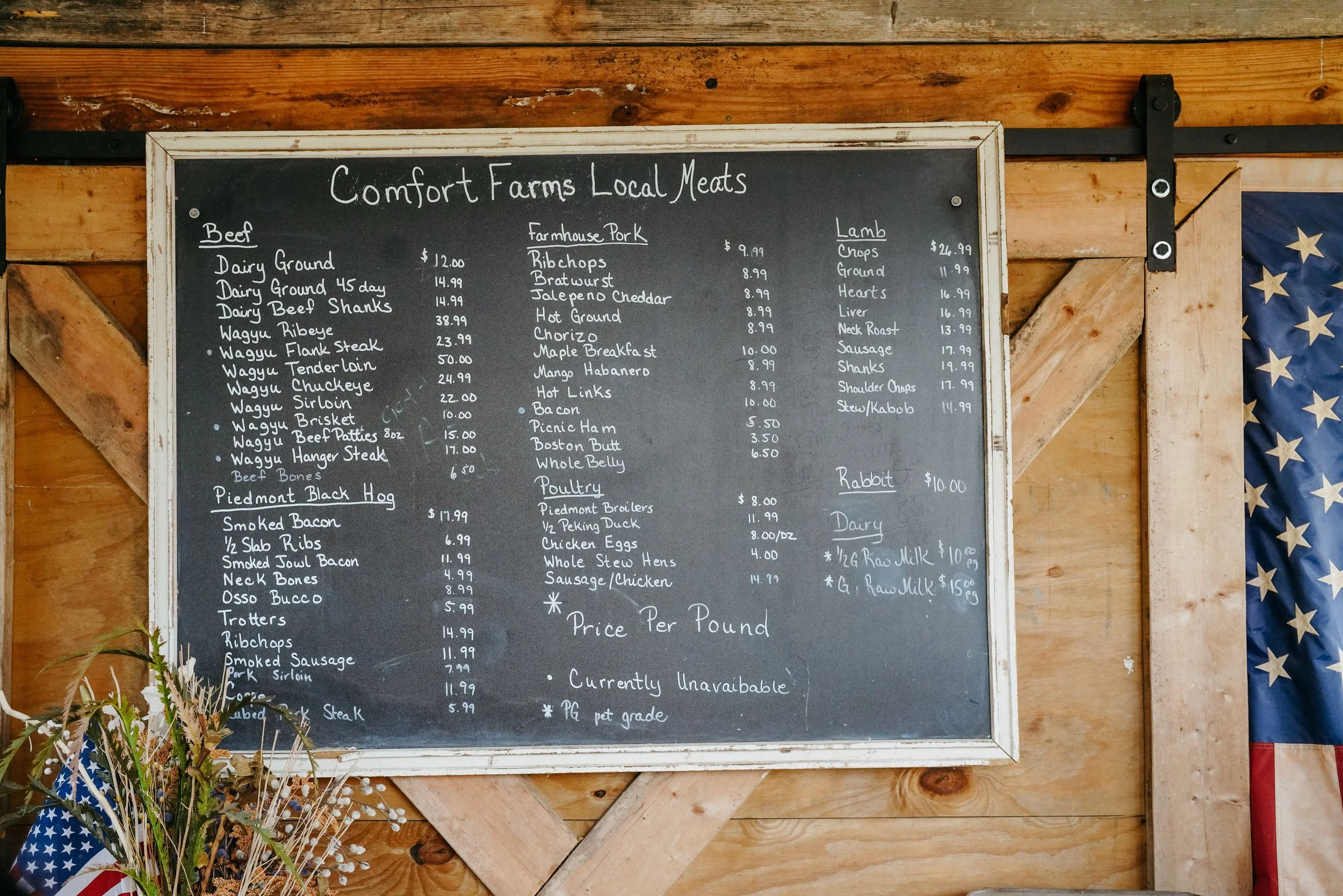
Comfort Farms’ on-farm market operates on an honor system and is open to the public 24/7, with refrigerated eggs, dairy, and frozen meats available for self-checkout. There are no set hours, and no staffing is required for basic sales.
A few things that make it work:
Comfort Farms hosts market cookout events twice a month that bring customers to shop, share a meal, and listen to music, which builds community around the farm.
Comfort Farms has harvest-to-order vegetables during the market events—rather than guessing what will sell, Jon harvests vegetables when customers request them, and there is no unaccounted for labor or vegetable waste.
Comfort Farms started an email listserv during COVID and still uses it today. Jon used to email customers a weekly availability list, then they made selections, and volunteers packaged orders for curbside pickup. This model was especially valued by Comfort Farms’ more elderly customers.
Comfort Farms will soon be adding a tea bar to the on-farm market, offering herbal blends made from herbs Jon grows and forages. His approach is intentionally low-pressure, as he'll offer only what's available without forcing production.
Consideration: An honor-system market lowers overhead and builds community trust. Pair it with regular events and simple communication tools to keep customers engaged.
Breed and save seed for flavor.
Jon values flavor above all else when saving seed. He's working with some remarkable varieties:
Motherland Okra – Sourced from a non-spiky varietal from a friend in Liberia. The leaves can be fed to sheep and goats, and Jon is experimenting with an okra lemonade for hydration.
A distinctly flavored, and highly productive watermelon variety gifted to Jon from a tribe in the Amazon. A 100-foot row can produce about 50 melons with an intensely concentrated flavor.
Black Jack tea herb – Jon discovered this one while traveling in Zimbabwe. It is calming and good for digestion, with a nutty aroma. Technically invasive, it will reseed itself annually.
Consideration: Rare and heirloom varieties can become a point of distinction for direct-market farmers. Seek out seeds from unconventional sources, seed swaps, and build relationships with other growers.
Choose livestock breeds for your region.
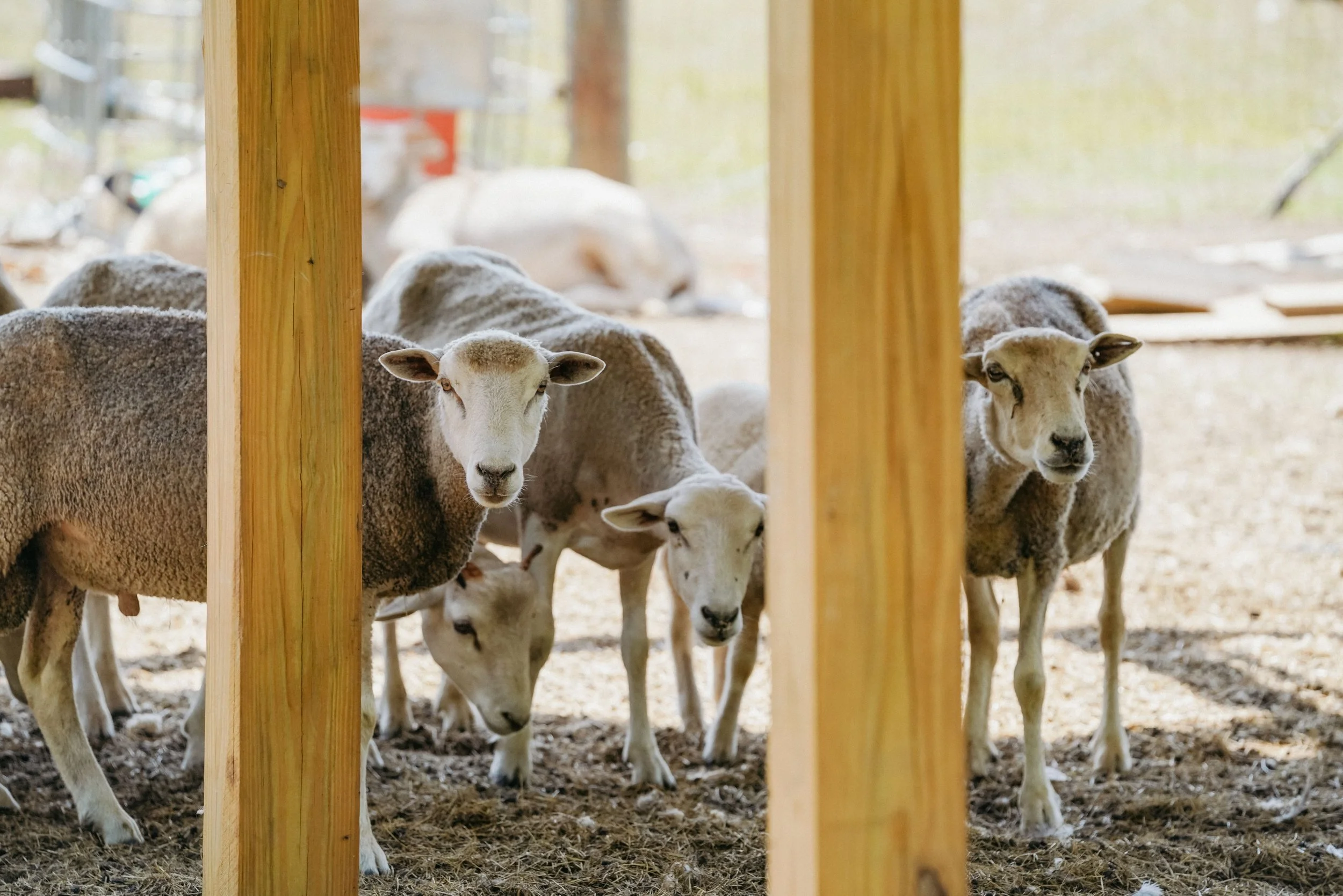
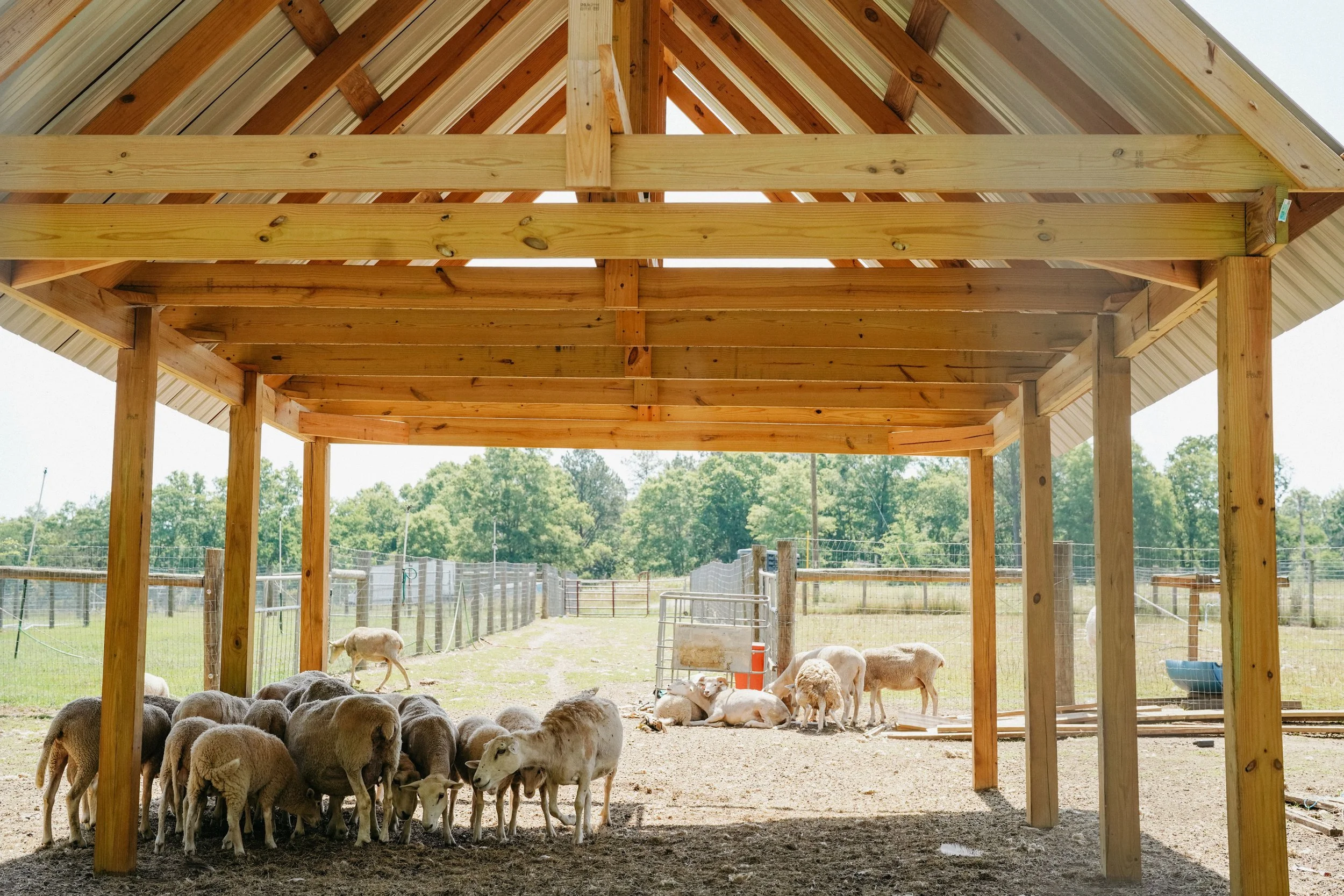
Comfort Farms produces Gulf Coast sheep because they're resilient, low-maintenance, and well-suited to the Southeast. Gulf Coast sheep crossed with Katahdin sheep perform particularly well in the region, especially with parasite resistance.
For hogs, Comfort Farms raises mostly the American Mulefoot breed, which traces back to the Spanish hogs brought to the Americas in the 1500s. Over time, Jon has developed his own crossbreeds from that foundation stock.
Consideration: Breed selection matters. Research breeds that are adapted to our Georgia climate and parasite load rather than defaulting to the most common commercial options.
Build community into your farm model.
Throughout the field day, it became clear that community is central to Comfort Farms’ model, not just an accidental by-product of it. In fact, during the tour, a bus arrived carrying adults with learning disabilities from a local organization so that they could see the farm and the animals. Jon mentioned this happens a couple of times a week and is another way of calling the community into the farm to educate while having people enjoy the space.
A few structural elements that can make a farm welcoming to volunteers and visitors:
Open farm layout that is accessible to the public
A pavilion for gatherings and events
Visual aid flags to guide volunteers in tasks around the farm
Comfort Farms also recently got authorized to accept SNAP/EBT, expanding access to the farm’s market for lower-income customers.
Consideration: Design your farm for community access (through clear volunteer systems, public hours, inclusive payment options, etc). This can help you expand your customer base while building lasting local relationships.
The Farmer Field Day at Comfort Farms highlighted that successful farming systems are built on more than production practices alone. Through thoughtful integration of livestock and vegetables, on-farm nutrient cycling, diversified income streams, and strong community connections, Jon Jackson has developed a model that reflects both ecological stewardship and economic resilience. While every farm will require its own approach, the lessons shared throughout the day encouraged attendees to consider how small, intentional changes—whether in soil management, marketing, breed selection, or community engagement—can strengthen the long-term sustainability of their operations. Georgia Organics extends its thanks to Jon Jackson and the Comfort Farms team for opening their farm and sharing their knowledge, experience, and vision with fellow growers.
WE’RE PROUD TO PARTNER WITH GEORGIA FARMERS
Georgia Organics is proud to support farmers in Georgia who are leading the way in conservation, innovation, and sustainable land stewardship. Events like this provide critical space to build relationships, share knowledge, and collectively envision a resilient future rooted in the land and led by farmers.
Thank you to Jon Jackson for hosting us at Comfort Farms and teaching us about his operation.
To learn more about and support Comfort Farms, visit https://www.stagvetsinc.org/ or follow them on Instagram.
To learn more about our Georgia Organics Farmer Services programming, check out our website farmerservices.georgiaorganics.org.
To learn more about Georgia Organics, visit georgiaorganics.org or follow us on Facebook, Instagram, and YouTube.
Want to keep up to date on future farmer-focused events, farmer resources, updates, and news? Join our monthly e-newsletter, the Grower News, for all the latest! Sign up HERE.
Funder Acknowledgement
This event was supported through the United States Department of Agriculture (USDA) Transition to Organic Partnership Program (TOPP). TOPP is a program of the USDA Organic Transition Initiative and is administered by the USDA Agricultural Marketing Service (AMS) National Organic Program (NOP). The contents are solely the responsibility of the authors and do not necessarily represent the official views of the USDA.