By Lauren Cox & Kimberly Koogler
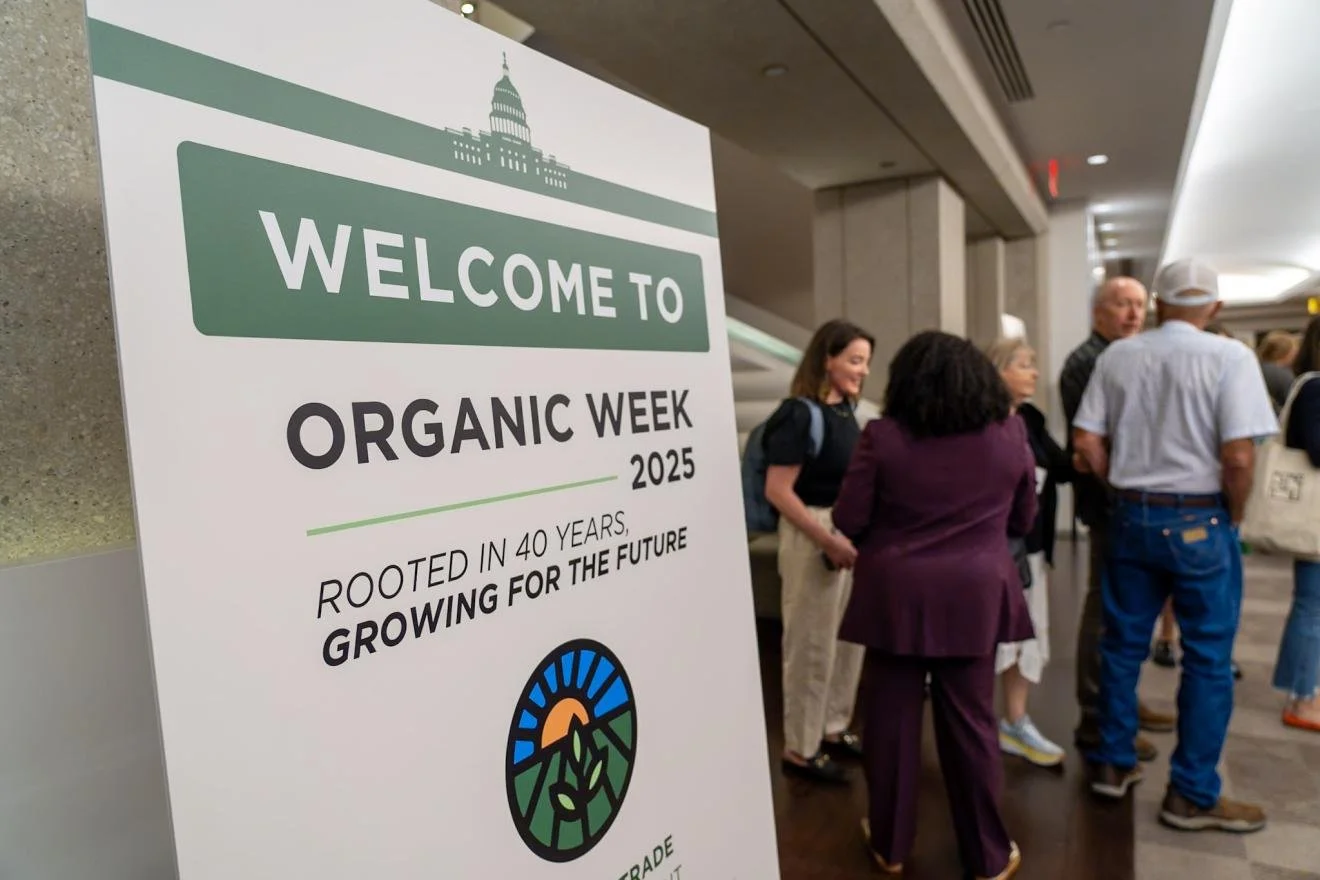
Last September 2025, 262 farmers, business leaders, and policymakers from across the US came together in Washington, DC for the Organic Trade annual Organic Trade Week to talk policy, organic branding around certification, equitable farm labor, and the urgency of strengthening organic infrastructure and the domestic organic supply chain.
Georgia Organics’ Director of Programs, Lauren Cox, and Farmer Services Specialist, Kimberly Koogler, attended the event.
Here’s what stood out most—and what matters for your farm heading into 2026.
The Big Takeaways
1. Organic paperwork is still a major headache
If you’ve been through organic certification, this won’t surprise you—paperwork is still one of the biggest barriers to becoming and maintaining certification. Across the board, farmers agreed: organic certification takes too much time. Farmers across the country echoed the same issues:
The process takes too much time
Requirements don’t scale (3 acres vs. 3,000 acres)
Organic System Plans (OSP) vary by certifier and can be hard to navigate
The big question: how do we reduce paperwork without weakening organic integrity?
What’s needed:
There’s growing momentum to simplify and standardize the process, especially for smaller and repeat growers. This could mean simpler applications, standardized forms, and less repeat paperwork—without lowering organic integrity. Farmers want to spend more time farming—and less time translating paperwork.
Many farmers expressed a need for:
A simplified application process, especially for smaller and repeat operations
A standardized OSP template across certifiers
2. Farm labor challenges aren’t going away
Labor wasn’t just a side conversation—it was front and center. From January to September 2025, the U.S. food system saw a drop of 750,000 documented workers, while the industry continues to rely heavily on undocumented labor. As workers leave, those remaining are expected to take on more—putting additional strain on farms.
Fewer documented workers in agriculture in 2025
Heavy reliance on undocumented workers
Ongoing fear and instability are affecting attendance and retention
Ongoing enforcement actions are creating fear and instability
Workers are less likely to show up consistently
Farm labor protections remain uneven and often insufficient
One major takeaway: organic agriculture must do more to support and protect farmworkers, especially undocumented workers who are most vulnerable. This conversation tied back to the four principles of organic agriculture—Health, Ecology, Fairness, and Care—with a strong emphasis on fairness in labor practices. Key policies discussed included the Farm Workforce Modernization Act, which would:
Provide a pathway to legal status for farmworkers
Reform the H-2A program
There was also discussion of the Equitable Food Initiative, which works to verify fair labor practices on farms. Some sobering realities shared:
Farmworkers can be up to 35 times more likely to die from heat exposure without proper protections
There is still no universal heat standard for agricultural workers
Bottom line: These are complex, systems-level challenges—but the message was clear: complexity cannot be an excuse for inaction. Mechanization alone won’t fix it, and a resilient organic system must include a stable and protected workforce. A long-term solution would need to address immigration and worker protections.
3. Organic vs. regenerative—what’s the difference?
You’ve probably heard more about “regenerative” lately. Here’s the practical difference:
Organic = based on approved practices (what you can and can’t use)
Regenerative = based on measured outcomes (soil health, carbon, etc.)
Watch-outs with regenerative:
Outcomes-based systems can sometimes be misleading (e.g., selective soil testing)
Many regenerative frameworks focus heavily on carbon, which can overlook broader ecosystem health
You must be certified organic before becoming regenerative organic
There was also discussion of Life Cycle Assessments (LCAs), which measure environmental impacts across production systems. While widely used, their accuracy depends heavily on methodology. Ongoing research aims to improve data quality and fill gaps.
Bottom line: Organic remains the foundation—but conversations around measuring outcomes are evolving.
4. Organic needs to do a better job telling its story
Organic is still a $70+ billion industry, with over 80% of households buying organic at least occasionally and still, there’s concern that organic is starting to feel like just another label—especially to younger consumers. There’s a need to better communicate the “why” behind organic—its environmental, health, and social benefits—while maintaining trust. There’s also a growing realization that branding and storytelling matter. Organics can’t rely on the label alone—customers want to know the “why” behind the product.
Younger consumers (Millennials and Gen Z) are highly values-driven
They expect authenticity and transparency, not just labels but also branding and packaging strongly influence purchasing decisions (“halo effect”)
Value-based co-branding is becoming more important
They understand the price premium—but still demand affordability and quality
Takeaway for farmers:
Your story, your practices, and your transparency matter more than ever.
Other insights:
There was also reflection on how organic is perceived today. Some younger consumers see it as part of the broader food system they distrust—raising the question:
How can organic stay true to its roots while operating within a regulated, large-scale market?
5. Domestic supply still matters
Supply chain resilience was another key theme. The organic market is strong (over $70 billion), but supply chain gaps remain. There’s increasing interest in strengthening domestic organic production and infrastructure, which could create real opportunities for farmers—if policy and investment follow through.
Big picture:
There’s real opportunity for U.S. growers if infrastructure and policy catch up. We see this in examples such as:
Organic still leading in categories like baby food
Past disruptions (like the infant formula shortage in 2021) showing us the risks of relying too heavily on imports
Opportunity:
Strengthening domestic organic production and infrastructure could create more stability—and more market opportunities for U.S. farmers.
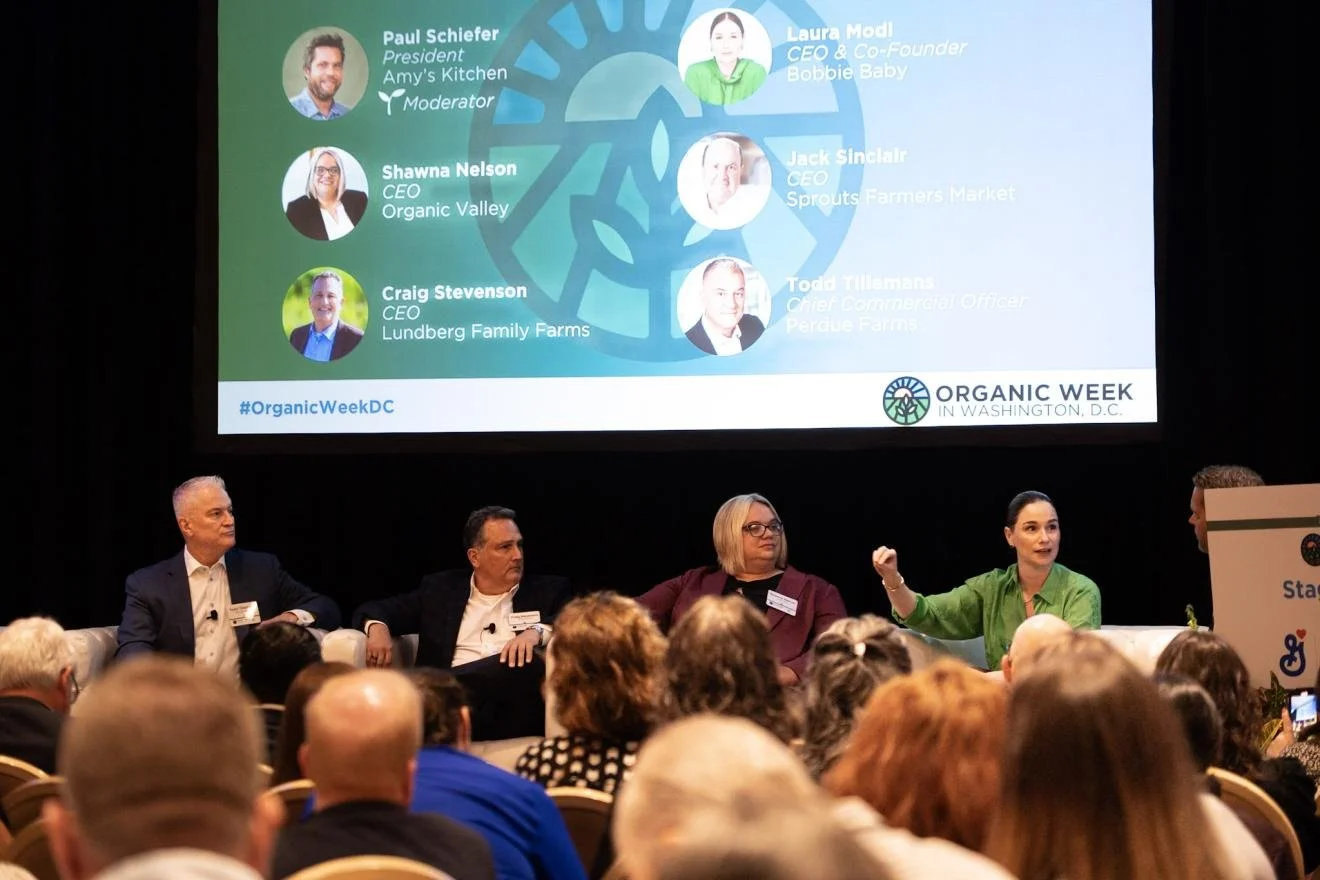
(Panel on the Next Generation Organic Consumer)
What’s Coming in 2026 (Advocacy Priorities)
Here’s what national organic leaders are pushing for:
Strong funding for the National Organic Program (NOP)
Reducing certification burden for farmers
Expanding domestic organic markets
Improving import oversight
Supporting the Farm Workforce Modernization Act
Strengthening organic standards and accountability
The strategy and how they plan to get there:
Build consumer trust → increase demand
Reduce risk and barriers → help more farmers transition
Better consumer education (build trust → drive demand)
Policies that reduce risk and barriers for farmers
More bipartisan support for organic agriculture
Key message for policymakers:
Organic is a voluntary, market-driven system that benefits farmers, consumers, and rural economies—and it exists in every state and district.
What We Noticed and our final takeaways
Organics continue to grow—but farmers are asking for a system that works better for them. Less paperwork, stronger labor support, and clearer communication with consumers will be key to keeping organic viable on the ground. That means it’s more important than ever that farmer voices stay part of the conversation. A few honest observations from the week were that:
Big players (dairy, grain, soy) dominated many of the conversations
There was less representation from small and diversified vegetable farms
A lot of focus of the week was on marketing—but less on day-to-day farmer realities
For farmers, the priorities are clear:
Streamlined certification
Real solutions for labor
Stronger domestic supply chains and fair access to markets
Stronger support at the policy level that reduces risk and supports transition
If those pieces come together, organics can continue to be a viable—and profitable—path forward.
Get Involved
Are you a current Certified Organic grower or transitioning grower in Georgia? Visit Georgia Organics’ GO Organic! page for cost-share and technical resources, along with more information on joining the Georgia Certified Organic Network (GCON).
To learn more about Georgia Organics, visit georgiaorganics.org or follow us on Facebook, Instagram, LinkedIn, and YouTube.