By Lydia Hsu
Lydia Hsu is a Farmer Services Program Specialist at Georgia Organics
On Thursday, November 6, 2025, Georgia Organics and McIntosh S.E.E.D hosted an Organic Growers Farmer Field Day: Resilient Whole Farm Production and Planning at Rag & Frass Farm in Jeffersonville, GA. The day started with a farm tour then transitioned into educational sessions, where speakers from the Georgia Forestry Commission, McIntosh S.E.E.D, and Georgia Organics presented on available forestry management services, climate-smart technical assistance, and organic transition resources for farmers.
RAG AND FRASS FARM TOUR
Rag & Frass Farm is a 54-acre certified organic farm that has been in operation for 14 years. When farmer Julia Asherman purchased the property in 2014, she started with no running water and no electricity. The farm property was previously the site of a motel with a horse barn attached. Now, it has been repurposed into office space and worker housing. With 4 acres in production and roughly 30 forested acres, the farm is a model of diversified vegetable, flower, and seed production, ecological management, and practical innovation. Throughout the farm tour, Julia shared her expertise with attendees covering how she operates the farm efficiently and demonstrated multiple ways in which using a problem-solving approach has built farm resiliency.
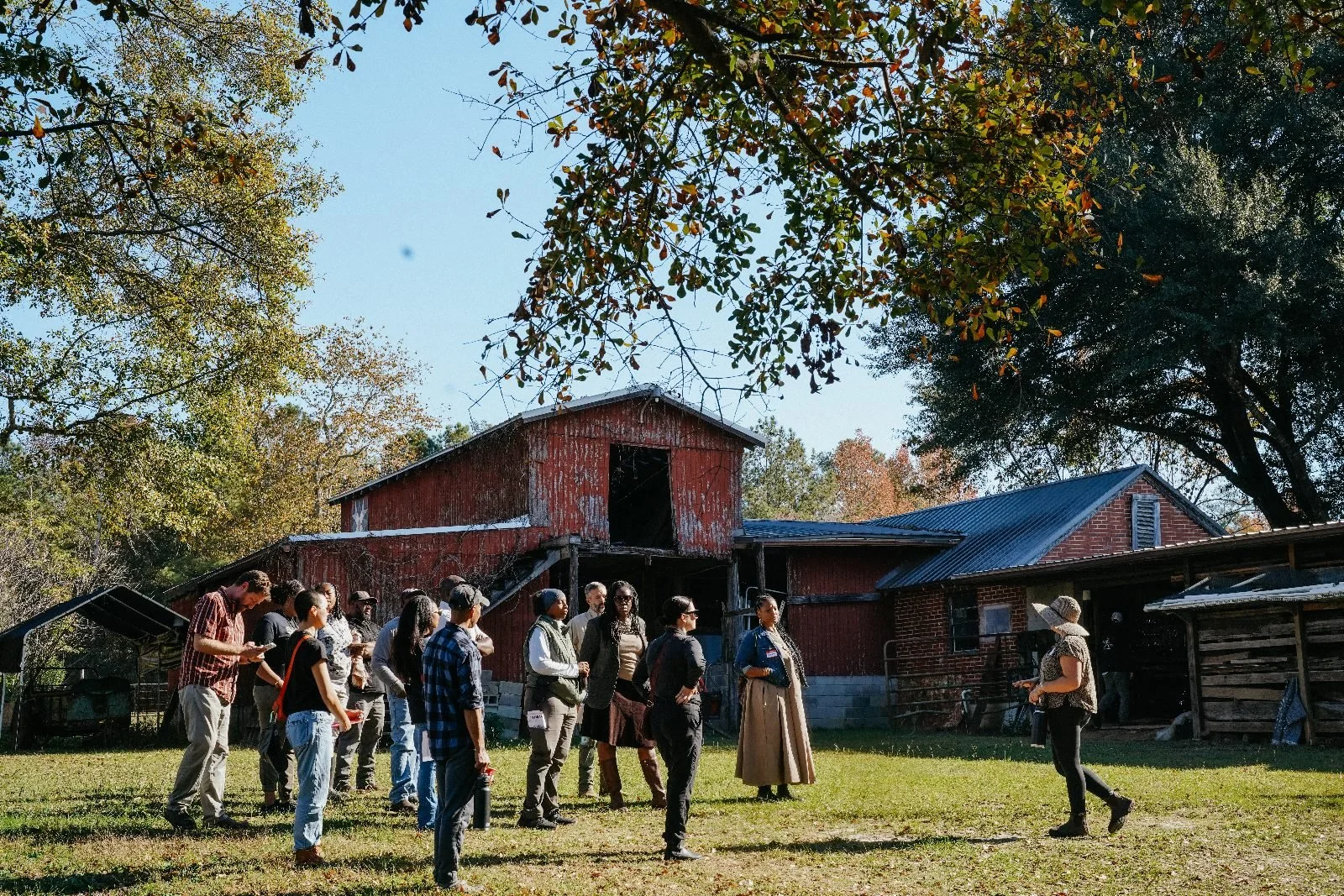
Farmer Julia Asherman kicking off the farm tour. Photo by Jenna Shea Photojournalism
Crop Rotation and Seed Production
Julia utilizes a 12-year crop rotation on the farm, with fields rotating among equal-sized zones, and the high tunnels operating on a separate rotation schedule. Rag & Frass also makes sure to rotate cover crops, like vetch and clover, as part of their overall crop and fertility plan.
Leftover plant materials from their high tunnels are pulled out at the end of a crop cycle and left outside the tunnel to break down in long-term composting piles. Some piles are as old as 14 years! They purchase additional compost from a company in Statesboro and apply it heavily in the tunnels, with lighter applications in open fields.
The farm grows several crops for organic seed production under contract for Southern Exposure Seed Exchange, including collards, pumpkins, and cotton. While on the farm tour, attendees were able to harvest some of the green-tinted cotton for themselves, a variety that many of the attendees hadn’t seen before. This year they harvested 40 lbs of uncleaned cotton, which will amount to a few pounds once cleaned. The farm previously grew cowpeas and peanuts for seed but scaled back their seed production to match their labor capacity. Integrating seed production into their business model has helped Rag & Frass Farm diversify their income streams and enhance the long-term resilience of the operation.
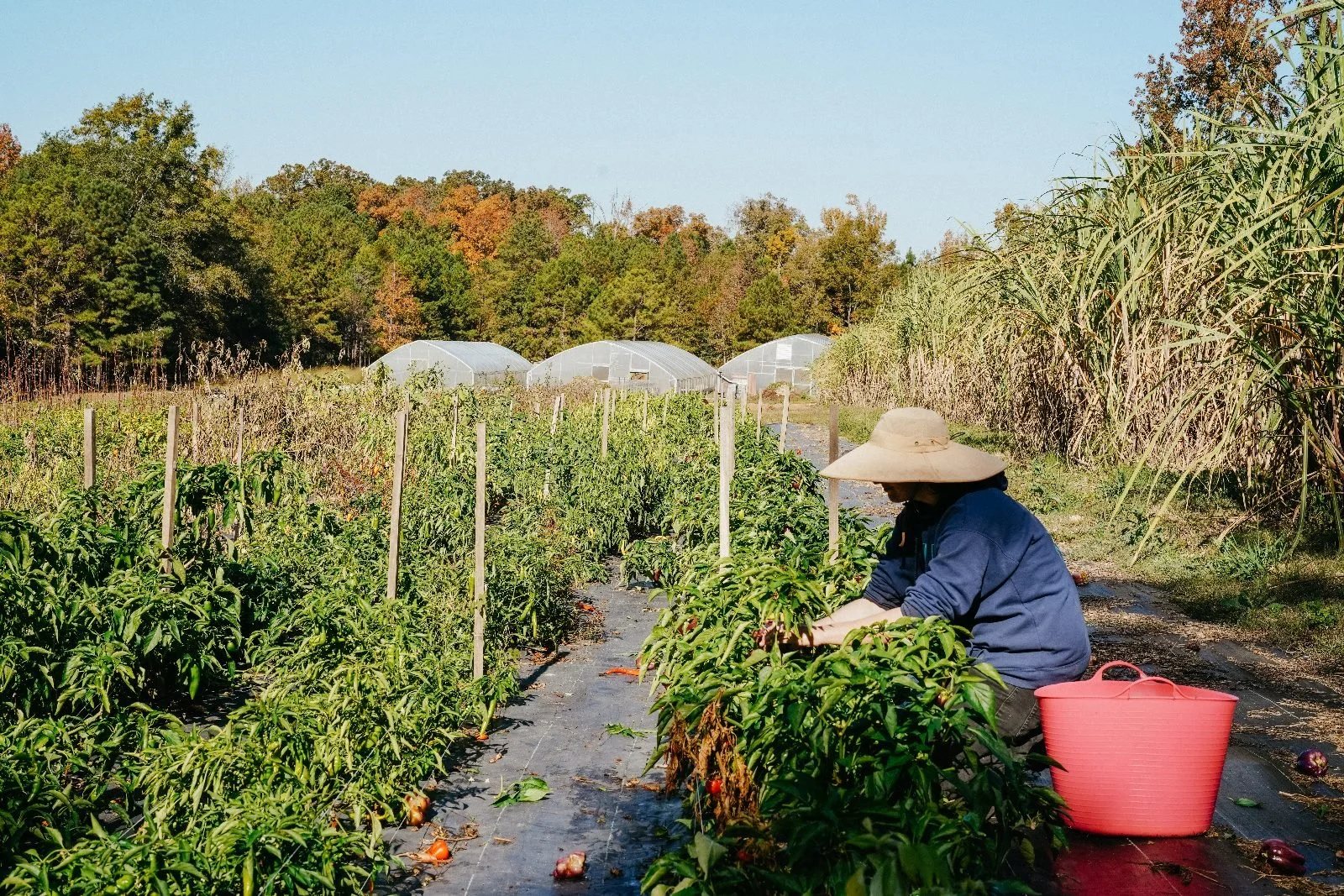
Photo by Jenna Shea Photojournalism
Market Strategy
Rag & Frass grows a diverse selection of vegetables year-round for two farmers markets and their roadside stand. Julia relies on market observation and customer behavior to determine which products go to which market, and the quantity sizes of the products sold at the markets. She has found that different markets tend to have different buying trends, and that it's good practice to get to know your customers and cater to them accordingly. For example, in Macon, smaller quantities sell best, and larger quantities sell better in Atlanta; Julia infers that this is likely due to older customers or smaller households in Macon, and bigger families in Atlanta. Julia and her staff track the inventories of what is sold week to week, and use their intuition based on experience and real-time feedback to plan for their markets and customers' preferences. Another tip would be to walk through the market at the beginning of the day before customers arrive to see what other farmers have at their booths. If everyone is carrying a ton of salad greens, for example, then you could expect to not sell out or if you did, you would know the demand of the market is being fill by multiple farms and you could probably bring more the following week. It's about understanding the limits of customer buying so that you minimize waste.
Infrastructure Through NRCS EQIP
Strategic whole-farm planning is central to building long-term resilience at Rag & Frass Farm, and federal conservation programs have played a key role in that strategy. The USDA National Resources Conservation Service’s (NRCS) Environmental Quality Incentives Program (EQIP) has supported climate-smart conservation projects on the farm, including:
A well
Irrigation box installations for each zone in the fields
Two high tunnels
Synthetic reusable mulch
High tunnel gutters for roof runoff management
Julia cautioned farmers not to apply for too many practices at once, as NRCS EQIP programs operate as reimbursements, and up-front costs can add up quickly. She advised using EQUP programs strategically so that they work for the farmer, and not the other way around.
For example, Julia had seen success using woven black-on-white landscape fabric on her farm, which kept cooler in the summer, reflected heat, and helped reduce aphid pressure on the plants. She is able to double crop in the landscape fabric, as long as she fertigates the second crop, and can reuse the fabric for up to 10-12 years. Using the EQIP Mulching 484 Conservation Practice Standard, Julia was able to get financial support to purchase the synthetic mulch by thinking outside of the box and considering the specific needs of her farm and farm systems. If you’re an organic farmer using reusable landscape fabric, make sure that, like Julia, you monitor the integrity of the fabric to make sure it is not degrading in the field so that you remain in compliance with the National Organic Program regulation 7 CFR 205.206(c)(6).
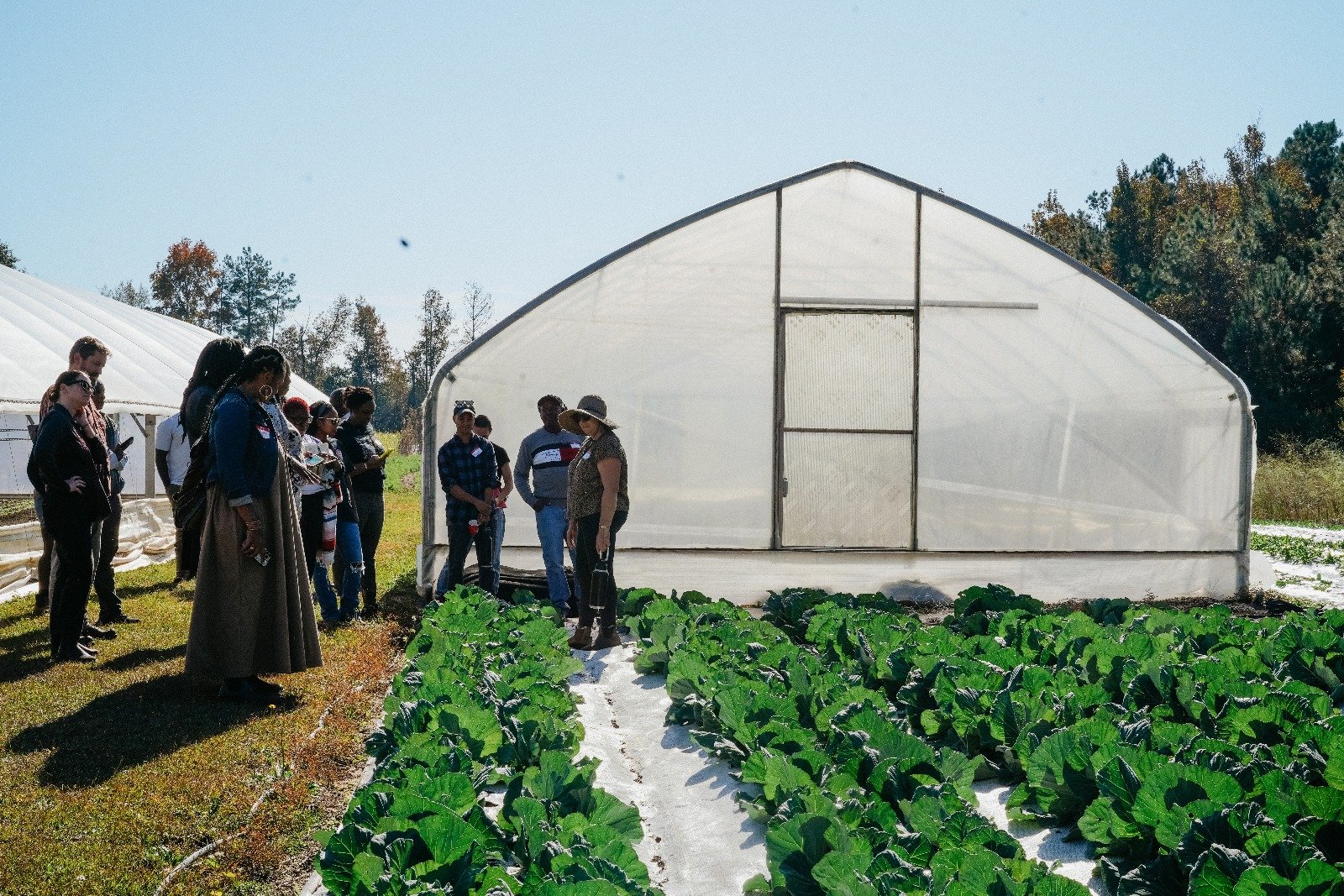
Julia discussing the benefits of white landscape fabric. Photo by Jenna Shea Photojournalism
Julia also utilized the EQIP Roof Runoff Structure 558 Conservation Practice Standard to implement gutters on one of her high tunnels. And while you don’t traditionally see house gutters on a high tunnel, Julia has seen huge benefits since they’ve been installed and hopes to implement gutters on the rest of her tunnels in the future.
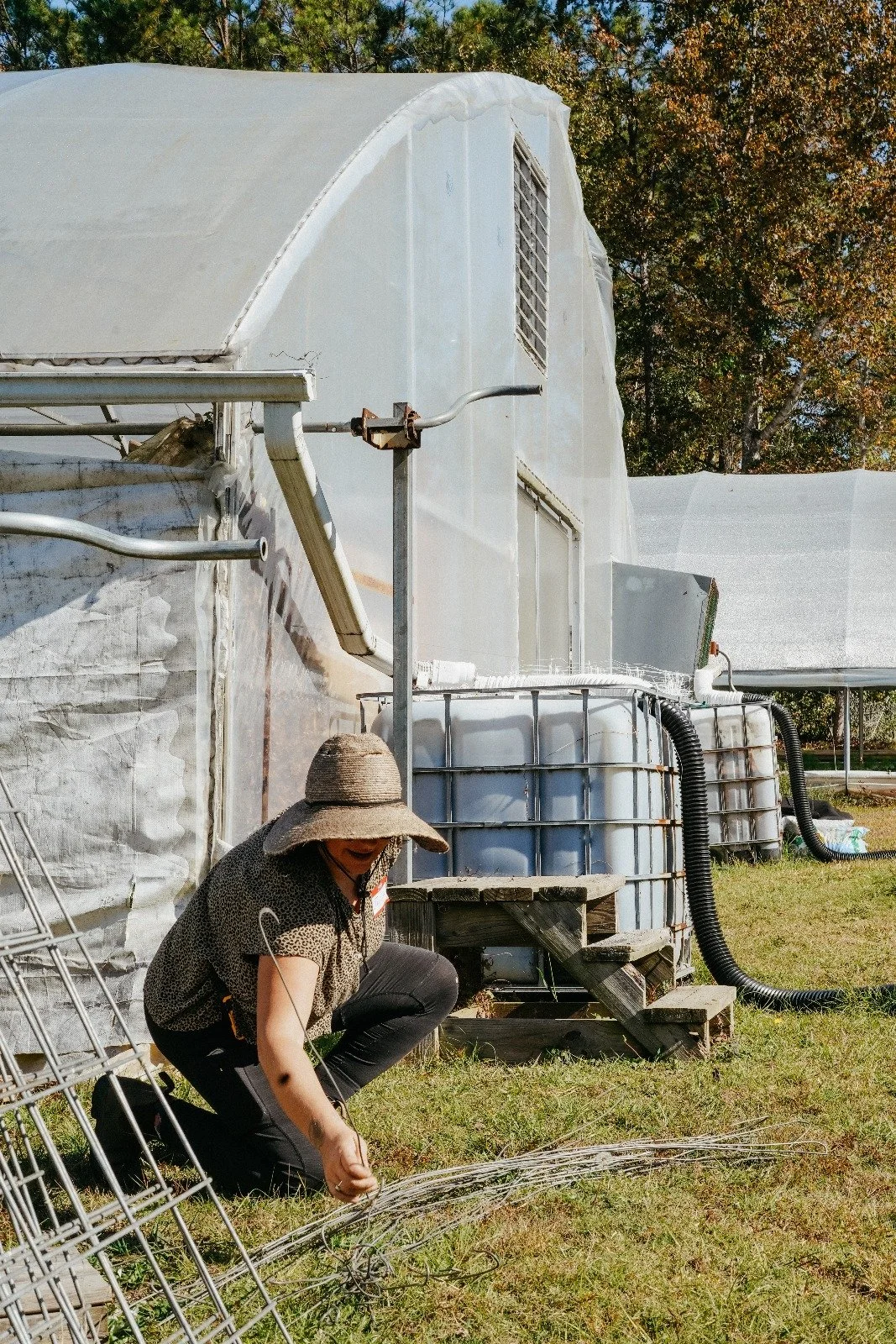
High tunnel gutters and runoff storage tanks behind Julia. Photo by Jenna Shea Photojournalism
On-Farm Innovations
On-farm innovation is an essential tool in whole-farm planning, and combining tried-and-true practices with creative solutions can make daily work more efficient and strengthen resilience year after year. Attendees were able to learn about the DIY and experimental strategies Julia was implementing on the farm. For example, in the high tunnel, she had developed her own trellising system using cattle panels, extended with concrete reinforcing mesh, hung using cut and bent 6–8-gauge wire hooks to support cucumber and long bean crops growth from floor to ceiling. She found that the plants that were able to grow taller lived longer, and were healthier. This system also allowed her team to grow two crops with one trellis installation, saving labor and time.
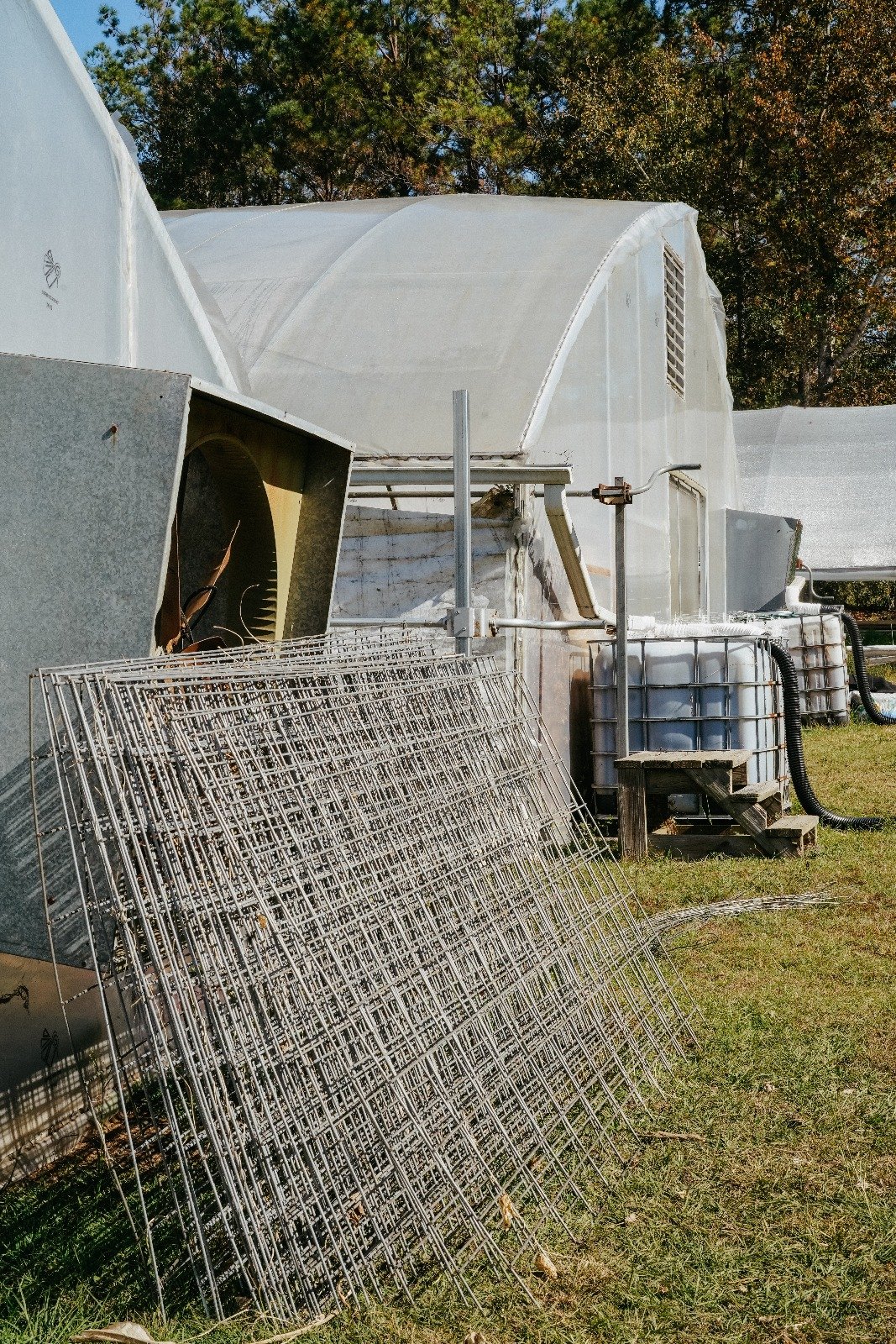
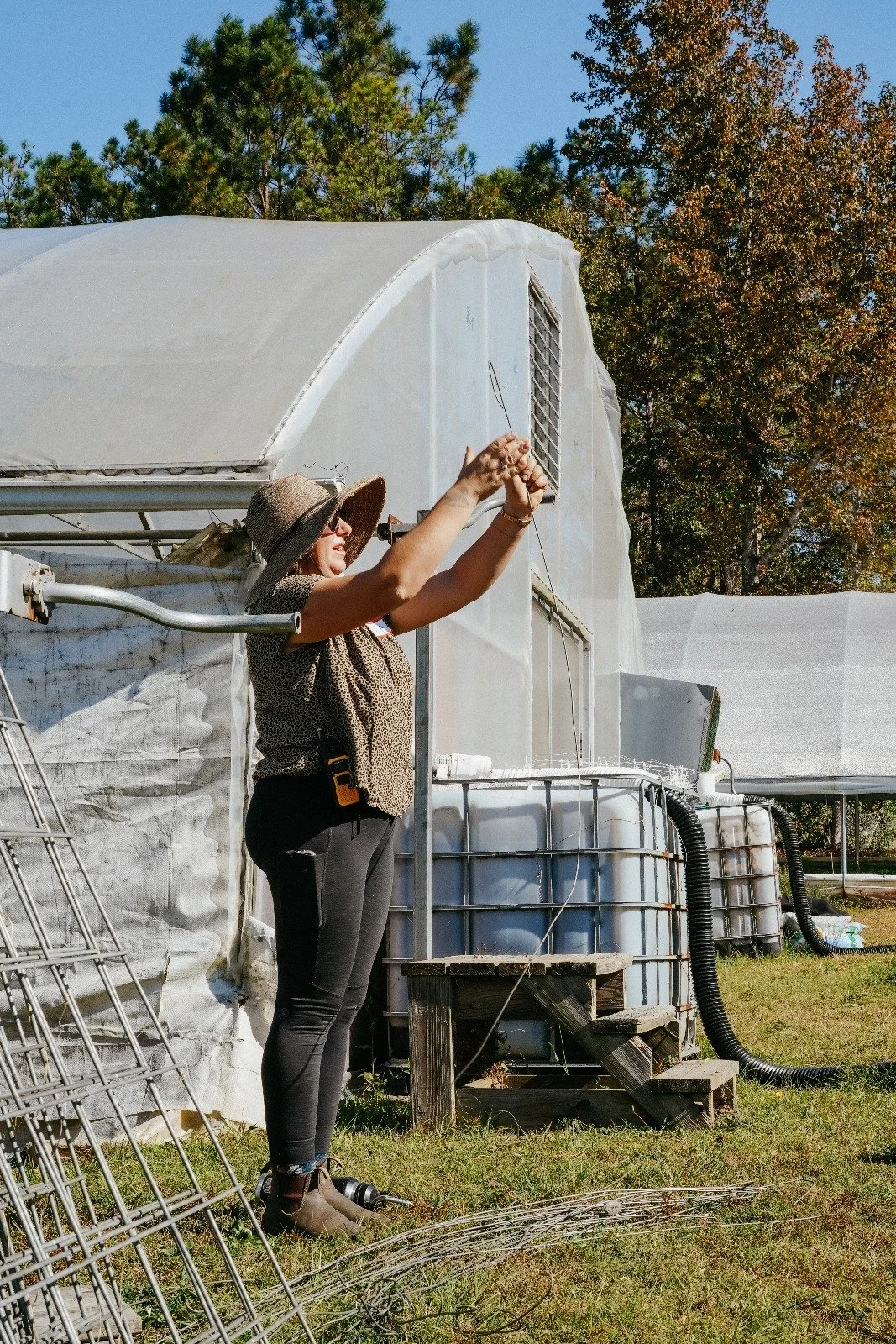
Cattle panel and wire hooks for trellising in the high tunnels. Photo by Jenna Shea Photojournalism
Julia also shared her lessons learned from using the Aluminet shade cloth on a high tunnel for the first time this year. She highly advised farmers against the 50% shade and rather opt for the 30-40% shade to provide for better light penetration. With the 50% shade cloth, she found that it reduced the heat in the tunnel but also limited the productivity of the plants.
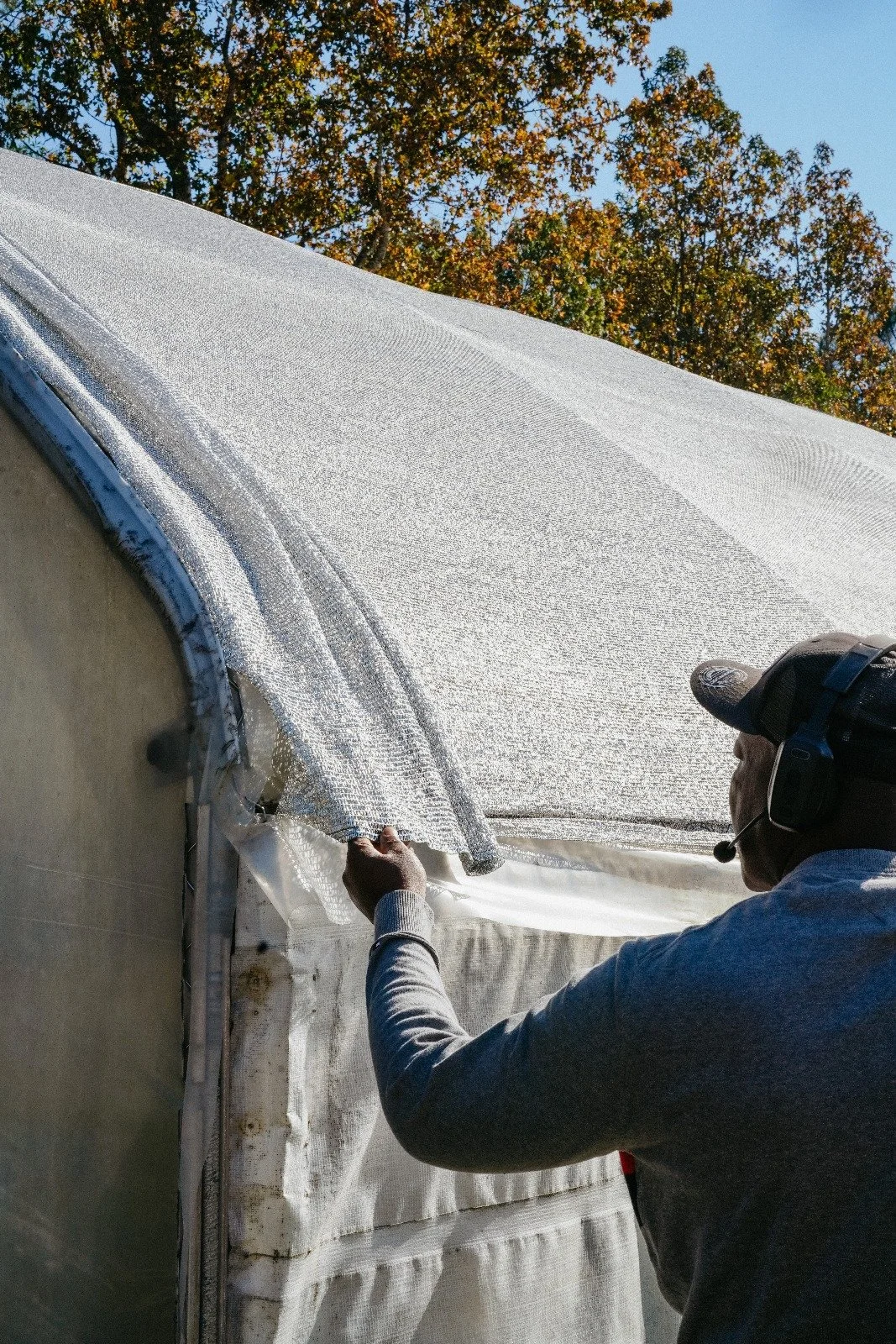
Aluminet shade cloth on a high tunnel. Photo by Jenna Shea Photojournalism
Just prior to the field day, Rag & Frass had installed a full solar array through AgSolar. The project was financed with an FSA loan and 50% of it was reimbursed through the USDA Rural Energy for America Program (REAP) grant. Julia is expecting that through the energy offset for the well and refrigeration, along with the long-term tax credit, the investment will pay off.
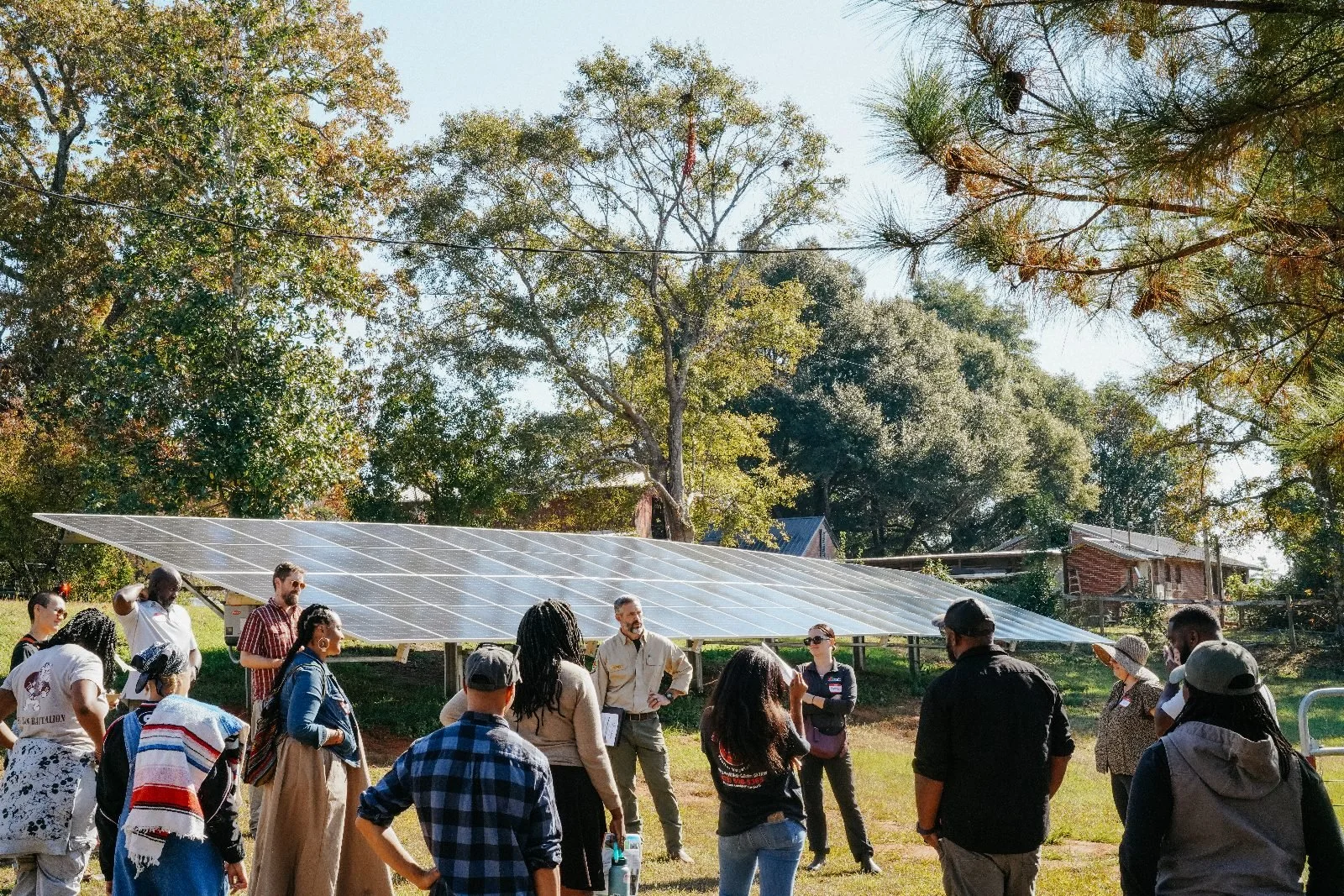
Recently installed solar panels at Rag & Frass Farm. Photo by Jenna Shea Photojournalism
Throughout the farm tour, attendees were able to learn from and absorb the knowledge, experience, and expertise Julia has from years of observation, new strategic projects, and lessons learned in whole farm planning. Rag & Frass Farm is a strong example of how creative and strategic use of programs like EQIP, REAP, and organic certification can help a small-scale diversified farm thrive and become more resilient. Their innovations—from market strategies to trellising systems to solar power—highlight how farmers can adapt tools and programs to fit their farms, their markets, and their long-term visions.
EDUCATIONAL SESSIONS
After the farm tour, the day transitioned to the educational sessions, where speakers from the Georgia Forestry Commission, McIntosh S.E.E.D, and Georgia Organics shared information on whole farm planning resources and services available to farmers. Resources and factsheets shared during the educational sessions can be found in the links at the end of this page.
Georgia Forestry Commission
Forest fire protection and prevention
Burn permit distribution and administration
Firebreak plowing (fee-based)
Prescribed burning assistance (fee-based)
Forest management
Forest pests and invasive species detection
Forest Stewardship Plans
Assistance with federal cost-share and conservation programs
McIntosh S.E.E.D
Climate-Smart Farmer Program (CSFP) technical assistance
Assist farmers in getting a farm tract number
Assist farmers in accessing NRCS programs and exploring which conservation practices fit a farm’s goals
Georgia Organics
Emergency Farmer Fund (EFF) program for farmers that have experienced a natural disaster or medical crisis
GO Organic! resources for transitioning and certified organic farmers
Crop insurance options through USDA’s Risk Management Agency, including:
Whole-Farm Revenue Protection
Micro Farm Program
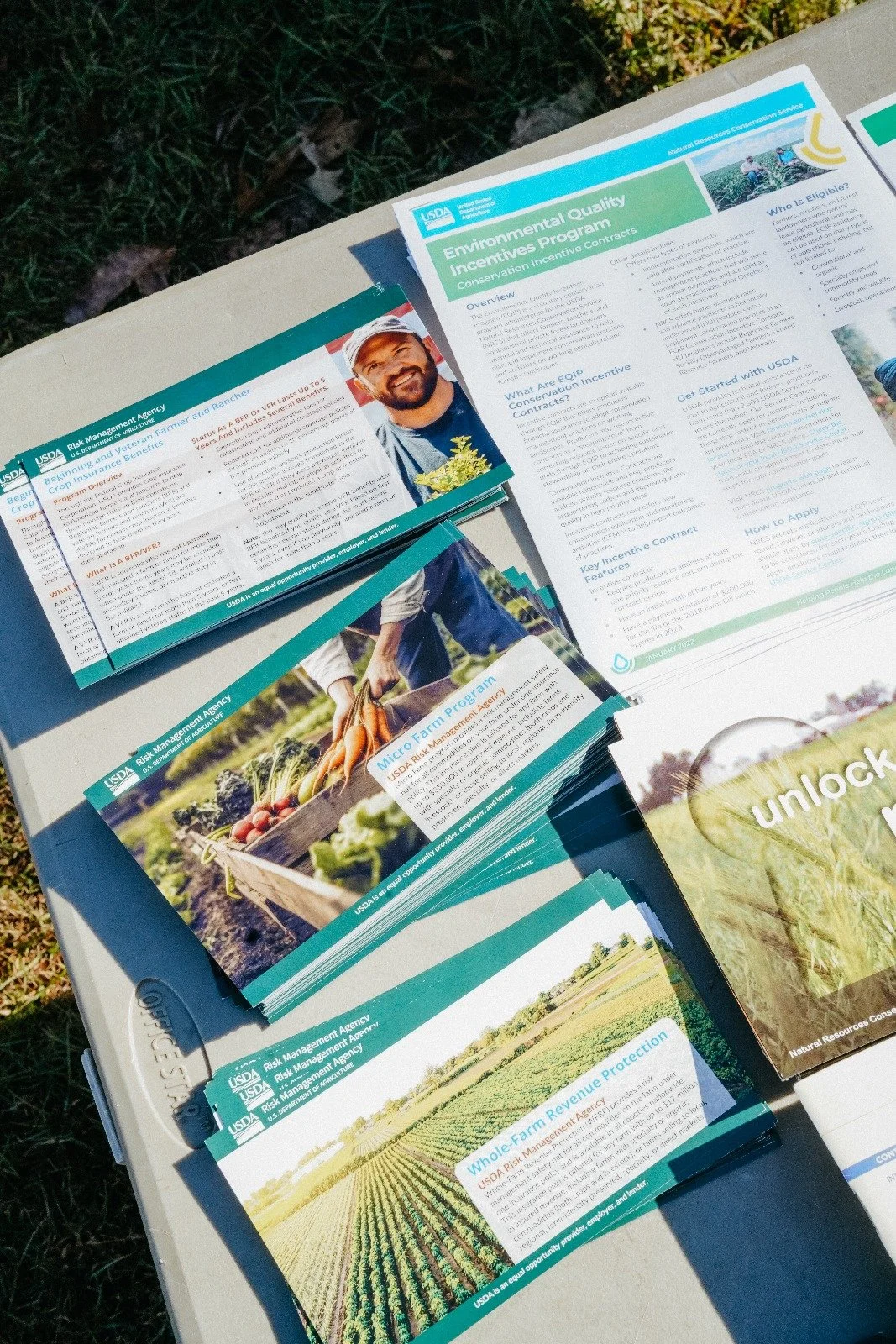
RMA and NRCS resources distributed at the field day. Photo by Jenna Shea Photojournalism
If you’d like help exploring NRCS programs, crop insurance, or organic certification resources, Georgia Organics is here to support you.
WE’RE PROUD TO PARTNER WITH GEORGIA FARMERS
Georgia Organics and McIntosh S.E.E.D are proud to support farmers in Georgia who are leading the way in conservation, innovation, and sustainable land stewardship. Events like this provide critical space to build relationships, share knowledge, and collectively envision a resilient future rooted in the land and led by farmers.
Thank you to Julia Asherman for hosting us on at Rag & Frass Farm and teaching us about your operation.
To learn more about and support Rag & Frass Farm, visit https://www.ragandfrassfarm.com or follow them on Instagram and Facebook.
To view and download the resources passed out from the field day, click HERE.
Click HERE to access the Climate Smart Farmer Program Technical Assistance (TA) Form.
Click HERE to access free office hours with Katy Galbreath of Ag South Farm Credit for crop insurance assistance.
If you are a current or transitioning Certified Organic grower, check out the resources we have available for you through our GO Organic! program HERE.
To learn more about McIntosh S.E.E.D, visit https://mcintoshseed.org/ or follow them on Instagram and Facebook.
To learn more about our Georgia Organics Farmer Services programming, check out our website farmerservices.georgiaorganics.org.
To learn more about Georgia Organics, visit georgiaorganics.org or follow us on Facebook, Instagram, and YouTube.
Want to keep up to date on future farmer-focused events, farmer resources, updates, and news? Join our monthly e-newsletter, the Grower News, for all the latest! Sign up HERE.
Funder Acknowledgement
This event was supported through Drawdown Georgia Climate Solutions & Equity Grant Funding Partners, the USDA Risk Management Agency’s Risk Management Education Partnerships Program, and the United States Department of Agriculture (USDA) Transition to Organic Partnership Program (TOPP). TOPP is a program of the USDA Organic Transition Initiative and is administered by the USDA Agricultural Marketing Service (AMS) National Organic Program (NOP). The contents are solely the responsibility of the authors and do not necessarily represent the official views of the USDA.