Georgia Organics Board of Directors, 2022 Election

GEORGIA ORGANICS MEMBERS ELECT NEW & RETURNING BOARD MEMBERS

Every year, we engage our invaluable Georgia Organics members to vote for new and returning members of our Board of Directors.

This week, thanks to many votes from our members, we confirmed the following slate of four new nominees and four incumbents, meet them below!

As a non-profit, we rely heavily on our incredible Board of Directors for oversight, accountability, and guidance in our daily programmatic work. Meet the full Board of Directors at georgiaorganics.org/board.

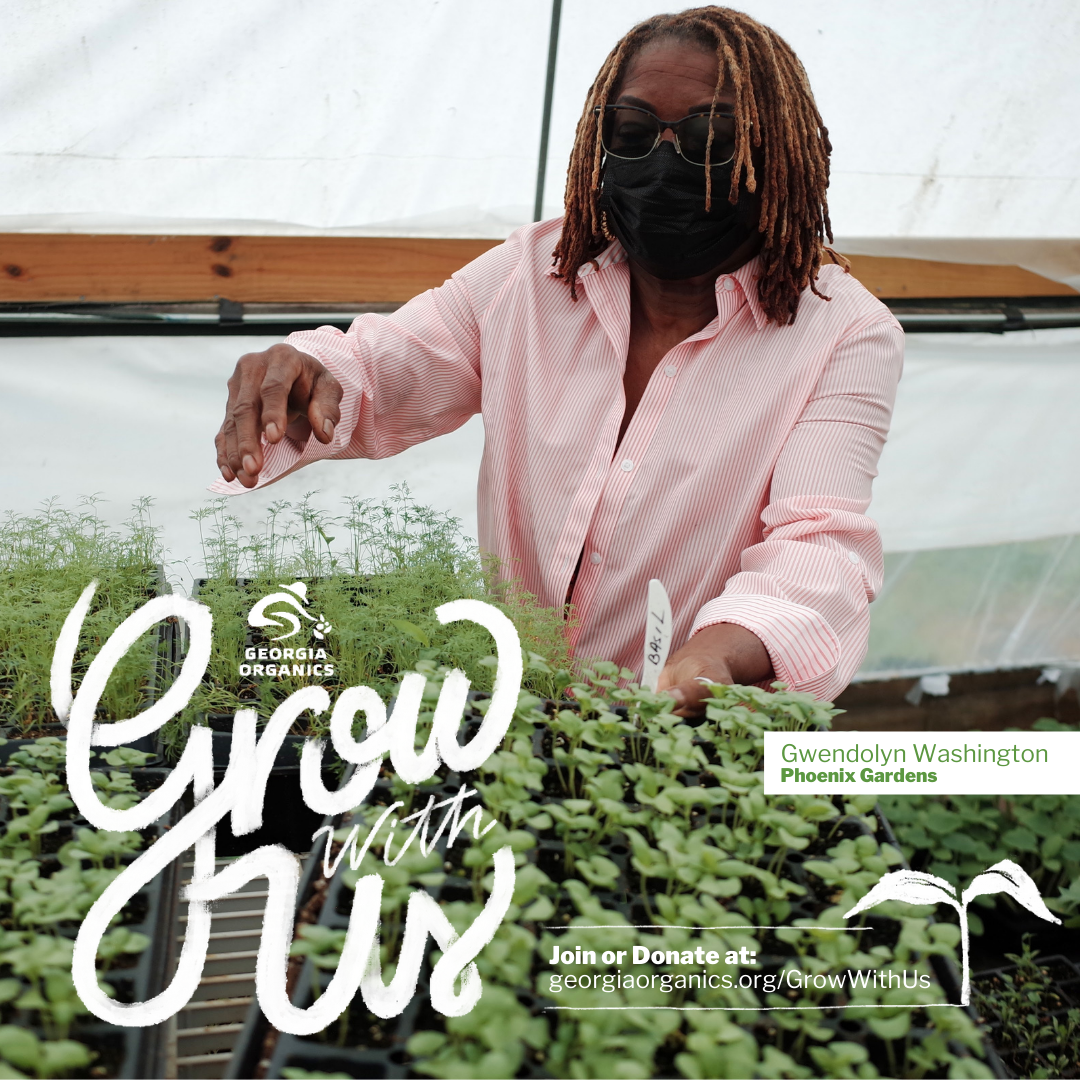
Want to play a part in shaping Georgia Organics’ future and the work we do? Become a member today at georgiaorganics.org/growwithus.

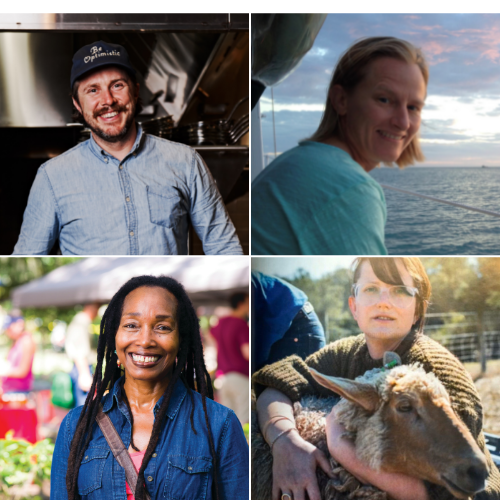
Top (left to right): Akia Lewis, Shari Martin. Bottom: Tripp Pomeroy, Sed Rowe

BOARD OF DIRECTORS: NEW MEMBERS

The following individuals will serve a three-year term on the Georgia Organics Board.

Akia Lewis (Atlanta) – Akia Lewis is a lover of food and nature who believes access to life-sustaining food is a human right. Since 2014, she has supported strategy, partnerships, and community capacity building at Georgia Family Connection Partnership, the only statewide network in the country dedicated to the health and well-being of families and communities. As a staunch believer in the mission and vision of Georgia Organics, Akia has been a volunteer and member for several years and has been serving on the organization’s program committee.

Shari Martin (Roswell) – Shari Martin, together with her husband Tony Martin, embarked upon farming in 2015, having reclaimed former farmland in downtown Roswell. With the help of young farmers, Martin’s Garden has grown into a small urban organic farm providing vegetables through CSA memberships and farm stands. Martin’s Garden is also committed to using the farm to support local charities through hosting events and donating food locally. After a decade as a Corporate Banking Executive with Bank of America and Wells Fargo, followed by another decade as a Fintech executive for New York based firms, Shari is happy to put down local roots. She is responsible for strategy, marketing and acts as CFO for Martin’s Garden and is excited to contribute her small business banking and technology experience to Georgia Organics.   

Harlan “Tripp” Pomeroy (Americus) – Tripp Pomeroy is the CEO of Cafe Campesino, Inc., a fair trade organic coffee company, and a board member of Cooperative Coffees, through which Cafe Campesino sources all of its coffee. A unique fair trade organic green bean importing cooperative of small to medium-sized North American roasters, Cooperative Coffees is committed to deep, long-term partnerships with small-scale coffee farmers and their exporting cooperatives. Since 2004 Tripp has played an active role in Cooperative Coffees, including participating in numerous roaster-farmer workshops and leading delegations to connect Cafe Campesino customers directly with the women and men who grow their coffee. These connections provide a unique and important opportunity to learn first-hand about coffee farming and, in particular, the critical role of organic farming practices. Tripp has over twenty years of experience in international business and trade and has an MA in International Development from The American University's School of International Service.

Sed Rowe (Albany) – Sed Rowe is owner of Rowe Organic Farm where he grows peanuts, sunflowers and hemp. He attended Fort Valley State University on a full football scholarship and received a B.S. in Plant Science with a concentration in Horticulture and later received an M.S. in Public Health. After college he worked at Southwest Georgia Project, a nonprofit founded by civil rights pioneers Charles and Shirley Sherrod. Although involved in agriculture since he was young, Sed is a first-generation farmer and started with 10 Certified Organic acres. He was among three farmers to grow Organic peanuts in 2019 and become a founding member of the Georgia Organic Peanut Cooperative (GOPA). He currently serves on the board of the National Young Farmers Coalition.

Top (left to right): Drew Belline, Kristin Russell. Bottom: Jennifer Taylor, Rebecca Williams

BOARD OF DIRECTORS: RE-ELECTED MEMBERS

The following four current board members will serve a second three-year term.

Drew Belline (Decatur) – Drew Belline is currently the Executive Chef / Owner of No. 246 in Decatur, Georgia; a restaurant that focuses on seasonally and locally sourced American-Italian cuisine. Chef Belline is also the Vice President of Creative Direction and concept development for the Ford Fry restaurant group in Atlanta and has worked in the past with chefs Anne Quatrano in Atlanta and Chef Tom Colicchio in New York City. As a chef, Drew is deeply committed to seasonal ingredients and supporting local farmers and has supported Georgia Organics through events such as Attack of Killer Tomato Festival and a foraged mushroom inspired dinner for patrons.

Kristin Russell (Savannah) – Kristin grew up on a family farm/ranch in north -central Kansas and followed the agricultural thread through college in Minnesota and an internship in South Africa. She came to Savannah to thaw out and to open The Sentient Bean- a fair-trade coffee shop, which evolved into the vegetarian, farm-to-table restaurant that it is today. She helped found the Forsyth Farmers' Market in Savannah in 2008 and continues to volunteer for that organization. In early 2020, she and her partner purchased Savannah's 41 year old independent natural grocery and next door neighbor, Brighter Day. The hope is to leverage the combined power of the two businesses to support good change in Savannah's food system and strengthen our beloved community.

Jennifer Taylor (Glenwood) – In 2010, Jennifer returned to her grandmother’s farmland and with her husband relaunched it as Lola’s Organic Farm. They grow delicious organic vegetables and fruits (and cover crops) all year and provide workshops from the farm on the benefits of organic agriculture, agroecology and organic farming systems. Jennifer studied agronomy at Florida A&M (FAMU) and Iowa State University, ultimately earning her PhD degree from Virginia Tech. Jennifer is passionate about building healthy soils and environments, healthy food systems and communities, inclusive of underserved small farmers and their communities. Jennifer previously served on the National Organic Standards Board from 2011-2016. She currently serves on boards of the Organic Farmers Association, Rodale Institute, Real Organic Project, National Organic Coalition Advisory, and International Federation of Organic Agriculture Movements.

Rebecca Williams (Chattahoochee Hills) – Rebecca Williams owns and operates Many Fold Farm, home to the Rodale Institute Southeast Organic Center and the agriculture and community non-profit, Three Magnolias. After nearly a decade of grass-based livestock farming and farmstead cheesemaking, Rebecca understood the need for more resources for established farms to grow and thrive. In 2018, she decided to leverage the farm in that direction. Her work now centers around generating useful research in regenerative organic farming practices, farmer education, and agriculture as a means of land preservation, carbon sequestration, and community cohesion and growth.
WELCOME TO OUR NEW & RETURNING BOARD MEMBERS!

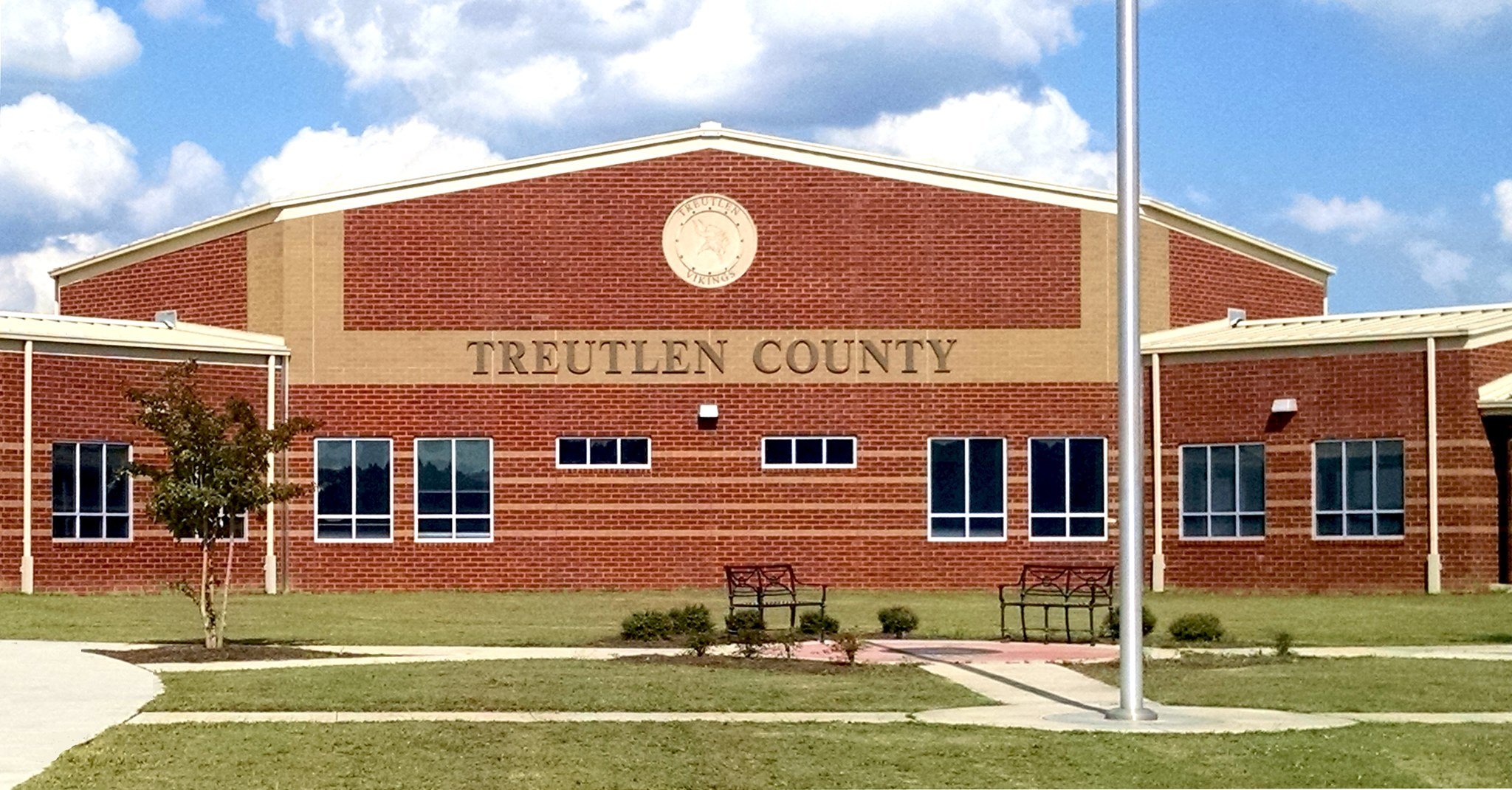
From School Gardens to School Meals: Spotlight on Innovation Mini Grantee Treutlen County School District

By Diana Pena

Diana Pena is the Farm to School Coordinator at the Georgia Department of Public Health.
Pre-pandemic days, the annual Golden Radish Awards recognized Georgia school districts doing exceptional work in farm-to-school.

Discontinued for three years to the pandemic, Georgia Organics and the Georgia Department of Public Health (GA DPH) instead collaborated to establish the Farm to School Innovation Mini-Grants Program.

These funds support farm to school initiatives that:

  • Increase access to local, fresh, organically grown food,

  • Include culturally responsive food and education,

  • Increase local food procurement,

  • And/or benefit Georgia-certified organic farmers in other ways.

After a thorough application process in the Fall of 2021, Georgia Organics and GA DPH selected and awarded 15 Georgia School Nutrition Departments.

We are excited to spotlight our first Mini-Grant Awardee: Treutlen County School District!

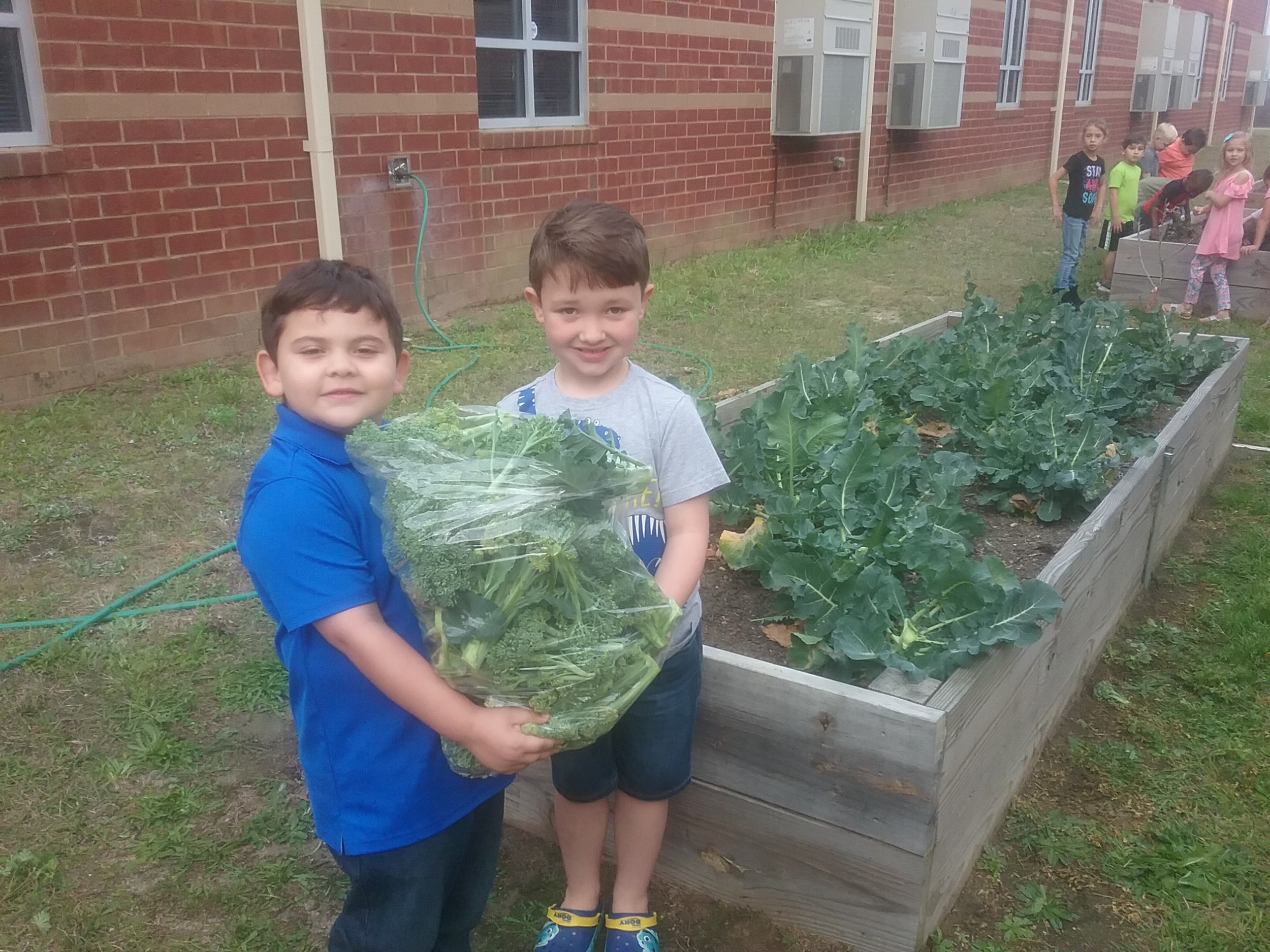
All images courtesy of Treutlen County Schools

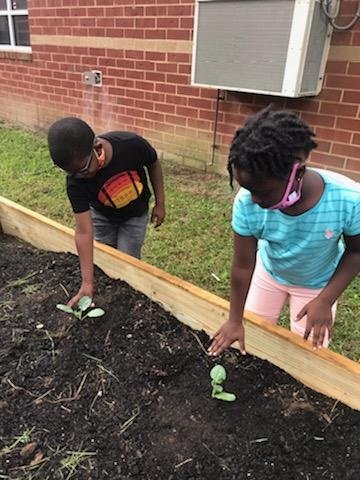
Under Red Barrett’s leadership as School Nutrition Director, the funds will support the school gardens in all the schools and grow produce for school meals in her district. Red has also incorporated school garden activities into the elementary and special education school lessons.

Red has taught Treutlen County School students about what is needed for seeds to grow (water, soil, and sun), about the plants they’re growing, how to adequately space them, how to care for their garden (weeding, watering), and what to do at harvest time. They have also examined soil and compost together.

Images courtesy of Red Barrett

She has made it so that the students are responsible for maintaining the garden, she always makes an effort to tie their garden into the school curriculum.

Red shares that, “Time is our only issue...[due to] the demands of the regular school curriculum...we have those challenges.”

Nevertheless,  they have successfully planted their seeds and are now waiting to harvest the produce!

To learn more about Georgia Organics, visit georgiaorganics.org, and follow them on social media @GeorgiaOrganics and at facebook.com/GeorgiaOrganics. To see updates on Treutlen County Schools, visit treutlen.k12.ga.us/ and follow them on social media at facebook.com/treutlencountyschools.

Farmer Field Day Re-cap of Tractors: Soil Health and Safety with the Little Fox Tractor School

By Kayla Williams

Kayla Williams is a Georgia Organics Farmer Services Coordinator.

Attendees getting ready for a lesson in tractors!

On Sunday Nov. 14, Georgia Organics Farmer Services brought together Little Fox Tractor School and Sedrick Rowe of Rowe Organic Farm for an afternoon of Tractor Safety and utilizing tractors to optimize soil health. 
Sedrick started of the afternoon with an overview of various tractor attachments and their functions in regards to creating optimal soil health conditions.  

Daniel Guzman sharing tractor safety knowledge with the attendees 

Next, beginning and advanced farmers alike gained invaluable experience from Lindy Kloepfer and Daniel Guzman’s innovative and in-depth curriculum on tractor safety. Lindy owns Little Fox Farm, currently located in Douglasville, GA and Daniel has worked for several years nearby at Rodgers Greens and Roots farm. Their combined knowledge made for a teaching style filled with specificity and real world examples.  

Daniel Guzman, Lindy Kloepfer of Little Fox Tractor School and Sedrick Rowe of Rowe Organic Farm.

The Little Fox Tractor school is still holding classes, follow along for more information on their Instagram. You can follow along Sedrick’s journey on Instagram and on their website.  

Organic Certification: The Trace Back Audit

By Porter Mitchell  

Porter Mitchell is a Farmer Services Coordinator at Georgia Organics.

For many fruit, vegetable, and row crop farmers, the records check is the most daunting part of an organic certification inspection. During an inspection, your inspector will review your records. They will perform what is called a “trace back audit,” which some certifiers call a “mass audit.” If they are not able to complete the audit, you may not be able to be certified. But never fear! The trace back audit is not as overwhelming as it seems, and if you keep decent records you’ll be able to pass with flying colors! 

What is a trace back audit?  

A trace back audit is a required component of the organic inspection process. The audit is designed to help prevent fraud and keep the integrity of the National Organic Program. During a trace back audit, your inspector will trace a product from when it left the farm all the way back to when you planted seeds or purchased transplants.  

Your inspector will look at your sales records and pick a crop. Let’s say they pick 20 lbs of arugula you sold during a farmers market. You and the inspector will trace the crop all the way back to seed purchasing and will check your records for each step. Here’s an example of how the process could go: 

Do I need to keep digital or paper records?                                              

Although digital records might be more searchable, paper records are perfectly acceptable and many certified organic farmers use them. Records don’t always have to be written either—photos taken with your phone in the field can be great records, especially since your phone will automatically record the date. 

How long do I have to find a record during the audit?  

Ideally, you would have your records prepared and ready to look through before your inspector arrives—however, you know things aren’t always ideal and your inspector knows too! The National Organic Program rules say you must be able to find your records in a “reasonable” amount of time. What’s considered “reasonable” varies, but a good rule of thumb is about 30 minutes. 

What if the organic inspector can’t complete the trace-back audit?  

Never fear! Your inspector will just move on and try to conduct a trace-back audit on a different product or from another time period. Although the number of attempts varies from certifier to certifier, many inspectors will typically try to conduct three different audits and will record the most complete one. 

If the inspector can’t complete an audit on any product, a few things may happen. Keep in mind, each farm, situation, certifier, and inspector are different, so don’t take the following information as a guarantee. Like most things in farming, the answer is “it depends!” 

If your inspector can’t complete a trace-back audit, they may: 

  • Ask you to send the missing record as a follow-up if you need more time to find the record.  

  • Put a note on your file that you were not compliant to the National Organic Program standard of record keeping and check that you improve your records for next year’s inspection 

IMPORTANT!  

Keep in mind that your inspector CANNOT approve or deny your request for certification. They simply report what they see during the inspection to the certifier. If the certifier decides your records are not adequate to prove that you are following the National Organic Program rules (called “in compliance”) they may deny your request for certification.  

How long do I have to find a record during the audit?  

Ideally, you would have your records prepared and ready to look through before your inspector arrives—however, you know things aren’t always ideal and your inspector knows this! The National Organic Program rules say you must be able to find your records in a “reasonable” amount of time. What’s considered “reasonable” varies, but a good rule of thumb is 30 minutes.

To learn more about Georgia Organics, visit georgiaorganics.org, and follow them on social media @GeorgiaOrganics and at facebook.com/GeorgiaOrganics. 

Holiday Recipes from the Georgia Organics Farm to School Team

Georgia Organics Farm to School Intern Lena Enciso shares much-loved family food traditions from the Farm to School team!

By Lena Enciso 

Lena’s family dinner, photo credit: Carlos Maraviglia

Cooking is one of my favorite ways to connect with the people in my life and show appreciation for my loved ones. I enjoy any opportunity to exchange recipes and learn about the foods other people like to make for their friends and families. Since Thanksgiving is this week, the Farm to School team has decided to share some of our favorite holiday recipes.  

Growing up, I wasn’t a big fan of stuffing. My dad’s recipe had a mushy consistency and flavors I didn’t enjoy. In high school, I took my Thanksgiving stuffing destiny into my own hands and decided I would prepare a different recipe for my family. So, I asked my friends and their families about their favorite recipes and one of their moms told me about this cornbread stuffing/dressing recipe from The Slate. Every year since then, we have prepared both dishes and our family members vote on their favorite (it’s a tie every time, but I choose to believe they’re just protecting my dad’s feelings). 

Diana Peña shared that she doesn’t usually have what some would consider “typical Thanksgiving” dishes with her family. She showed us a recipe for one of her favorite dishes--with a vegan twist that incorporates jackfruit instead of beef! She shared, “Birria (sauce with beef) is one of my favorite Mexican dishes and something my mom cooks on special occasions, however, she has her own recipe (which I do not know), but I found this vegan chef who makes traditional Mexican dishes. This is a vegan birria recipe that I have been meaning to try. She has other dishes as well.”  

Vegan Birria Tacos from Dorastable.com

Kimberly Koogler’s Glorious Greens

Kimberly Koogler, Georgia Organics Farm to School Coordinator, decided to tell us about a recipe for “Glorious Greens,” which comes together in less than 15 minutes. It’s a great way to incorporate more veggies on the dinner table!

She explains, “I learned how to make this when I was working as an AmeriCorps VISTA Garden Coordinator at The Garden Kitchen in Tucson, AZ, where I started learning how to grow food. It's a super quick and easy, yummy, versatile recipe--you can use any hardy green you have on hand.

I like to make it for my family at Thanksgiving (when I get the chance to) to put something green on the table.”

Farm to School Director Kimberly Della Donna shared her favorite cranberry sauce recipe, which has parsley and orange peel to level up a Thanksgiving classic!

Cranberry Sauce by Kimberly Della Donna

She said, “I've been making this since Bon Appetit published it in 2005. It's a good thing everyone loves it- because it makes a ton!

“I usually end up eating it late at night on Thanksgiving over vanilla ice cream- it's one of those transcendent dishes that works for both dinner and dessert.”  

If you decide to try any of our favorite holiday recipes, be sure to share photos over social media with us by tagging @GeorgiaOrganics!

To learn more about Georgia Organics, visit georgiaorganics.org, and follow us on social media @GeorgiaOrganics and at facebook.com/GeorgiaOrganics. 

Grow with Us! A Letter from Alice Rolls

Dear  Farm & Good Food Friends:  

I never want to hear the word “pivot” again! 

The past 20 months of the pandemic have brought head-swiveling change.  We saw food rotting on big farms, global food supplies jam, and processing plants mired with COVID. 

Meanwhile, local farmers markets were flooded with new customers, and small-scale farmers scrambled to meet the demand for healthy food in their own communities.   

The pandemic validated the resilience of the local food movement and our work. That’s why Georgia Organics reinvested in our farmers and communities like never before. 

  • We distributed $100,000 in emergency farmer relief via The Farmer Fund. 

  • We purchased over $200,000 in food from our farmers for Farmer Champion restaurant employees impacted by the pandemic. 

  • We invested $175,000 in local food and farm innovators through our Farmer Accelerator program and community mini-grants. 

This never could have happened without support from our members and friends!  You understand that food is medicine. You know that farmers are central to strong communities, public health, and environmental renewal.  

The pandemic and racial justice movement have challenged Georgia Organics to grow in bold and creative ways.

Thus, we’re excited to share new goals from our freshly minted strategic plan. 

Together with you, Georgia Organics is cultivating a food future that will: 

  • Grow the number of profitable organic and regenerative farmers making a living wage, particularly Black, Indigenous, Latina/o and rural farmers; 

  • Grow a network of influential advocates championing organic farmers; and 

  • Grow capital investment in organic farmers and regional food systems. 

Bold impacts require deep investment.  

We ask you to GROW WITH US and contribute to our goal of raising $50,000 by Friday, Dec. 31.

Will you consider a year-end gift of $120 today? 

Any amount you can give is valued in our mission to invest in organic farmers to nurture the land, your family and our communities.

Pivots are temporary, movements are lasting.

Thank you for giving and growing with us. 
 
In good health,

Alice Rolls
President & CEO

CLICK TO GROW WITH US!

My Farmers Market Experience: Fifth-Grader and Farm to School Fan Aubry Angelety

By Aubry Angelety

Aubry Angelety is a 5th grade student at Burgess-Peterson Academy.

My name is Aubry Angelety, a 5th grader at Burgess-Peterson Academy. I have really enjoyed doing some of the activities and learning about farming.

Aubry Angelety

I love going to the EAV Farmers market each week too. I loved it when we tried okra. My favorite books are all of them! I learned how to grow a pumpkin.

We love getting apples from the market too. I also enjoy looking at the people who are playing music. I got a chance to meet a great baker too. Danny sells Proof Bakery goods. He is so nice. My favorite part of attending is when I can see my friends and play with them too.

I love the farmers market and will continue to go every week with my mom.


From Aubry’s mom:

“Aubry really enjoyed going to the farmers market on Thursdays. Ten straight weeks and several books later she made a friend of one of the vendors, thanks Danny for being so sweet and enjoyed some healthy eats.

Thanks BPA for promoting healthy eating and an appreciation of buying and supporting local.”


Georgia Organics partnered with Community Farmers Market (CFM) to host a “Farmers Market Book Club” this Autumn in Atlanta. Burgess-Peterson Academy and Parkside Elementary students received farm to school activity sheets that featured a farmer they could meet at the market. They were encouraged to do the activities and bring their completed sheets to the East Atlanta Village or Grant Park Farmers Markets to meet farmers and choose a book each week about local food and agriculture.

Jenna Mobley USDA Grant Farmers Market Book Club

CFM also offered students a $5 token for fruits and vegetables each time a student turned in an activity sheet. The program was incredibly popular among students, parents, teachers, and farmers.

Aubry and Connelly, who staffs the Kids Booth at East Atlanta Village Farmers Market

At the time of publishing, students had collected about 1300 books and spent $8845 on local produce. This program is funded by a USDA Farm to School Grant.


To learn more about Community Farmers Markets, visit cfmatl.org and follow them on social media @communityfarmersmarkets.

To learn more about Georgia Organics, visit georgiaorganics.org and follow us on social media @GeorgiaOrganics and at facebook.com/GeorgiaOrganics.

October Farm to School Month: Honoring History & Culture through Farm to School Curriculum, Recap

By Kimberly Koogler 

Kimberly Koogler is the Farm to School Coordinator at Georgia Organics.  

For the grand finale of our October Farm to School Month Wednesday webinar series, we gathered at the Parkside Elementary School garden with Jenna Mobley of Tending Our Common Ground, Tasha Gomes of FoodCorps Georgia, and Suzanne Welander, a founding member of Parkside Elementary School’s garden.

To honor and get grounded in the garden space we were in, Suzanne Welander told us all about the history and evolution of Parkside’s school garden, including all of the many and various contributions made by so many different community members over the past 15 years.

Tasha Gomes Parkside Elementary Garden

We spent a lovely hour together, learning about culturally responsive teaching practices, talking about our favorite meals, exploring how that simple prompt can be turned into a culturally relevant and rich garden project for your whole class that promotes each student’s individual identity and celebrates the diversity in your classroom. 

If you were not able to join us for this, I really encourage you to watch the recording. It will not only inspire you, it will also leave you feeling good. Here are some golden nuggets to take away:  

  • Culturally responsive teaching…  

  • Honors those who came before us and those who are with us presently. 

  • Acknowledges and promotes each of our individual student’s identities and celebrates diversity DAILY. 

  • Engages in student-centered instruction, centered on students’ unique interests, abilities, and life experiences. 

  • Connects to, affirms, uplifts, and validates your students’ family and community traditions and knowledge. 

  • Are you a school garden leader having trouble getting teachers or other school community members engaged and invested in your school garden? Ask them how they want to use it and what they need to do so! How would the school garden best serve them and meet their needs?  

  • A favorite children’s book to open the conversation about food and culture is The Ugly Vegetables by Grace Lin. 

  • Have students catalog what they eat all week in a food journal and/or have them choose a favorite meal. Then you can plan your garden together, choosing plants that make up part of the students’ favorite meals. 

  • There are many opportunities to invite parents into this process, too. 

  • You could compile recipes brought from home into a class cookbook. 

  • Encourage and model for students how to respectfully express curiosity about their peers and their lived experiences.  

Tasha Gomes mealtime traditions (photo by Jenna Mobley)

To learn more about FoodCorps Georgia, visit foodcorps.org, and follow them on social media @foodcorps_ga.

To learn more about Georgia Organics, visit georgiaorganics.org and follow us on social media @GeorgiaOrganics and at facebook.com/GeorgiaOrganics.  

October Farm to School Month: Livin’ la Vida Okra con Mis Pequeños Genios, Recap & Video

En Español y English (scroll down)

Livin’ la Vida Okra con Mis Pequeños Genios—Resumen

Por Kimberly Koogler

Kimberly Koogler es la Coordinadora de Farm to School en Georgia Organics.

El miércoles pasado, el equipo Farm to School se reunió con María Claudia Ortega en su guardería familiar en Marietta, GA, My Little Geniuses para conversar con ella y ver como ella hace Farm to ECE todos los días con sus estudiantes chiquitos.

My Little Geniuses excited about okra!

Maria Claudia teaching knife skills

Empezamos entrevistando a María Claudia para conocerla un poco más, de donde es y de su familia y su trabajo. María Claudia y su esposo, Jesus Silva vinieron desde Colombia, su país de origen, hace aproximadamente 20 años. Vienen de familia agricultora y María Claudia había estudiado la educación especial en Colombia. Llegaron acá y a pesar de que fue bastante difícil empezar de nuevo en un país nuevo, donde el idioma principal es inglés, lograron a abrir su guardería My Little Geniuses dentro de su propio hogar. Con el correr de los años se ha hecho una guardería de gran reputación con un excelente programa de Farm to ECE.

Luego María Claudia describió para la audiencia dos ejemplos específicos de actividades Farm to ECE que ella ha hecho con sus propios estudiantes:

1. El primer de cómo cortar y preparar el okra con los estudiantes para hacer una prueba de sabor de okra frito al “air fryer”

2. Y el segundo de una exploración de hojas diversas y otra prueba de sabor de diferentes hojas de tres maneras distintas.

(photos: onion bed screen shot, garden tour screenshot) Por último, nos dio un recorrido por su huerta donde se cultivan muchos vegetales diversos para utilizar ahí en la guardería diariamente.

En caso de que no pudiera asistir, aqui hay algunos puntos clave:

  • Los beneficios de cultivar y cosechar en un entorno ECE son muchos, incluyendo:

  • La comida que uno cultiva y cosecha por si mismo está mas fresca, segura, sabrosa, y sana.

  • Ya no hay que comprar tanta verdura del super.

  • Es un programa rico y bonito que ofrece oportunidades sin fin de aprendizaje diferentes para los niños.

  • Empiece con algo pequeño, poco a poco, sea constante y diligente, y su programa de educación jardinería crecerá con el tiempo.

  • Toda cosa (literalmente)y cada falla en el jardín es una oportunidad de aprendizaje para los niños.

  • El okra hecho al “air fryer” sale muy rico. 😉

Se puede hacer aderezo “Ranch” de yogurt griego, especies, e hierbas, y a los niños les gusta toda verdura mejor la que tenga “Ranch”.

Un programa de jardinería en un centro ECE queda mejor si se involucran a los padres. Por ejemplo: Maria Claudia nos dijo que la mayoría de las familias de My Little Geniuses son Mexicanas que comen picante, y por eso, cultiva varias clases de chile/pimiento para compartir con ellas.

Echa un vistazo a la grabación para obtener más información sobre My Little Geniuses y su programa modelo de Farm to ECE.

Para obtener más información e inscribirse en Livin ’la Vida Okra, visite bit.ly/livinlavidaokra.

Para obtener más información sobre Georgia Organics, visite georgiaorganics.org y síganos en las redes sociales @GeorgiaOrganics y en facebook.com/GeorgiaOrganics.


Livin’ la Vida Okra con Mis Pequeños Genios—Recap

By Kimberly Koogler

Kimberly Koogler is the Farm to School Coordinator at Georgia Organics.

Last Wednesday, the Farm to School team met with Maria Claudia Ortega at her family daycare center, My Little Geniuses, in Marietta, GA to talk with her and see how she does Farm to ECE every day with her young students.

We began by interviewing Maria Claudia to get to know her a little more and learn where she’s from and about her family and work. Maria Claudia and her husband, Jesus Silva, came from Colombia, their home country, about 20 years ago. They come from a farming family and Maria Claudia had studied special education in Colombia. They arrived here and despite it being very difficult to start anew in a new country, where the primary language spoken is English, they managed to open their family daycare center My Little Geniuses out of their own home. Over time, they have gained a great reputation and have created an excellent Farm to ECE program.

My Little Geniuses making air fried okra.

Then Maria Claudia described for the audience two specific examples of Farm to ECE activities that she has done with her own students:

1. The first one about how to cut and prepare okra with students for a taste test of air-fried okra.

2. And the second about an exploration of different leaves and a three-part taste test of different edible leaves.

Lastly, she gave us a tour of their garden, where they grow a bunch of different vegetables to use daily in their ECE center.

In case you missed it, here are some key takeaways:

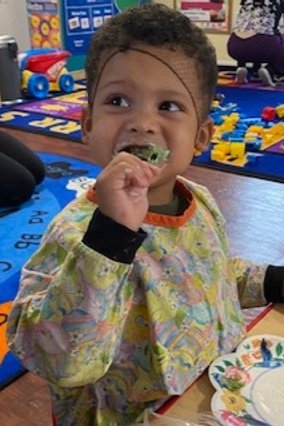
My Little Geniuses tasting okra!

There are so many benefits of growing food in an ECE setting, including:

  • The food you grow yourself is more fresh, safe, tasty, and healthy.

  • You don’t have to buy as much produce from the store.

  • It’s a rich and beautiful program that offers endless different learning opportunities for the kids.

  • Start small, be consistent, and your gardening education program will grow over time.

  • Literally everything and every failure in the garden is a learning opportunity for the kids.

  • Turns out air-fried okra is delicious.

You can make your own ranch dressing using Greek yogurt, herbs, and spices, and kids like vegetables better with Ranch.

Garden tour with Maria Claudia.

A gardening program in an ECE Center is even better with engaged parents. For example, Maria Claudia told us that the majority of My Little Geniuses’ families are Mexican and like spicy food, so she grows several different varieties of hot peppers to share with them.

Check out the recording to learn more about My Little Geniuses and their model Farm to ECE program.

To find out more about and sign up for Livin’ la Vida Okra, visit bit.ly/livinlavidaokra.

To learn more about Georgia Organics, visit georgiaorganics.org and follow us on social media @GeorgiaOrganics and facebook.com/GeorgiaOrganics.

Welcome, 2021-2022 Accelerator Farmer Cohort!

Written by Kayla Williams

Kayla Williams is a Farmer Services Coordinator at Georgia Organics.

When a small-scale independent farmer sets out to run their own operation, there are typically several barriers to them running a successful business, having a good work-life balance, and ensuring that the plants/animals are being taken care of. Farmers suddenly become soil scientists, bookkeepers, a marketing agency, the human resources department, food safety specialists and so much more. More often than not, farmers do not get access to a support system that addresses the specific challenges they face. They are often isolated in rural places with little time to rest, nurture their mental health, pay all the various bills that pile up, and fix equipment that keeps breaking.

The Georgia Organics Farmer Services team supports farmer members in a variety of ways: providing emergency relief funds, assisting farmers to get access to free healthcare, facilitating networking opportunities for farmers to build community, hosting technical workshops, subsidizing fees for the USDA Organic Certification process and the Accelerator program.

Michael Wall, the director of Farmer Services, designed the Accelerator program with “going an inch wide and a mile deep” in mind. Although the program only accepts ten farmers per year, the case managers form deep relationships with the cohort through monthly check-ins and periodic check-ins after the year-long program is up. In addition to accessing this Georgia Organics support system, the farmers have the opportunity to get to know other cohort members and professional consultants, hopefully forming connections beyond Georgia Organics and their time in the program.

In spring 2021, the Georgia Organics Farmer Services team accepted the second Accelerator cohort. The ten cohort members were chosen from a pool of approximately sixty Georgia farmers who applied for the Accelerator program. The year-long program begins with the cohort members getting matched up with a Farmer Services staff member, which will serve as their case manager. Afterward, an intake process is conducted to determine the cohort farms’ key needs, opportunities and challenges. Through coaching with farm experts, conversations with their case managers, and research, the farms can spend up to $9650 on their operation. With approval from the consultants and case managers, farmers have chosen to spend this investment capital on everything from compost to tractor implements, automatic greenhouse watering systems, and tarps. In reality, many investments change a farm’s ability to be successful.

Speaking of success, the Farmer Services team hopes to move towards understanding what it looks like for a farm to be successful through the Accelerator program’s data collection before, during, and after the farm is a part of the program. From a stress assessment to the farms’ revenue and surveys on how the infrastructure investments have benefitted the farmers’ (physically? mentally? time-saving?), the Farmer Services team is interested in ensuring that this program is as effective and impactful as possible. A member from the 2020-2021 Accelerator cohort said during their exit interview, “For us, it did exactly what it set out to do. It gave us an acceleration… You learn so much about specific things you need help but don't spend your money on…We felt so fortunate to be benefactors of the Accelerator program.”

Without further delay, please give a warm welcome to our 2021-2022 Accelerator Cohort!

Bread and Butter Farm in Monroe, GA follow them on Instagram and Facebook

Bread and Butter Farm courtesy of Kayla Williams

Bugg Farm in Pine Mountain, GA follow them on Instagram and Facebook

Chattahoochee Queen in Atlanta, GA follow them on Instagram

Chattahoochee Queen courtesy of Kayla Williams

Heritage Farm on Sapelo Island, GA Learn more in this article

Ladybird Farm in Hull, GA follow them on Instagram and Facebook

Ladybird Farm courtesy of Kayla Williams

Levity Farms in Madison, GA follow them on Instagram and Facebook

Rag and Frass Farm in Jeffersonville, GA follow them on Instagram and Facebook

Starlit Roots Farm in Keyesville, GA follow them on Instagram and Facebook

Sunbird Flowers in Lithonia, GA follow them on Instagram and Facebook

Sunbird Flowers courtesy of Sunbird Flowers

Vesterfield Farms in Cochran, GA follow them on Instagram and Facebook

Stay tuned for a deeper dive with each farm over the next several months. Stay in touch with Georgia Organics on social media @GeorgiaOrganics and at facebook.com/GeorgiaOrganics


October Farm to School Month: The Secret Succotash Society, Recap

By Kimberly Koogler

Kimberly Koogler is the Farm to School Coordinator at Georgia Organics. 

Next in our webinar series line-up on October 20 is Livin' la Vida Okra con Mis Pequeños Genios presented in Spanish by Maria Claudia Ortega of My Little Geniuses and Lena Enciso of Georgia Organics and translated to English by Kimberly Koogler of Georgia Organics.


Today is your special day because we’re freely offering to you the steaming secrets of an American treasure, a most satisfying succotash. Welcome to this high society!

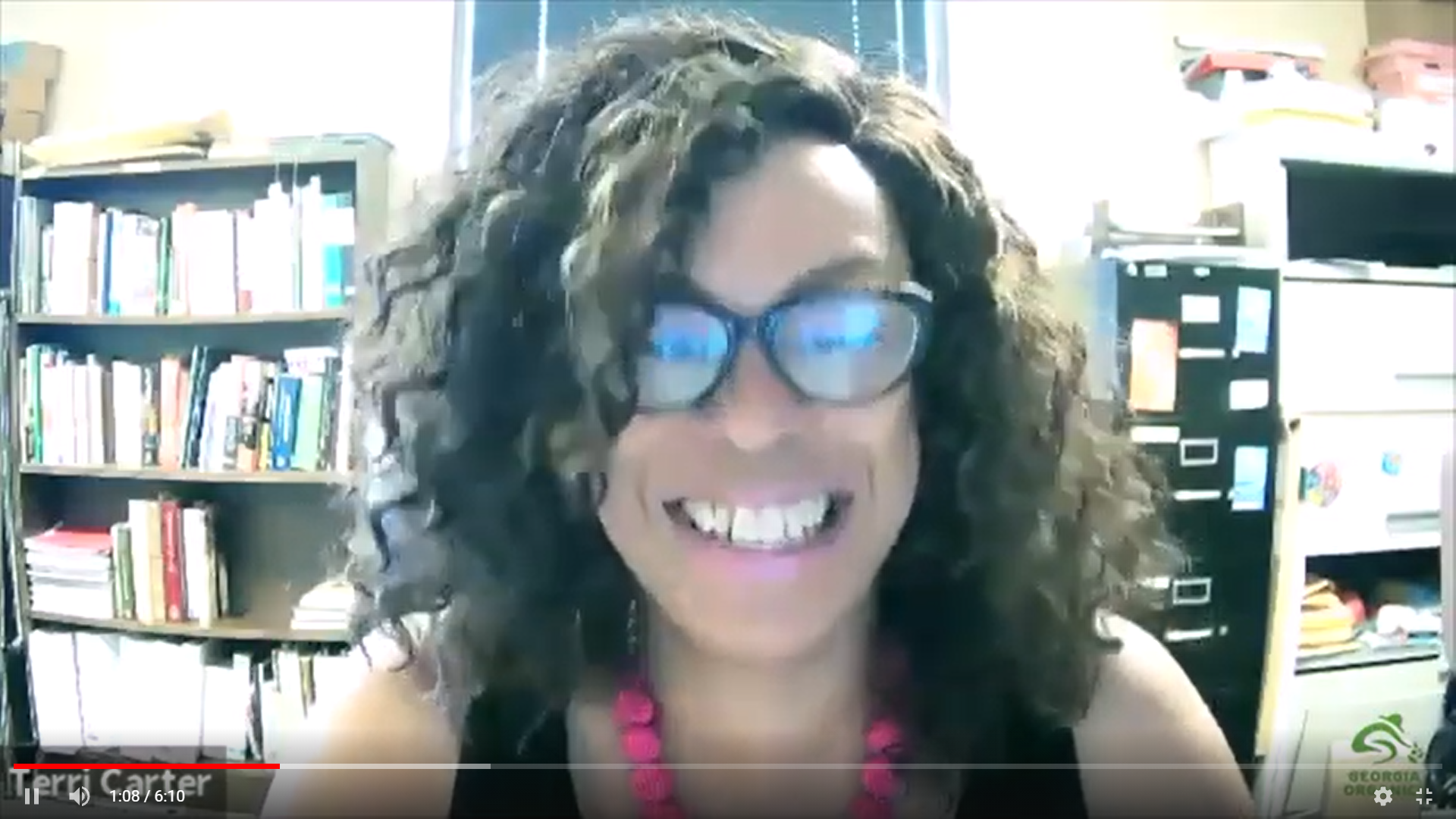
In case you missed it, The Secret Succotash Society gathered last week, and the not-so-secret secrets of “suffering succotash” were revealed. Cobb County UGA Extension Agent, Master Gardener, and Food Historian, Terri Carter (pictured below) beautifully laid out some of the intriguing and important histories behind both okra and the old, multicultural dish called “succotash.”

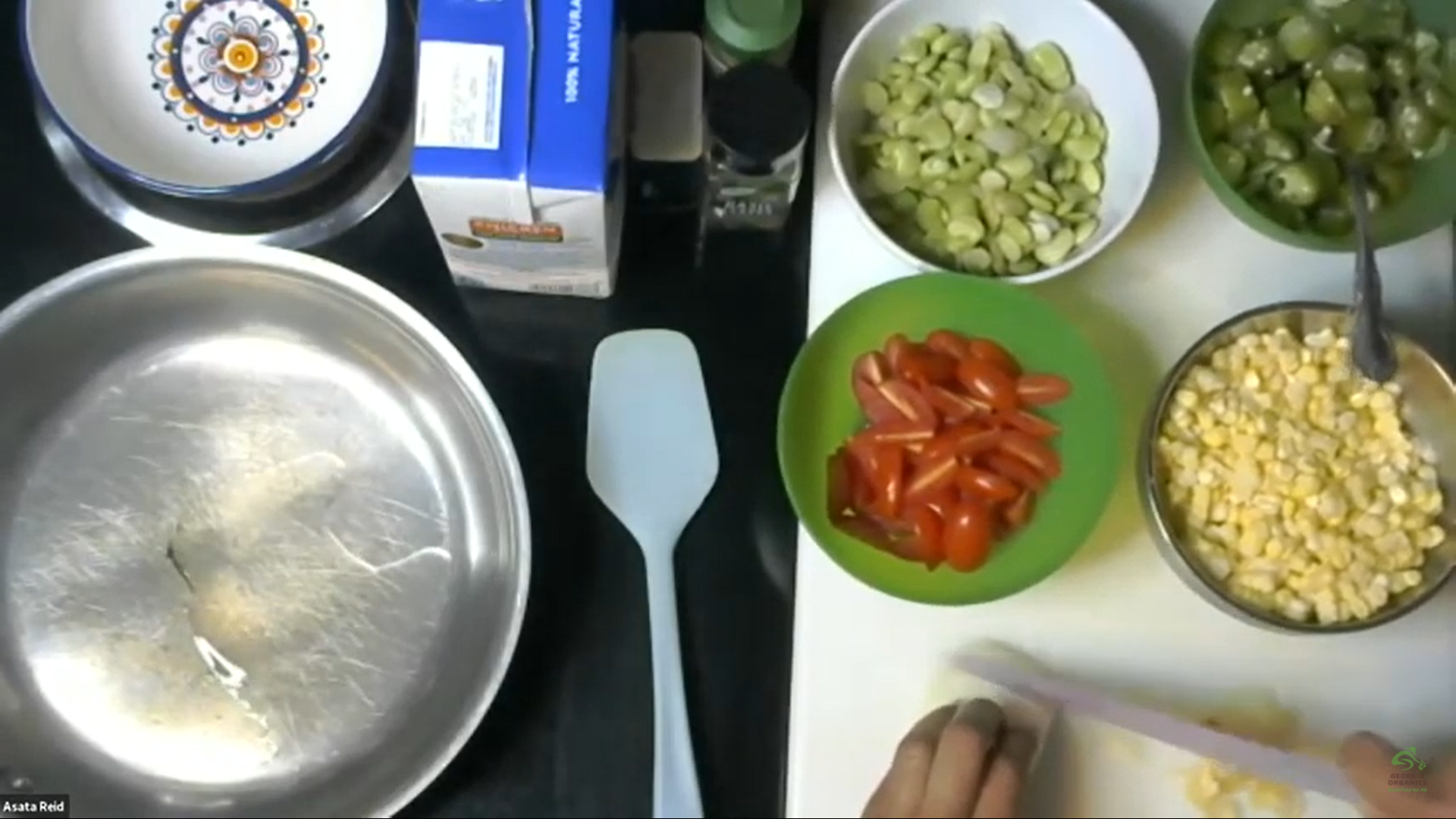
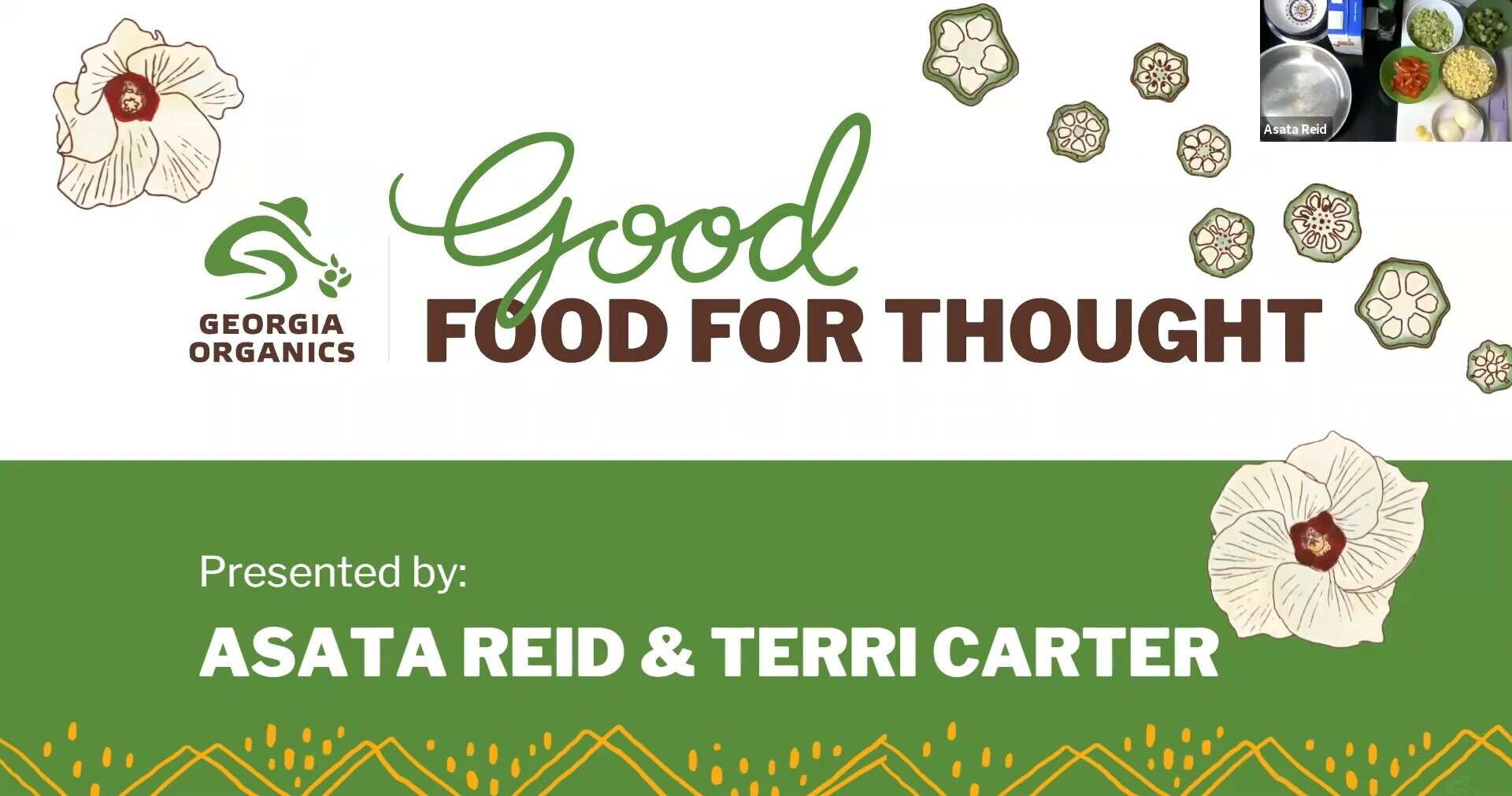
Chef, Author, and Health Educator, Asata Reid gave to us a live demonstration of how to cook succotash, made our mouths water, and shared with us some culinary secrets as well as some suggestions for incorporating cooking into curriculum and/or curriculum into cooking.

Here are some key takeaways, but seriously, check out the recording of this presentation (scroll down!) to make sure you get all the juicy bits:

  • Africans, kidnapped and forced into slavery brought okra to the Americas.

  • Explore the different names around the world for okra and how okra is used in different cultures.

  • Succotash, introduced to struggling colonial immigrants by the Narragansett people, was born out of the genius Native American technology and system of planting known as the “three sisters”. The basic elements are corn, squash, and beans. This brilliant combination of legumes and whole grains provides the amino acids your body needs to create complete proteins.

Culinary secrets:

  • To avoid okra slime, cook fresh, whole okra quickly, just until bright green and still firm.

  • Or cook okra longer in stews so that it becomes part of the sauce and thickens the stew.

  • Make sure you use a heavy pan (it’s better for caramelization and it’s safer in the classroom).

  • Don't overcook your corn!

  • Use lots of smoky paprika for flavor if you’re not going to use bacon or sausage.

  • A whole lot of black pepper is the secret to Southern cooking.

  • Serve your succotash over rice for a super sensational and satisfying, not-at-all-suffering, nutrient dense meal.

  • This simple dish is bursting with opportunity to learn and teach: history, culture, social studies, math and science, measurements, chemical reactions, emulsification, knife skills, exploration of shapes, size, contrasting colors…

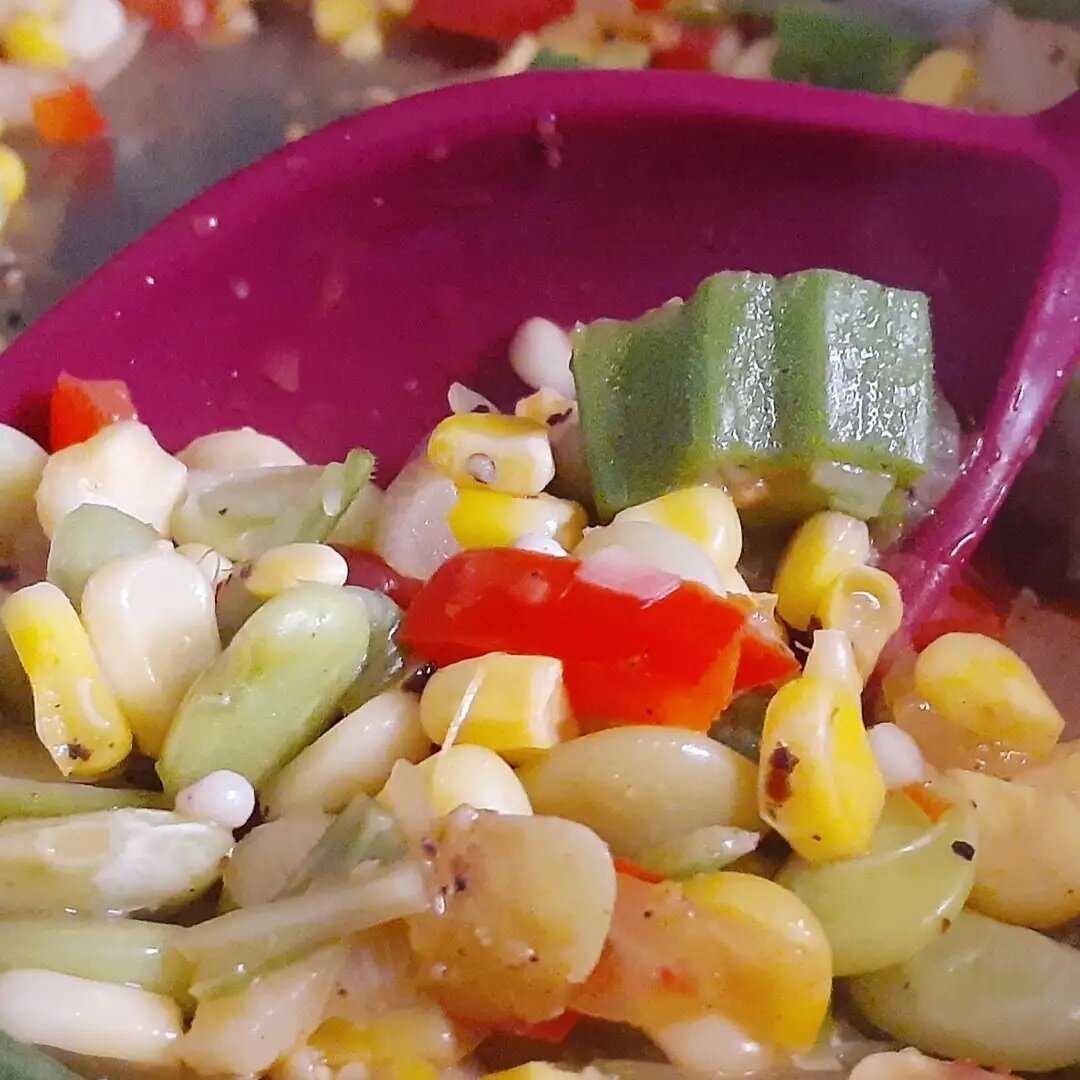
Here is the recipe and scroll down or click here to check out the recording!

Next in our webinar series line-up on October 20 is Livin' la Vida Okra con Mis Pequeños Genios presented in Spanish by Maria Claudia Ortega of My Little Geniuses and Lena Enciso of Georgia Organics and translated to English by Kimberly Koogler of Georgia Organics.

To see all of our upcoming Good Food for Thought events, visit georgiaorganics.org/virtual-events.

To learn more about and sign up for Livin’ la Vida Okra visit bit.ly/livinlavidaokra.

To learn more about Georgia Organics, visit georgiaorganics.org, and follow us on social media @GeorgiaOrganics and at facebook.com/GeorgiaOrganics.

Georgia Food Oasis Mini-Grantee Spotlight: Marigold Market

By Suzanne Girdner

BACKGROUND: Marigold Market (marigoldmarket.square.site) received a Spring 2021 Planning Grant and a Fall 2021 Implementation Mini-Grants through Georgia Organics’ community outreach initiative, Georgia Food Oasis. 

Marigold Market:

LEADERSHIP: Sherrie Anderson, Farmers Market Manager; Laura Ney, UGA Clarke County Extension Agent; Dodd Ferrelle, Mayor of Winterville

FUNDING: Funds were used to assist with launching in-person activities, marketing outreach, and market coordination.

Lydia Engelsen of Sungate Farm

Lydia Engelsen of Sungate Farm


WINTERVILLE—At first glance you may think Marigold Market is a quaint Saturday farmers market at Pittard Park that’s always been there—not a market only in its second season.   Launching in the pandemic Spring of 2020, Marigold was immediately forced to pivot to a pre-order drive-thru market.  And then relaunched in Spring 2021 as traditional in-person farmers market.  Like many markets it’s been a challenging season of reinvention but luckily Marigold Market has an experienced and resourceful market manager Sherrie Anderson volunteering her time and expertise to meet an array of challenges still unfolding as a grassroots market and food hub. 

Sherrie Anderson and Mayor Dodd Ferrelle

Sherrie Anderson and Mayor Dodd Ferrelle

After surviving and witnessing the enthusiasm for the market in 2020, Anderson realized many of the Marigold Market farm partners were very small-scale farmers who had barriers to access marketplaces.  Many farmer partners could not afford to sell at other farmers markets due to vendor fees and smaller crop volumes.   Anderson also notes that their farm partners are predominately woman, Black or Brown-owned farmers and/or market-gardeners. This prompted Anderson and UGA Athens-Clarke County extension agent, Laura Ney to think about additional ways Marigold could facilitate market opportunities for these small-scale farmers—what if Marigold Market operated with small-farmer prosperity as its cornerstone?  What if Marigold Market became a hub of market opportunities for these farmers and small food businesses?

This was an idea that well-aligned with Mayor Dodd Ferrelle’s aspirations of attracting more small businesses into Winterville, a small city next to Athens that lacks a full-service grocery store and reliable public transport.  Winterville residents must drive several miles into East Athens for weekly food shopping and needs. Mayor Ferrelle began to think about ways to leverage existing assets to foster more economic activity while meeting the food access needs of residents.   What if Marigold Market was the opportunity to address both of these needs?

Marigold leadership quickly aligned their visions for Winterville residents and nearby farms, and during its first and second market season installed cold storage in a former park pavilion at Pittard Park. Marigold Market food hub was born in the winter of 2021, and is a place for farmers and local organizations to safely store produce.  At the same time Marigold applied for and received a commercial kitchen license for an adjacent kitchen pavilion at Pittard Park so farmers and food entrepreneurs had an immediate space for creating value-added products. The day I visited with Marigold, Sungate Farm was finishing three small batches of salsa with an overabundance of tomatoes.

Cold storage in a former park pavilion at Pittard Park, Marigold Market food hub

Cold storage in a former park pavilion at Pittard Park, Marigold Market.

As Marigold progresses through the second season, they continue to refine and develop a plan for making Winterville a hub for small-farm businesses.  I visited Sherrie Anderson to see and learn more about the personality of the market and farm partners, and how Winterville is transforming big ideas into local action:

Tell us a little about yourself?

Sherrie: I’m a Native Floridian that moved to Athens in 2012 and earned Bachelors in Business Administration and Leadership.  In free time I love to read, go for hikes, and thoroughly enjoy sunsets and waterfalls. I’ve always been involved with volunteering and community service opportunities wherever I’ve lived because fostering community connection is important to me. Being a mom of 8 and grandma to 9 keeps me busy and blessed. I love watching super-hero movies and TV-shows because you see so much leadership in their characters in how they make hard choices.  My other creative outlets are sewing and playing the piano.

Why are you a local food activist/advocate?

Sherrie: I have been food insecure, so I know what it’s like. That experience solidified my belief that everyone absolutely deserves fresh healthy food without any form of discrimination.  There should be no shame in procuring food—people are often working very hard but do not have enough money to buy the food they need, and they feel ashamed they cannot purchase what they need.  My vision for Marigold and the Winterville community is to facilitate an experience were everyone can participate and add value to community food projects whatever their means. We see value in what life skills people may have developed, maybe it’s time and transportation for food distribution, or simply volunteering at market, or helping a farmer gather produce.  We want residents to find ways for themselves to contribute in a way that fits their life and talents while it builds up our community. 

A favorite way of celebrating with food?

Sherrie: I love getting in the kitchen, making things up and just seeing what happens. Just allow your creativity to flow.  I do not follow recipes—and today, a few of my kids are the same way.  One time I remember buying an ice-cream cake that said “every day is a day worth celebrating.”  Isn’t that’s such a good mantra to take to heart, how can our busy culture step away and cultivate more celebratory meals and moments in an everyday sense? 

DeijhonYearby of Cozybear Market Garden

DeijhonYearby of Cozybear Market Garden

How would you describe the market?

Sherrie: Marigold is a very happy market, and we try really hard to head off any signals of stress.  Everyone is very helpful. There’s a beautiful spirit of helping one another versus competing with one another. There’s a sense of comradery farmer to farmer, vendor to vendor. Of course, Winterville and Pittard Park is just a very peaceful and idyllic location for a market with lots of shade, a playground, pavilions, basketball, trails, and more. We are also just off the Firefly Trail, too.

Explain how the partners work together—UGA extension, the City of Winterville, Envision Athens, and Sherrie?

Sherrie: Envision Athens and City of Winterville started collaborating in 2019 on fresh food access in the area. In early 2020, Mayor Ferrelle and Laura Ney from UGA Extension hosted a meeting at the train depot for farmers.

When I attended that meeting, I thought I would volunteer in a minor support capacity. It didn’t take long to realize the Mayor’s vision that all citizens should have access to local, affordable, fresh food so they can live their best life aligned with my passion. He advocates on behalf of Market at City Council and with local businesses. UGA helps with research and fine details of executing the market. I bring the vision to life on a daily basis. You could say we are the three musketeers of the market with our passion, commitment, and fortitude.

Jean Young of Freedom City Gardens

Jean Young of Freedom City Gardens

What does success look like for the market in 1 year?  3 years?

Sherrie: Higher SNAP/EBT redemption and more diversity of customers at market.  In a year that looks like having better representation of the community at the market, so it reflects the inclusivity we seek. In 3 years expand into a new commercial kitchen space to better facilitate food recovery and support of value-added food producers.

There’s been a demand for this for a long time which only continues to grow. We would like to facilitate a sustainable local food system that will also benefit the local economy for years to come.

How can people—farmers, consumers, businesses get involved?

Sherrie: Vendors and farmers don’t have to be a vendor at the market to participate in food hub development. It is easy for them to offload or drop off any fresh food that might get composted after a market day in Athens or Atlanta. We would love more local businesses involved and look for ways Marigold can partner with them—financial or in-kind, or ways to cross pollinate our economic activities.

We are so thankful for the consistency of our consumers. One way they can help is to spread the word via their social media and word of mouth. If you’d like to attend or get involved email marigoldmarketwinterville@gmail.com to learn more.

Any special features you’re especially proud of or would like to highlight?

Sherrie: Mayor’s vision of rethinking the traditional farmers market and making it accessible to everyone—we support just compensation of farmers but also seek to meet the needs of our residents. 

I was once told you have to pick a side in the local food system, ‘you’re either an advocate for farmer; or you’re an advocate for consumer.’  And I wholeheartedly disagree. We strive to challenge the stereotypes and ways of doing things to make a more inclusive and viable food system for all.

Anything else you’d like to add?

Sherrie: Winterville is Gilmore Girls meets Mayberry, it’s such a great community.  Please come visit us on Saturdays, 10-2, at Pittard Park.