Farm to Restaurant In Conversation: Local Lands and Arnette's Chop Shop

By Lauren Cox

If you know Local Lands and Atlanta Harvest, then you know that these two farms, owned and operated by the Ysrael family, make up a deeply-rooted and community-based part of our Georgia good food community. It may come as a surprise to discover that it was less than 10 years ago—2010, to be exact—when they packed their bags in Pennsylvania and moved down South.  

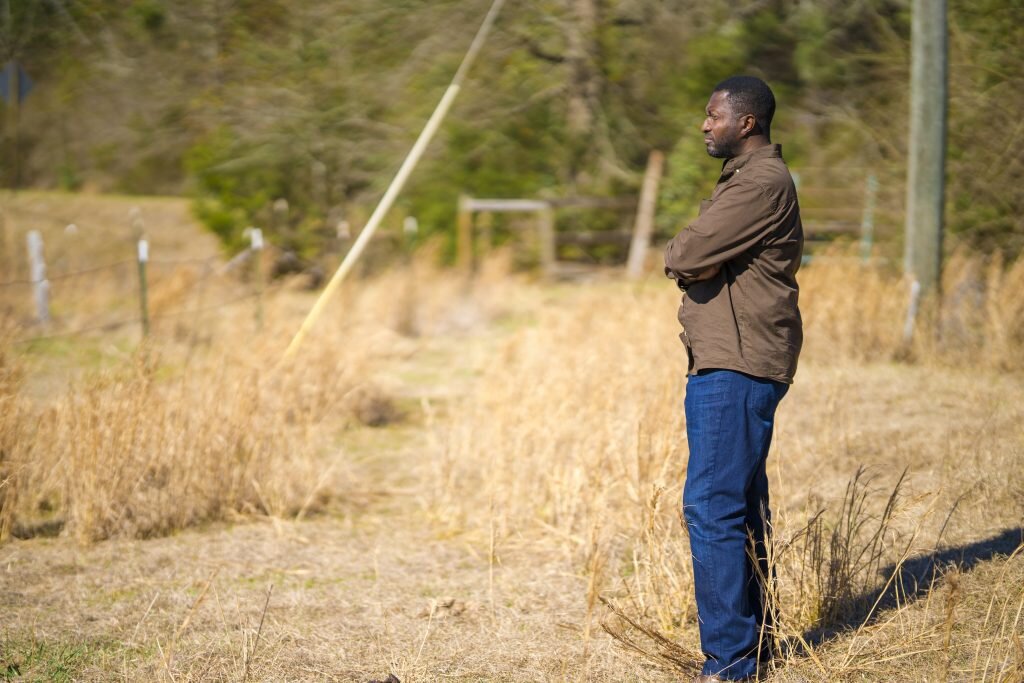
EliYahu and Asa Ysrael at Local Lands. Photo: MSNBC.

EliYahu and Asa Ysrael at Local Lands. Photo: MSNBC.

Steven Herman of Arnette’s Chop Shop.

Steven Herman of Arnette’s Chop Shop.

This tidbit of knowledge was a common thread and bonding point for Arnette’s Chop Shop chef and owner Steven Herman the first time he was approached by Asa Ysrael to see if he was interested in sourcing local produce for the restaurant. “We instantly bonded over being Georgia transplants and our relationship has continued to deepen ever since.”  

In this Zoom interview with Farm to Restaurant farm Local Lands (Atlanta Harvest), EliYahu Ysrael and chef Steven talk about the importance of farmers and chefs working together to transform the local food movement. “It all boils down to relationships and the mutual respect we have for one another’s work,” EliYahu says. “We’re both super busy people with so many balls in the air that sometimes it’s hard to slow down and make time just to talk but that, ironically, is one of the most important things you can do as a farm trying to sell to a restaurant.”  

Check out the conversation here…

To learn more about the Farm to Restaurant program, visit farmtorestaurant.georgiaorganics.org/

Connect with Local Lands: https://www.locallands.net/

Connect with Arnette's Chop Shop: http://arnetteschopshop.com/

Hometown Harvest: An Heirloom Garden for Food and Appalachian Heritage

By Yaza Sarieh

Purple potatoes. White cucumbers. Heirloom tomatoes. While you may have never come across these produce varieties, they have been harvested for decades in the Appalachian Mountains of Georgia. The Hometown Harvest project in Lumpkin County, Georgia is an heirloom garden intended to preserve produce unique to this region while educating children about nutrition and the ancestral foods grown in Appalachia.  

During the summer of 2019, University of North Georgia Biology and Ecology Professor Dr. David Patterson and his wife were delivering meals to schoolchildren in Lumpkin County. While interacting with the children and their families, Dr. Patterson noticed that they did not have any access to fresh produce. He began to work with Lumpkin County School Nutrition Director Julie Knight-Brown, who has worked around the state for over 16 years in childhood nutrition and wellness. While striving for the Golden Radish Award, Julie was exploring ways to increase wellness, food, and nutrition education in all aspects of school programs.  

Photo courtesy of Hometown Harvest.

Photo courtesy of Hometown Harvest.

“Every School Nutrition Director hopes to get a Golden Radish Award each year. Students in Lumpkin County have a very hands-on educational experience, and I wanted to find ways to incorporate that with nutrition” said Knight-Brown.  Hometown Harvest

In collaboration with Dr. Rosann Kent in the Appalachian Studies Department at the University of North Georgia, Dr. Patterson and Julie began the Hometown Harvest Project to supply Lumpkin County Schools with a surplus of fresh fruits and vegetables, while propagating heirloom seeds to support the preservation of Appalachian food heritage.   

Hometown Harvest is not just any community heirloom garden. It is a space for students to experiment with the latest gardening technologies and best gardening practices for school and community plots. The Hometown Harvest heirloom garden utilizes a precision agriculture system, which takes daily readings on the garden to determine crop needs, such as the pH levels of the soil or the amount of water necessary for ideal growing conditions. Additionally, the garden uses a rainwater system, which helps to cut the cost of utilities. These strategies have made it possible for the Hometown Harvest garden to supply fruit and vegetable donations, while also maintain the garden without large expense.  

Photo courtesy of Hometown Harvest.

Photo courtesy of Hometown Harvest.

Photo courtesy of Hometown Harvest.

Photo courtesy of Hometown Harvest.

Students in Lumpkin County have experienced the garden in multiple ways. Hometown Harvest has provided over 150 pounds of fresh produce for school meals in Lumpkin County. Their favorite food from the garden has been the cherry tomatoes, which can be found at the cafeteria salad bar alongside other crops such as spinach, broccoli, or kale. The garden produce has provided students the chance to try unknown fruits and vegetables, such as kohlrabi or rutabaga, in addition to experiential learning opportunities. For instance, students used the garden to conduct experiments about pollinators and their importance to plant life cycles. Hometown Harvest has been a source of enrichment not only for student’s health and nutrition but also for real world application of classroom knowledge.  

The Hometown Harvest project has enabled students not only to learn about growing their own food but also to grasp the importance of nature in Appalachian heritage. This heirloom Garden has engaged members of the Lumpkin County community from all walks of life, with individuals coming together to plant seeds that have been passed down for generations and to tell stories about regional traditions and practices. As an ecologist, Dr. Patterson has found it interesting that the knowledge of gardening is inherent among many community members.  

He mentioned how many of the school lunch workers have contributed key insight into growing and harvesting produce without any formalized training, reflecting, “The staff from the Lumpkin County School System have a rich history in gardening and they come to the heirloom garden to tell me everything I should be doing for the crops. They have lots of tricks in terms of planting and harvesting, and I enjoy learning from their knowledge.”   

Screen Shot 2020-10-02 at 11.11.39.png

Additionally, he discussed how many heirloom seeds have evolved over the generations because various individuals have artificially selected plant traits and propagated new produce varieties without even realizing it. Dr. Patterson cited the rich bean tradition as an example of this phenomenon—Appalachian families have been growing their very own unique bean varieties that can only be found in this region of the world.

The most rewarding component of the heirloom garden for Dr. Patterson and Julie has been the opportunity to introduce children to new types of produce while making fresh fruits and vegetables more accessible.  

Julie acknowledged, “I love being able to feature the garden produce in the schools. It is a great way to connect the kids with the community and show them new vegetables they may have never known about. They are even educating their parents on the healthy produce they try at school!”  

Furthermore, it has united the community during the COVID- 19 pandemic, as dedicated volunteers have continued gardening and spreading knowledge of Appalachian culture.

If you are interested in creating a garden at your school, Dr. Patterson and Julie recommend reaching out to others—both kids and community members. Try engaging your student’s interest and planting produce that they would be excited to eat. Additionally, contact other gardeners, schools, or organizations such as Georgia Organics, to learn about starting a garden and get support for your project. The Hometown Harvest project in Lumpkin has been an amazing way to supply food and to connect folks through a garden that will continue to keep on giving for generations to come.  


For more information or to get involved, please contact Julie Knight-Brown with Lumpkin County Schools at julie.knightbrown [at] lumpkinschools.com. 

Yaza Sarieh is a contractor for Farm to School at Georgia Organics. To learn more about Georgia Organics, visit www.georgiaorganics.org and follow us on Instagram @GeorgiaOrganicsTwitter @GeorgiaOrganics, and at www.Facebook.com/GeorgiaOrganics. 

Farm to School Month Educator Spotlight: Jenna Mobley

By Caroline Croland

Fall is in the air, and Georgia Organics is excited to kick off our October Farm to School month by talking to a seasoned farm to school advocate and expert educator about how to engage kids around eating healthy foods.    

Jenna Mobley is truly a farm to school rock star, and we’re so grateful for her work educating and engaging with young Georgians around healthy, local food.

Jenna Mobley and student. Photos courtesy of Jenna Mobley.

Jenna Mobley and student. Photos courtesy of Jenna Mobley.

“Farm to School Month is all about creating access points for educators that maybe don't see themselves as having a green thumb or have never taught in a classroom. People tend to worry that they don’t have enough experience with gardening, or don't know how to cook—all of that is okay! All of this work is accessible to everyone at all experience levels and interest levels,” says Mobley.  

Jenna received the Presidential Innovation Award for Educators from President Barack Obama in 2015. She began her career in education in 2008 and has since become a leading provider and advocate of increasing educational resources in the areas of social justice, food access, and environmental education.  

As a grade-school teacher, Mobley was struck by what a powerful tool food could be in the classroom and what a profound impact being in the garden had on her students. The passion and excitement she observed in her students around activities was undeniable.

“I could just tell that this was the sort of context where the kids were genuinely curious, engaged, and excited about the academic concept that we were learning,” said Mobley.  

Georgia Organics is lucky enough to have Jenna as one of our teacher trainers.  

Jenna5.PNG

“Jenna Mobley is the teacher we all wish we had as a kid, and the one who truly gets us as adults. She's a fantastic teacher of all age groups and helps our farm to school team train educators across the state of Georgia. Jenna brings lessons to life; whether she's cutting fruits into fractions, turning taste tests into theme paper topics, or simply sharing her love of growing gardens. We are thrilled to have her on our Georgia Organics Farm to School team,” says Kimberly Della Donna, the Farm to School Director at Georgia Organics.  

We sat down with Jenna over Zoom to talk about what drives her work, her journey with Farm to School, tips on how to get kids excited about eating healthy…and alien spaceships in the garden.   

Can you tell us a little bit about yourself, your background, and what drew you to your work in education and food access?   

Absolutely! I have been a public school teacher for 12 years. I worked primarily in Atlanta Public Schools as a first-grade teacher, second-grade teacher, and then a fourth-grade teacher.  

I currently work as the Education Director for Community Farmer's Markets, and I am also a teacher trainer for Captain Planet FoundationLife LabFoodCorp, and Georgia Organics.  

The first unit to inspire me in this work was a Johnny Appleseed unit that I was teaching to my first-grade class. I quickly realized that food was the one thing that every single one of my kids could get excited about, every single one of my kids regardless of background or their prior knowledge all got excited about eating together.  

First grade standards also include George Washington Carver, so we followed that up with a lesson on growing sweet potatoes, which we planted in May. Then when they came back as second graders we would go back out there and harvest them. It was truly such a light bulb moment because every child absolutely loved being outside, loved being in the fresh air.  

I could just tell that this was the sort of context where the kids were genuinely curious, engaged, and excited about the academic concept that we were learning. They also had a lot fewer behavior problems. Not only because the kids were excited, but also because they were getting a chance to move their bodies and practice their fine motor and gross motor skills. I was excited to see them eating better off the cafeteria line. There were just these amazing outcomes that came into play. It was also an opportunity to get the parents more involved—we formed a Wednesday group where all the grandparents came to weed up the garden with us on Wednesday.  

Jenna3.PNG

Teaching through food brought about all these amazing things within my little 28 kids in my classroom year after year after year, so I kept growing with it. My passion for the work grew over the years, and eventually, President Obama awarded me the Presidential Innovation Award for Educators in 2015. That’s when I started doing teacher training all over the country and began focusing my work more on curriculum development. It was a real big shift when our president at the time took the effort to acknowledge one little teacher in her one little sphere, and now I feel like the work has been able to reach a lot more people.  

With all of the upheaval in education created by the COVID-19 pandemic, what does the future of Farm to School education access look like?   

There are a couple of big things that have changed. One thing is that a lot of this experiential sensory learning used to happen at schools and with teachers. They were the folks that were in there, had access to these kids, and these materials and could create these experiences together.  

With the onset of the pandemic, that has shifted profoundly. Now we have homeschool teachers, pod leaders, tutors, mentors, parents, caregivers, and after school caregivers taking on a much bigger role in a child’s day to day learning. We have so many different adults that are working with children now that this work can be extended throughout our communities in a really beautiful way. We're reaching a lot of folks that maybe did not know about farm to school before, or have never thought about using food as a mindfulness and learning tool. It’s very exciting actually that now that work is spreading deeper into these communities instead of just being focused on teachers.  

When we talk about what is shifting, it's hard to tell what will also shift back. One of the things that have shifted right now is that, as a teacher, I am not the one gathering the materials for 28 children. Instead of me gathering all the apples and having all the apples ready to go, I will tell the kids and the caregivers about a week in advance that we are going to do a taste test with apples. I am intentional with telling them that I want to see if all of you guys can go out into your communities, go to the grocery store, go to the farmers market, and see if you can have an apple ready for our lesson on Tuesday.  

We're still doing the different exercises, we're still estimating the diameter then measuring the diameter. We're still doing our fractions and cutting up in different parts to share with our friends. We're still using all of our senses and writing our thoughts about apples. We're still doing all those things, we're just not in the same room. That's been pretty neat to sort of figure out how to put that piece of finding your materials on the caregivers and students when it's accessible.  

Jenna2.PNG

Of course, it is created some barriers where we come up with solutions to where we can deliver some of these things to the home so that everyone still has equal access. For those who can access local food that has the privilege of a schedule and transportation to get to local farmers markets, it has been a nice push to get them to local farmers markets to try it out, to meet farmers to get a certain apple so that they can come together with me to do this lesson plan.   

But, in a lot of ways, this has created equity gaps or has continued to perpetuate these equity gaps. And I think that's something extremely important for farm to school work to be thinking about. For all these opportunities that we offer, we need to have the materials available to address the gaps as well.   

Since the pandemic began and schools closed, many parents and caregivers are finding themselves taking a more active role in the day to day education. Could you give our readers tips on how to best engage kids with lessons around healthy eating?    

Parents and caregivers are absolutely the experts on their kids and feeding their kids. And they do it all day every day. It can be tricky and challenging because kids of all ages, including the senior citizens that I work with, can find trying new foods to be scary.  

I think one of the starting places would be to always remember that it can take kids many opportunities to try something. And to not just try it through eating, but to experience something in different ways before they are ready to do something like stick it in their mouth.  

This could be reading a book about turnips and growing turnips and painting turnips because they're such a cool color. Then also looking at turnips and sorting all of the turnips and dividing all the turnips between all the different family members, make sure everyone gets an equal amount. Then building this up. So by the time we eat it, you're going to love these things!  

This includes opportunities for the whole family to be involved. For example, scrubbing vegetables with brushes is a great task for even our smallest kids.   

I would also encourage caregivers to invite kids to try lots of different varieties of turnips. I think even as adults what we do oftentimes is we say, "Oh I tried apples once and I did not like them." But their biodiversity offers us so many different varieties with so many different tastes and texture profiles that it's nice to be able to introduce right off the bat, here are lots of different varieties of radishes. Which one do you like more or less?  

Then when you're trying those different varieties, and I should say preparation styles too. That could be raw turnips, roasting turnips, sautéing turnips. But it could even be just the way you cut the turnips. It could be the way that you do carrots in coins or that you grate carrots or that you do them in match sticks because that texture makes a difference, it can make a difference to a kid.   

All of those variations will get kids closer to feeling like they have some choice on which one they want to try first, next, and last. It'll also help develop this sort of sense that it's not a dichotomy between, yes I like it or no I don't. It's more an idea of which one do you like more? Would you like it prepared differently? Would you like to try a different variety? And it's also a way to give kids some language to describe food. I think that's a lot of what we miss about food is we just eat it to be hungry in the car on the way to soccer practice; we don't talk about it.   

But if we can have those conversations—let's say we're tasting a radish—and if we have that conversation of “what do you like about it?” “Oh, it's crunchy…” “I like crunchy things too!” It's crunchy like a carrot. That is a really fun part of this radish. Questions like: What else do you taste in it? Oh is it too spicy for you? Is this one less spicy? Is this one sweeter? With these, you can kind of hone in on what exactly what you like or dislike. Is it the spiciness that isn't your favorite, or is this one not crunchy enough? Maybe this apple is too mealy. It just helps create a lot more of this gradient between I don't like it, I do like it. There are all of these things in between. All these different preparation styles, all these different textures, and the way that you talk about this vegetable. And there are all these different ways to describe the taste and the texture in these gradients. "It's not my favorite, but I would try it again," to "That is my favorite, I love it."  

Can you give us an example of an exercise you use with your students?   

We like to do a mindfulness exercise from the book “Before We Eat” by Pat Brisson.  

In our classes, we do three different contemplations before we eat. The first contemplation is that this food is a gift of the earth, sky, sun, and rain. Amazingly, it started as a small seed, and then this soil and the sun and the water and the air all came together to create this carrot? That is cool. And when you can get kids just amazed at that miracle, that's already pretty incredible.  

Beforeweeat.jpg

Then the second contemplation is, "As we sit around this table, let's give thanks, because we are able. To all the farmers we'll someday meet that help grow this food we eat." The second part of the contemplation is not only is it amazing that it came from this little seed and grew up into this thing we can eat, but also “let's take a moment of gratitude for all the humans that have something to do with this getting to your plate. Someone planted this and cared for it and harvested it and packed it up and took it to the farmers market, then someone purchased this for you and brought it home, and someone prepared this.”

Then the third contemplation that we do with our kids is that this food will give us the energy to be more loving and understanding. And if we can get that big idea across, that this food will give us this energy and it will help us be our best selves that makes a lot more sense to a lot of kids than the concept of “healthy” eating.  

Can you share a story from your work that profoundly impacted you?  

If I had to pick one, I think one of my favorites is the story of when we grew kohlrabi. Because we just got these seedlings donated from Nicholas at Crystal Organics Farm, who has always been so generous to us and our school garden. He'd bring us all these seedlings, and some of them were labeled. We misplaced the label and we had no absolutely any idea what we were growing, but we put this thing in the ground and watched this vegetable grow for weeks. And it grew this massive purple and green bulb right at the base. Every day we'd go out there and look at this thing, and all the kids would be like, "Miss Mobley, what is that thing?" And I honestly had no idea. I was not kidding with them, I just actually didn't know.  

Jenna4.PNG

 We spent all these weeks just asking questions about it and wondering about it and wondering what's inside. Each of us made a prediction about what was inside, and we wrote all these stories on it, it was cool. Because some of the kids were like, "Oh when we cut inside all these little aliens are going to come out, and this is their spaceship."  

As the kohlrabi grew, we couldn’t figure out what it was. I ended up having to facetime my Dad, who is a gardener, one day with one of my second-grade classes. I was like, "All right dad, we've been watching this thing grow for eight weeks. I don't even know how to Google what this thing is. I don't know how to figure out what it is, I genuinely don't know what it is." So I held the thing up to my dad, and he was like, "Oh, that's kohlrabi."   

Anyway, the thing that stood out to me about this kohlrabi is when it was finally time to cut it up and see what was inside and taste it, there was just this amazing intense curiosity about this thing. And that stuck with me—building intrinsic curiosity and excitement in our food.

We always do some fractions or data about our class. That day, we took a poll and asked, "Who has ever tasted kohlrabi before?" And of course, it was zero out of 28. No one even knew what this was. Then we asked how many kids tasted it that day. Twenty-seven out of 28 of my kids tasted it that day, which was incredible. That was good for us. Even that jump just goes to show the big leap that curiosity can do.  

I felt like that day showed the impact of having a hand in growing something and watching it grow. The willingness to try something brand new was just through the roof. Not only that, but their interest in trying it again! We don't always get data that good. But that day showed me what an impact these exercises can have. 


To learn more about Tending Our Common Ground, visit www.facebook.com/TendingOurCommonGround and instagram.com/tendingourcommonground.. To learn more about Community Farmers Markets, visit https://cfmatl.org/.

Jenna is also a frequent photography contributor with her beautiful images of farmers, farm to school happenings, farmers markets, and much more via Jenna Shea Photography.

Caroline Croland is the Fundraising Coordinator at Georgia Organics. To learn more about Georgia Organics, visit www.georgiaorganics.org and follow us on Instagram @GeorgiaOrganicsTwitter @GeorgiaOrganics, and at www.Facebook.com/GeorgiaOrganics. 

It's Time to #TurnipTheVolume! Welcome to October Farm to School Month!

Welcome to October Farm to School Month 2020! We at Georgia Organics can’t wait to celebrate the wonderful turnip with you, our Farm to School family.

Let’s #TurnipTheVolume!! …Can you dig it?

If you haven’t signed up yet, don’t worry, you can still register at bit.ly/turnipthevolume throughout the month of October to receive our abundance of FREE resources and start planting today. And don’t forget, these resources are curriculum-based for in-school use, but they’re also perfect for parents looking to engage their children via at-home learning!

The pandemic has disrupted the learning and back-to-school rhythm for students across Georgia and our nation, increasing screen time and stress. We sincerely hope these resources provide students with time to get outside or get into the kitchen to engage with delicious, healthy, home-grown, and farm fresh foods!

Here are some examples of the available resources for Farm to School month, and, if you haven’t already, join us by registering at bit.ly/turnipthevolume! Below, you’ll also find details on our weekly webinars and weekly social media giveaways!

OCTOBER FARM TO SCHOOL MONTH 2020 WITH GEORGIA ORGANICS: TURNIP THE VOLUME! (CAN YOU DIG IT?)

Here are some of the FREE resources, recipes, videos and more you’ll receive when you sign up for October Farm to School Month at bit.ly/turnipthevolume!

FACT SHEETS

Kids of all ages will gain a whole new appreciation of this humble root vegetable through a variety of fact sheets on topics such as growing turnips, turnip varieties, history, nutrition, and more! Fact sheets available in English and Spanish!

RECIPES

The brilliant Chef Asata is joining us for another exciting October Farm to School Month and shows us so many yummy ways to enjoy the turnip! Get ready to #turnipthevolume in the kitchen with some amazing video tutorials and printable recipes!

LESSONS

Our team has developed over 40 curriculum-based lessons—made for early care, grades K through 12, and Special Needs—that cover all things turnip! Learn how to grow, craft with, and taste delicious turnips while covering subjects from STEM to grammar to the arts.

turn2.PNG

ACTIVITIES

Feeling a little stir crazy? Get up and have some fun with turnips today! These activity sheets will keep up the turnip fun for the whole family.

WEEKLY WEBINARS

Tune in and #turnipthevolume with Georgia Organics every week! Via our online learning platform, Good Food for Thought, you can join our Farm to School team and friends as we engage even further with October Farm to School month resources and help you get the most out of our resources! To view the full schedule and register for these FREE webinars, visit https://gfft.georgiaorganics.org/virtual-events.

And tune in to our recent Good Food for Thought webinar kick-off October Farm to School Month and reviewing all of the great resources:

SOCIAL SWEEPSTAKES

We want to see your turnip fun! Tag Georgia Organics on Facebook, Instagram, or Twitter using the hashtag #turnipthevolume for your chance to win weekly prizes, including a grand prize at the end of the month! Weekly prizes will include gift cards for Farm to School materials, face masks from our partners at Georgia Farm Bureau and Farm to School books.

Weekly winners announced each week on Tuesday. Georgia residents only. By participating, you consent to Georgia Organics featuring your photo on Georgia Organics marketing channels. This giveaway is in no way endorsed or sponsored by Instagram, Facebook, or Twitter. Giveaway ends 11:59 p.m. on October 31.

STAY TUNED AS WE CELEBRATE FARM TO SCHOOL MONTH UPDATES ON SOCIAL MEDIA!

WE CAN’T WAIT TO SEE YOUR #TURNIPTHEVOLUME FUN!

Farm to School Spotlight: A Conversation with School Nutrition Manager Larry Jackson

By Caroline Croland 

The COVID-19 pandemic shines a blinding spotlight on the indispensable role that schools play in our society. An ecosystem of dedicated individuals, from teachers to faculty to administrators keeps our youth learning, growing, and fed.  

Georgia Organics would like to take a moment to spotlight a school nutrition manager who is committed to integrating fresh, nutritionally dense, delicious local food from Georgia farms, and their very own school garden, into the cafeteria and classrooms. This dedicated individual leads the day-to-day operations which keeps Furlow Charter School children nourished throughout the school year. 

Today we are honoring Larry Jackson, School Nutrition Manager of Furlow Charter School.  

Larry Jackson, School Nutrition Manager of Furlow Charter School

Larry Jackson, School Nutrition Manager of Furlow Charter School

“Larry Jackson is one of the hardest working, most loved and lovable school nutrition managers in the state of Georgia...maybe the country,” says Kimberly Della Donna, Georgia Organics Farm to School Director, whose eyes light up when I mention his name.  

Della Donna first began working with Jackson in 2017, right after our Farm to School team added the Platinum level to our Golden Radish awards.  

“He told me that Sumter County would be the first to win the Platinum award that year. They did, and they've won the Platinum Award each year since. Larry has played a critical role on the Furlow Charter School Farm to School team, made up of school and nutrition leadership, teachers, and community members. The team works together to create a comprehensive farm to school program where every grade has an outdoor learning garden,” Della Donna recalls.  

Additionally, the school nutrition team recently added a FoodCorps Service member, who helps teach gardening lessons. An innovative fundraiser with a local coffee roaster and Georgia Organics member Cafe Campesino, "School Grounds" provides financial support to the program.  

FurlowGarden.JPG
LarryJacksonAward.jpg

The National School Nutrition Association, recognizing Jackson’s exceptional efforts, awarded him Southeast Region School Nutrition Manager of the Year Award in 2018.  

“Larry is an ambassador of goodwill and school food in his community, ensuring that all his students eat well, learns about their food and nutrition, and enjoy themselves. I'm privileged to know and work with him and I'm inspired by his passion for community service,” says Della Donna.  

We sat down with Larry via Zoom to talk to him about his life, his work, the effects of the pandemic, and his passion for school nutrition.  


Larry, tell us a little about yourself, your background, and your role as a school nutrition manager. 

I've been school nutrition now for seven years. Before that, I was the Assistant Director of Food Service at the local hospital here for 35 years. I have almost 47 years in foodservice. School nutation is completely different but I love it. I wish I'd have spent my 35 years here as school nutrition manager, I absolutely love and wouldn’t go anywhere else. It's just a pleasure being on this mission for school nutrition. 

I'm married with seven grandchildren. The smallest one just turned six—she’s my baby. I've been married for 35 years to an RN. She's head of the dialysis clinic here in Americus. They inspire me every day in doing this work.  

COVID-19 has upended business as usual for schools with the closures earlier this year and the questions around re-opening schools this fall. How has the school nutrition program been operating through these closures? Were you still able to reach students?

Yes. I was a part of Sumter County’s summer feeding program, which operated throughout the school closures in the spring. We had three schools participating in the program. Some of those kids do not have enough to eat. You do have to get up early in the morning but I didn't mind! When I saw those smiles on those kids' faces, it was a powerful experience.  

I made sure they got all the needed components in there because I'm a nut about making sure they get their fruit and their vegetables. This is something my grandson always notices. He says, "You must work at a school cafeteria, Grandad." I say, "Yes I do." 

Nothing beats in-person learning, of course. We're starting some distance learning and some in classrooms. It fills my heart when I get to see students and they say, "Hey Mr. Larry. I can't wait to eat!" That’s what brings joy to me when little kids recognize you and know that you're helping feed them. Granted, I don't do it by myself but that just amazes me when they still know your name after six, seven months we've been out. It just blows me away, I love it. 

What inspires you about this work?  

Developing relationships with my scholars (we call our students scholars) and parents. My years in hospital work cemented my belief that food is medicine, so I love seeing kids develop in their relationship to food.  

I love doing activities that help kids get excited about food—even if it’s just putting a bit of food coloring in some applesauce and watching them get excited about the color change. I love hearing their feedback—if they like something or if they don’t. If they don’t like it, we're going to see what we can do about it. We want these kids to eat, not just look at food. I always say, “feed your mouth, not the trashcan!” 

I do what we call table touch. I go out there and sit down with those students, sit down with a class, and taste food with them. Or I sit there and ask them questions. I love to go out and mingle with them and see what their thoughts are. 

I'll talk to the parents as they are driving up, picking up their kids to pick up or go to school. I go out there to the parents and say, "Excuse me. I'm the manager of the cafeteria. I'd just like to know if you have any problems, have any questions you want to ask me." And if they tell me my child doesn't like this or like that. I tell them, “well let me see what I can do.” So I like to be transparent as much as I can. 

I am inspired by the feedback I get as well. They dedicated this year's yearbook to me, which that's been a rare occasion that a cafeteria worker, it’s usually it'll be for teachers. I never, in my wildest dreams, thought that would happen. I said, "Oh my God." They say a man ain't supposed to cry but I was a crying man. 

Do you have any guidance or words of advice for parents or fellow educators on how to connect with students?  

I like to tell people about my personal experience being a type 2 diabetic because that is what taught me about eating right. Eating right simply makes you feel better. I love sharing my journey with people.  

I always connect with my scholars and parents and ask them to reach out to me directly and talk about what they are eating at home. I go to PTA meetings, school board meetings, and parent meetings. I can ensure that they eat a good school meal here but want to ensure that they are taken care of once they get home.  

Can you talk a bit about your experience of being an advocate for Farm to School programs in Georgia? How has Georgia Organics impacted your work?  

Georgia Organics always has so many tools that you can use. I never get too old to learn anything. I have enjoyed going to your annual Conference & Expo. Every time I come home from one I can’t wait to share with my team, "This is what I learned at Georgia Organics. This is why they're doing this. This is how they're doing farm-to-school." 

I also love getting to connect with and talk to farmers. We have invited farmers to come to our school and our schools to give talks. I appreciate what they're doing. They're going through a lot. I appreciate what it takes to get up every morning and milk a cow. They show kids how milk doesn't just pop up in that container. There's a process to go through and those kids are always fascinated. "Okay. I see the while milk coming out there but where are the chocolate cows at?" 

We also love the support we get with our gardens. It is amazing doing taste testing for the kids. They go out and do a little gardening and then whatever they plant, we bring it in there. We can't feed the whole school but we'll bring that class in and we'll cook it and let them taste it. And you'll be amazed. The Golden Radish is really, that kicked off to me the farm-to-school approach and we are so thankful for all the active learning the kids get to do out in the garden. 

You can learn more about our Farm to School programs by visiting our website. Be sure to sign up for October Farm to School month for free lessons, activates, and recipes. This year’s theme is “Turnip the Volume: Can you Dig it?” and features lessons for pre-k through high school.


To learn more about Furlow Charter, visit www.furlowcharter.org/ and follow on social media at www.instagram.com/furlowcharterschoolfalcons/ and www.facebook.com/FurlowCharter/.

Caroline Croland is the Fundraising Coordinator at Georgia Organics. To learn more about Georgia Organics, visit www.georgiaorganics.org and follow us on Instagram @GeorgiaOrganics, Twitter @GeorgiaOrganics, and at www.Facebook.com/GeorgiaOrganics. 

Walton Wellness: Fostering Community Wellness through Connection, Education, and Partnership

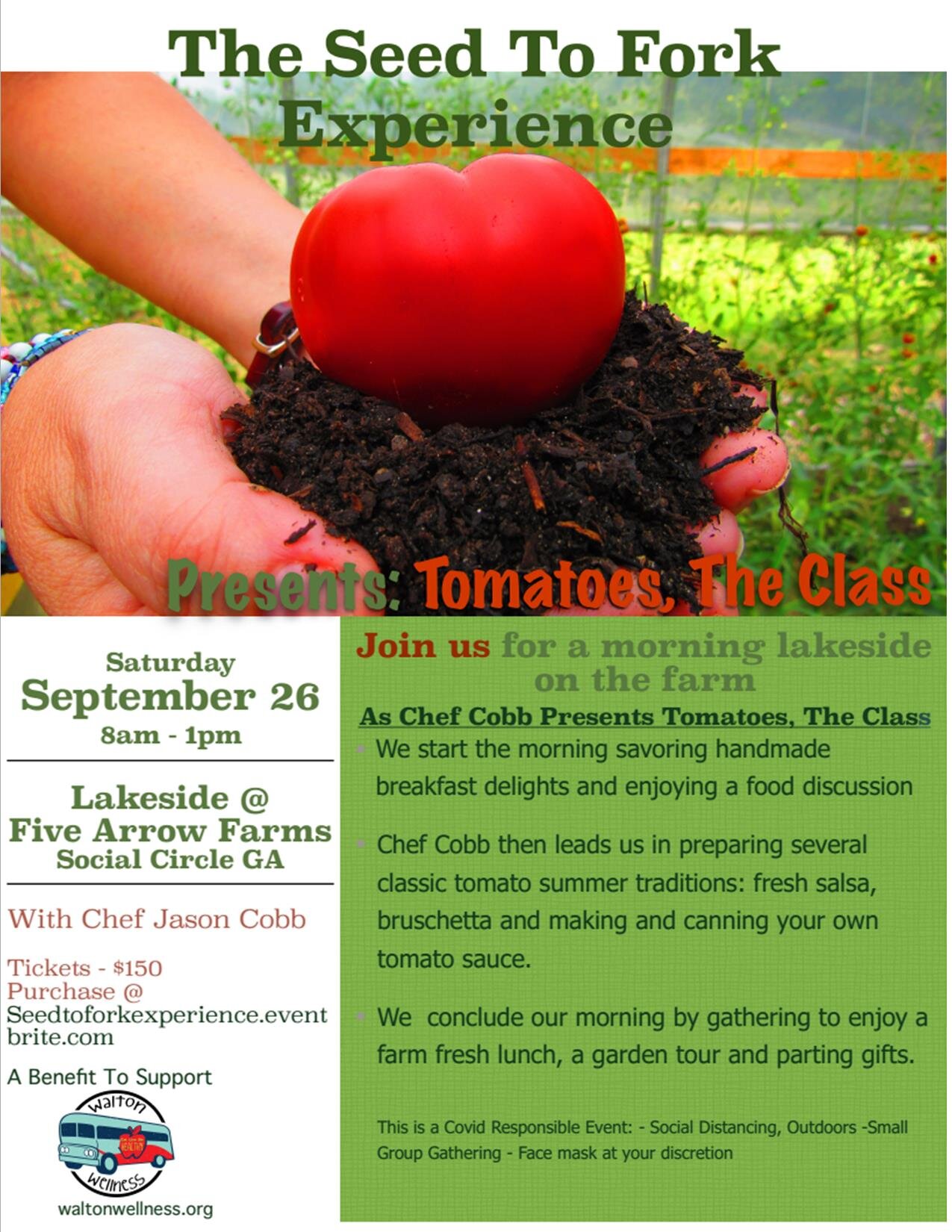
Join Walton Wellness and support their mission by attending the Seed To Fork Experience: Tomatoes, The Class on Saturday, Sept. 26 from 8 a.m.-1 p.m. with Chef Jason Cobb. Click here for details and tickets. 

For DeDe Haris, Executive Director of Walton Wellness, it’s all about good habits. And through their variety of programming and successful approach to partnership, Walton Wellness is helping their neighbors create healthy habits and a greater sense of community through engaging with nutritious food.  

Walton Wellness officially became a 501(c)(3) in 2011, dedicated to educating Walton residents about the tools, habits, and resources for good health. In their own words, the purpose of Walton Wellness is: 

To be a catalyst in our community for creating a county-wide value of health. Our goal is to work on a macro community level that will allow for systemic change. We do this by implementing sustainable projects through community partnerships. 

Walton County became a Georgia Food Oasis community in 2019 through the incredible work of DeDe Harris, her colleague, Health Educator Alex Lundy, and their network of partners to address health needs in their community. DeDe also coordinates the Walton Local Food Alliance (WLFA), a food policy council of neighboring food groups, farms, and restaurants. Click here for the full list of WLFA partners, statistics, and their latest work. 

DeDe Harris (right), Executive Director of Walton Wellness, and Alex Lundy (left), Health Educator.

DeDe Harris (right), Executive Director of Walton Wellness, and Alex Lundy (left), Health Educator.

Walton County is situated approximately halfway between Atlanta and Athens and includes Monroe, Social Circle, and Loganville. This area has a long and storied agriculture history as well as one plagued with racial violence and economic depression. The area was hard-hit by the 2008 recession and the resulting closure of two cotton mills, leaving many Walton residents, particularly older residents, food insecure and lacking resources to support their health.  

Which is where Walton Wellness steps in with initiatives created to help fill the gaps of a destabilized community. Walton Wellness’ programs include: The Mobile Farmacy Market, Health is Your Wealth, the Field Garden, Walton Local Food Alliance, Get Charmed, and Project Road Share. Each of these initiatives involves community partners coming together to address the specific elements that make up illness-fighting lifestyle habits.  

One of the most robust offerings of Walton Wellness is their Mobile Farmacy Market, which runs every week from May through September and as a pop-up market through year-end serving Monroe, Social Circle, and Loganville. Each week during the pandemic, they have served an estimated 95 families through their drive-up COVID-19 version of the market, helped greatly by dividing the service areas and notifications using the Remind app as well as good old-fashioned word-of-mouth. Participants in the program apply for this free, fresh grocery program and are determined based on income and other need-based factors.

The Mobile Farmacy Bus in action, pre-COVID-19.

The Mobile Farmacy Bus in action, pre-COVID-19.

A source for the Mobile Farmacy bus is Walton Wellness’ Field Garden, which was founded at 2010 and makes vibrant use of the land at the Walton County Sheriff’s Office through this local partnership with the Sheriff’s Office, St. Albans Episcopal Church, and the Episcopal Community Foundation of Middle and North Georgia. In 2020, through harvests of the Field Garden and donations from the Grow A Row program from families and churches, the Mobile Farmacy Market became officially 100% locally grown. 

Okra and transitioning the garden at Walton Wellness’ Field Garden.

Okra and transitioning the garden at Walton Wellness’ Field Garden.

Each market, Walton Wellness shoppers are greeted—from the safety of their vehicle—with an authentic shopping experience, able to choose which fresh fruits and vegetables they will take home each week. This is very intentional, versus a pre-packaged box or bag of produce, so that the shoppers will better engage with and learn about what items they’re getting. For DeDe Harris, it’s getting in this habit of asking questions and making healthy decisions that mean long-lasting benefits—education and connection over food combine to nourish the community. Nudge campaigns like the #MeatlessMonday initiative further this social engagement around good food. 

IMG_6487.jpg

When speaking to DeDe Harris, it’s clear she and her colleague Alex Lundy, know the high return on the investments they’re making in local fresh food for Walton County. From the excitement and strong sense of community they see leading up to and on market days to the way so many neighboring organizations, farms, and businesses have rallied in support—they are truly doing work at the root of creating a resilient food system in Walton County. 

Join Walton Wellness and support their mission by attending the Seed To Fork Experience: Tomatoes, The Class on Saturday, Sept. 26 from 8 a.m.-1 p.m. with Chef Jason Cobb. Click here for details and tickets. 

Seed To Fork Experience 1.jpg

Seed Saving and Sharing Can Add Cultural Richness to Your School Garden

Becky Griffin, Community & School Garden Coordinator for University of Georgia Extension

Becky Griffin, Community & School Garden Coordinator for University of Georgia Extension

We’re grateful to welcome Becky Griffin for this guest post, as she shares tips for seed saving, seed sharing, and their value in an education setting!

Becky is the Community & School Garden Coordinator for University of Georgia Extension. She is part of a team that received a grant to promote best management practices with seed saving in Georgia and she is on the Community Seed Network Advisory Council.

Seed saving is an often overlooked aspect of school gardening. This practice can add a new skillset for young gardeners, expand the curriculum reach of the garden, and celebrate the diversity and cultural heritage of the student population. Read more from Becky below and learn more at ugaurbanag.com and Seedsavers.org.


By Becky Griffin

School gardens routinely grow food crops, create pollinator habitat, and even replicate historic gardens. They are an integral part of the school curriculum used to teach botany, math, nutrition, history, literature, and even geography. However, the one area lacking in the hundreds of school gardens that I have visited is seed saving. Seed saving can be an important horticultural part of the garden as well as an additional avenue for tying the garden to the school curriculum. In addition, saving and sharing seeds can add a richness to the garden you may not have considered, cultural and heritage diversity. 

Across our country experienced gardeners are welcoming immigrants and refugees from all over to the United States in a garden setting. A garden is common ground and food can be a uniting force. There may be language barriers but we can all "talk" seed, soil, and water. Having the privilege of working with some of these community-type gardens is exciting as cultures are shared through the growing of food. Gardeners from Somalia are interested to see what the gardeners from Burma are growing. Gardeners from Kenya are poking their heads in the Syrian's garden to see what is coming up there. Our American melting pot is alive and well in the garden. 

People especially seem to enjoy growing foods from their homeland and their childhood. This is true even within the United States. Many a displaced Southerner has taken the family collard green seeds when being transferred to the North. Year after year, I grow family bean seeds brought down from the hills of Kentucky to Georgia. So, it is to be expected that our collective palate would be enriched by foods brought with immigrants from other countries.  Why not try this in the school garden setting?  Some schools already are! 

Getting Started 

If you already have an active school garden group, getting started will be easy: 

Gauge interest in growing plants that have culinary meaning with your student populations.  In DeKalb County, Chinese long beans, tomatillos, unique pepper varieties, and Thai basil are all grown in the same gardens. 

Find a seed source. The most important seed source may be the families of your students. They may be growing interesting and meaningful plants in their home garden and would be willing to share seeds. Your local library or UGA Extension office may host a seed library. Also, Seed Savers Exchange and Johnny’s Selected Seeds both have a large selection of plant varieties.   

Invite parents to help in the garden. You might be surprised at how interested parents can be in sharing their expertise and being a part of this type of project.  I have encountered a school garden group where English is not the first language of any of the parent helpers but they are all excited to be a part of their student’s garden club and to share their culture through the garden. 

Collect seed stories. As seeds are shared through the community, have the gardeners share their stories.  Why was this crop important to their family?  What traditions are associated with it?   These stories are as important as the plants themselves and give the students pride in their heritage. 

Host a potluck meal. Inviting families to share dishes important to their heritage with food grown in the garden is a fun way to share a meal!  You will be expanding the palates of all involved.  

Seed Saving 101 

Until modern times seed collecting was the only way a gardener had seed for the next year. Seed was shared with neighbors and passed down from generation to generation (heirloom seeds). Seeds were taken across oceans and over the American prairie and they are an important part of our agricultural history. In my area of Southern Appalachia seed saving is part of many family heritages

Hybrid plants are not appropriate for seed saving. They are bred to amplify a certain trait such as disease resistance or larger fruit and are produced by cross-breeding two plants with different genetics. Tomatoes are a great example. Most of the tomatoes grown in backyards are hybrid tomatoes with names like Better Boy and Early Girl. Although these varieties produce delicious tomatoes, they are not appropriate for seed saving. 

Hybrid plants produce seeds that are genetically unreliable or not true-to-type. These seeds are undesirable for seed saving. 

Open-pollinated plants are the type of plants we want for seed collecting. They are pollinated naturally and will produce seeds that are true-to-type if they are isolated from other varieties. So, it is important for the school gardener to choose only one variety of seed-producing plants. For example, do not plant Calypso beans in the same area as Hidatsa beans. They could possibly cross-pollinate resulting in seeds, not true-to-type. A garden of only Calypso beans will produce true Calypso bean seed! Larger gardens follow the recommended isolation distance for seed saving for most beans that is 10-20 feet. 

With the smaller space of a school garden, it is best to choose one variety of the seed-producing plant type for seed saving. 

Planting at Oakcliff Elementary School. Courtesy of Becky Griffin.

Planting at Oakcliff Elementary School. Courtesy of Becky Griffin.

Curriculum Ideas 

Lesson ideas are numerous: 

  • Pollination - what exactly is pollination and fertilization? 

  • Pollinators - how is pollen spread? 

  • History - heirloom seeds; what was on the dinner plate in America in 1800, etc. 

  • Geography - how did crops spread around the world? 

  • Math - how many seeds produced per plant/fruit/bean pod? 

  • Genetics - hybrid plants and gene traits 

  • Cultural Studies - choose plants with cultural significance such as Chinese long beans or lemongrass; research plants used in different cultures during holidays and celebrations as well as daily meals 

  • Literature – record seed heritage stories, research how seeds came from Europe and Africa to become part of our agricultural system 

Seed Savers has a website full of seed collecting information. Your local land grant University of Georgia Cooperative Extension office can assist you in choosing varieties of plants that will work well for seed saving and will grow well in your area. Depending on your cultural background they could include extra garlic, long beans, or tomatillos! 

Farm to Restaurant In Conversation: Four Bellies Farm and Argosy

By Mary Elizabeth Kidd

Georgia Organics Farmer Services Coordinator Kayla Williams recently spoke to Melissa Nisbet of Four Bellies Farm and Tyler Haake, Executive Chef of Atlanta’s Argosy via Zoom (interview below) to explore their farmer-chef partnership and participation in the Farmer Fund Accelerator program and the Farm to Restaurant Farmer Champion program, respectively.

Melissa Nisbet and her husband, Avery, raise grass-fed lamb, beef, rabbit, and chicken and produce bone broth in Bowdon, Georgia, about an hour west of Atlanta. Four Bellies Farm is a 2020 Farmer Fund Accelerator member and was previously a 2019 Farm to Restaurant Farmer Cohort member. With Four Bellies Farm, their commitment to humane practices and restorative agriculture is evident in all they do.

Melissa recently summarized their operation and commitments in a recent Facebook post:

Courtesy of Four Bellies Farm

Courtesy of Four Bellies Farm

“All our animals are on pasture and are rotated in a way that allows each species to benefit from the others and contribute to healing the soil. We use regenerative practices where factory farming uses degenerative practices. Rotating the animals and having portable waterers sequesters carbon where factory farming practices pollute the water supply and adds excess carbon to the environment. The sheep and cattle just eat grass with hay (dried grass) supplemented in the winter. The chickens get grass, bugs, and are supplemented with a non-GMO, soy free feed from Tucker-Milling. The rabbits get to forage on grass and are supplemented with a non-GMO feed from Tucker-Milling. Rabbits wouldn't eat soy, but their feed is also soy free. We have never given any hormones or antibiotics of any kind to any animal ever. We might one day consider antibiotics if they were needed for a specific breeding animal. We would never consider giving hormones to any animal. We do not spray our pastures with any herbicides. We make decisions everyday toward better health for the land, animals, and humans consuming them. These practices are not easy or cheap to carry out. The labor of moving each animal 7 days a week is intense. Our family eats this food and we are passionate about clean eating. That is why we do this. I do hope people can understand, taste and feel the difference when eating our meats and broth.”

At Argosy in East Atlanta Village, Chef Tyler Haake has developed a special rapport with purveyors like Melissa by prioritizing his menu around the availability of seasonal, sustainable proteins and produce. For Haake, this type of sourcing has been ever-present in his decade-long career. He was gaining experience in a time with the restaurant industry embraced and marketed menu terms like “free range” and “farm to table,” but through working relationships like he has with the Nisbets, he’s come to fully experience and embrace the understanding and practices it takes as a chef to truly source locally.

They met at the Grant Park Farmers Market, where Tyler wanted to learn more about their operation by volunteering at Four Bellies Farm.

Wood-fired Freedom Ranger chicken quarters. Photo courtesy of Argosy.

Wood-fired Freedom Ranger chicken quarters. Photo courtesy of Argosy.

To truly build this working understanding and cement their farmer-chef relationship, it involved a trade off. In exchange for the knowledge and context he was seeking about the Nisbet’s business, he was willing to offer hands-on help at the farm. And it paid off. Now, when they’re collaborating on weekly orders, the process is more nuanced and familiar. The farmer-chef partners focus more on availability and unique cuts versus the boneless, skinless standards seen on order forms from Atlanta’s bigger purveyors.

“At the end of the day, they’ve helped me become a better chef.”

From this farmer-chef duo’s context and knowledge of each other, they’ve gained respective understanding of, in Chef Haake’s words: “the golden nuggets of why we do what we do.”

View the full interview:


Mary Elizabeth Kidd is the Communications Manager at Georgia Organics. To learn more about Georgia Organics, visit www.georgiaorganics.org and follow us on Instagram @GeorgiaOrganics, Twitter @GeorgiaOrganics, and at www.Facebook.com/GeorgiaOrganics.


To learn more about the Farm to Restaurant program, visit farmtorestaurant.georgiaorganics.org/

To learn more about the Farmer Fund Accelerator program, visit www.thefarmerfund.org/farmer-fund-accelerator

Connect with Four Bellies Farm:

fourbelliesfarm.com/

www.facebook.com/fourbelliesfarm

www.instagram.com/fourbellies/

Connect with Argosy:

argosy-east.com/

www.facebook.com/TheArgosyEAV

www.instagram.com/argosyeav/


Georgia Food Oasis Spotlight: Deidre Grim of Healthy Savannah on Food Equity & Access

By Caroline Croland

Urban Planner. Ph.D. Activist. Deidre Grim brings a passion for long-lasting, systemic change to her role as Nutrition Program Director for Healthy Savannah and the YMCA of Coastal Georgia.

Deidre Grim, Nutrition Program Director for Healthy Savannah and the YMCA of Coastal Georgia.

Deidre Grim, Nutrition Program Director for Healthy Savannah and the YMCA of Coastal Georgia.

“Deidre is passionate about centering a community’s lived experience to influence and inform systems change. Her unique combination of skills and training allows her to see the interconnected nature of personal health and food systems,” says Suzanne Girdner, Community Outreach Manager at Georgia Organics.   

Healthy Savannah is a Savannah, GA based nonprofit focused on “making a healthy choice the easy choice for people living in Savannah and Chatham County.” They aim to accomplish this by building community infrastructure that enables citizens to have equitable access to healthy, affordable food, and activity-friendly routes.  

Healthy Savannah is dedicated to approaching food justice through a racial justice lens, highlighting the intersections between food accessibility and racial justice, and taking a community-centered approach to food access.  

“I just want all to always understand the value of creating relationships with people and meeting them where they are. Relationship building has made me very successful in my work. It's been a humbling experience because it has taught me that we work alongside people, and we need to leave our preconceived notions and titles at the door,” says Grim.  

In November of 2018, Healthy Savannah, in partnership with the YMCA of Coastal Georgia, was awarded a five-year, $3.4 million collaborative grant to undertake a REACH (Racial and Ethnic Approaches to Community Health) project from the Centers for Disease Control and Prevention.   

The aim of Savannah and Chatham County’s REACH project, Healthy Opportunities Powering Equity or H.O.P.E., is to reduce health disparities among African Americans in seven low-wealth zip codes across Chatham County through long-term solutions. 

Through this grant, they have been able to increase healthy food access by adding a second location of Fresh Express, a produce distribution program, doubling the size of the program, and expanding its reach in providing low-income families within the community with fresh produce. The grant has also allowed them to create more stops within their partnership with the Forsyth Farmer’s Markets.  

“I think if I had to quantify just our impact locally within the year and a half that I've been working, I would say we've impacted at nearly 10,000 people,” says Grim.  

Deidre sat down with us over Zoom to talk about her life, her work, and her passion for equitable food systems.  


Tell us a little bit about yourself, your background, and your role with Healthy Savannah.  

I am a mother four and a very community-focused person. After high school, I went to college and earned a bachelor's in biology. While in undergrad, I got pregnant and felt like I need to switch paths but didn’t know what that looked like. My husband and I got married and I decided against pursuing medicine. I didn't know what I was going to do. It wasn't until I started working with a nonprofit that provided low-income housing that I found my passion—helping people.  

I've always been a people person. I grew up in a household that was full of activism, civil rights, and advocacy. I kept asking myself what I was going to do. Oddly enough, I found my answer through a commercial. The ad mentioned a city planner, and I started Googling. One thing led to another, and I ended up in the middle of Southern California and getting my doctorate in urban planning, public policy, and design. I decided this was one of the best ways to help all people especially those disadvantaged while leaving a solid foundation for the next generation to build upon. At the end of the day, helping people is my heart, while ensuring that there's equity, with a focus on inclusion and diversity.

Could you describe the types of services Healthy Savannah offers and what kind of impact you've personally seen within the community?    

HealthySav2.jpg

Healthy Savannah is an organization where we seek to make the healthier option the easier option. One of the main social determinants of health is access to knowledge. If a client doesn't necessarily know what healthier options they have, we will see more chronic illnesses. This is especially prevalent in low wealth communities. So, Healthy Savannah seeks to push for change through the policy, systems, and environmental change perspective. We work in the areas of physical activity, nutrition, and community clinical linkages to provide the resources to the community that helps them become healthier and live more sustainable lives.  

Through my particular strategy, we look at food access, particularly access to healthier foods. We’ve seen that low-wealth communities are more susceptible to have healthy food priority areas, originally termed “food deserts.” As a planner, we use the terminology “healthy food priority areas” because the desert can seem like an anomaly when we know this is a systemic issue, and it must be addressed it as such.  

Additionally, we are working on a photovoice project with Georgia Southern to identify the barriers that African American mothers are experiencing when needing to breastfeed. We also work in the faith-based organization under food service guidelines, to help these organizations provide healthier foods for their congregants as well as emphasize the need to be more physically active.  

Can you give us some more insight into the Nutrition program that you oversee? What areas do you focus on most in your work?   

My main focus is on changes to the food system and the barriers that keep people from having consistent access to nutritious foods. We want to make those changes at a policy level because often after program funding is gone, the community is left by the wayside and we do not want that. We want to guarantee that this work will continue even after funding has subsided. It starts with making those genuine connections in the community, whether it be with local leaders, elected officials, organizations, and residents. The average citizen is our focal point because we want to guarantee that we are hearing what it is that they feel that they need and how to best assist them.  

The truth is, one in three people in West Savannah (the area of Savannah with the highest poverty) lives below the poverty line. Food insecurity is costing Savannah over $27 million in healthcare costs alone. That's exponential with a population of around 150,000. We need to ensure that we are lowering those healthcare costs.  

We can do that by increasing access to healthy foods, access to a truly livable wage, and access to the information and resources that the community needs. The social determinants of health and research teach that if you eat healthier, are more physically active, and have equitable access to education, knowledge, and resources, the trajectory of a person’s life changes. It is our heart, our mission, to ensure that those who are most vulnerable have those services and knowledge more readily available. 

What inspires you about this work? Why is the integration of racial equity work so important when it comes to talking about health access?   

I grew up in a house that was committed to civil rights and equality. Fast forward 30 years, we see that it wasn't equality that we needed. We needed equity because each community has different resources and barriers.   

I belong to the school of thought that if you give people the tools they need to succeed, they will use them. Therefore, I can't just say, "Okay, here's the healthier option, use it." I'll give an example. I can't just give some kohlrabi to someone if they're used to eating pork and beans in a can all their lives, I have to help them understand the reasons why it's a little bit better to eat than the can of pork and beans. From there I need to educate them on how to prepare it while making it their own and adding their spin. As an African American person, our ancestors ate healthy because they ate off the land. But was different when we came here because we didn't have the same resources and food supply that we were used to. 

And so we had to make it our own. We did what was comforting because we were in a bondage situation. Food has the ability to take you to a place that helps you forget about what's going on around you.  

With that said, it's also about changing our relationship with food and changing the perspective of what you eat. I’ll tell anybody, I grew up on collard greens, grits, watermelon, and fried chicken. And so instead of collard greens with bacon fat, I use chicken broth and Mrs. Dash. Instead of fried chicken in the deep fryer, I prepare air fried chicken. And with macaroni and cheese, I use either brown rice pasta or whole wheat noodles. And that's how we incorporate that spin. Sometimes people may not understand it, but it's just giving your spin on food. And I think as long as it comes from the heart, food is always going to be good. 

Can you talk a bit about your experience in being a member of Georgia Organics’ Georgia Food Oasis communities? How has been a member of Georgia Food Oasis impacted your organization?  

We have been impacted dramatically. The conference was awesome this year. I love that you had the farmer at the forefront of the conference, especially the black farmer, giving them the information to access funding that was integral and pertinent. 

Because that is something that historically we did not have equal and definitely not equitable access to. It has impacted my work because I am very cognizant and conscious of how to partner more with farmers.  

Georgia Food Oasis has also provided a true sense of community, and as a planner, I am always looking for that. It's a truly collaborative effort because we reach out to each other and say, "Hey, I need some help. Do you know how I can get this done? Or do you know who does this?" And if I may not know someone off the top of my head but I have to do is reach out to Suzanne and she can connect us with someone. So just the relationships, the webinars, the real genuineness of the organization is what's been very impactful and invaluable for me. 


Be sure to check out Deidre on an upcoming panel for Good Food for Thought- Pandemic Response in GFO Communities: Rome, Savannah, and Walton County highlight partnerships that helped connect families to fresh local food during COVID-19 on September 22 at 11 a.m. Click here to register!


Caroline Croland is the Fundraising Coordinator at Georgia Organics. To learn more about Georgia Organics, visit www.georgiaorganics.org and follow us on Instagram @GeorgiaOrganics, Twitter @GeorgiaOrganics, and at www.Facebook.com/GeorgiaOrganics.

Farmer Spotlight: Eric Simpson of New Eden Ecosystem & West Georgia Farmer's Cooperative

By Lauren Cox

Eric Simpson put his hands in the dirt with an intention to grow something 12 years ago and grow something, he did. His farming journey, from backyard gardener to one of the leading members of the West Georgia Farmer’s Cooperative, unfolded as organically as it gets (no pun intended) and continues to set an example for other farmers in how to hold space for building strong community and continuing the tradition of convening and mobilizing, while carving out space for a successful, independent business.   

Courtesy of Eric Simpson

Courtesy of Eric Simpson

Georgia Organics got a chance to connect with Eric, a Georgia Organics board member, to learn more about how he got his start in farming, his work with West Georgia Farmer’s Cooperative (WGFC) and his involvement with the Accelerator and Farm to Restaurant program, as well as the Food Fight GA initiative. Spoiler alert: There’s also mention of some pretty cute horses…

Read more below. You can learn about The Farmer Fund Accelerator program here and learn more about the Farm to Restaurant program here.

What do you remember about those early days when you first started gardening?  

I mostly remember the newness of it all and being inspired by the idea of growth, life, and the act of growing food. One of the first things I grew were Sugar Baby watermelons and of course I very clearly remember them being invaded by squirrels. (laughs) 

When did you think about farming as a profession?  

The simple answer is back in 2007. 

After having a successful backyard garden, I wanted more space to grow food and I also wanted to explore livestock. I had purchased a horse a year earlier and was paying to have it boarded on someone else’s property and so I started looking for land and it unfolded just like that. Now I have my own land where I can grow food organically and keep not only my horse but two others!  

What are these lucky horse’s names by the way?  

My horse’s name is Baby and then there’s Cheerio and Sandy, a Palomino I’m keeping for a friend.     

The West Georgia Farmer’s Cooperative is one of the oldest Black led agricultural organizations in the south and a huge deal! How did you start working with them?   

I found out about them through a neighborhood elder by the name of Ralph Paige. He was the executive director of the Federation of Southern Cooperatives at the time and was once a part of WGFC, having helped to build it many years ago. He told me about the organization and I learned from there how to join and become a member. Basically, I reached out to someone, went to a meeting, and once there was able to see where they had been (how much work they had done), and what they were so keenly positioned to do in the future. After joining the organization, I began to help them with organizing and getting further established.  

What would you say was your influence on the West Georgia Farmers' Cooperative?  

When I first joined, I was able to bring to the table my relationships with Global Growers, Georgia Organics, and additionally my connection with Brennan Washington, who owned Phoenix Gardens and is currently the Land Grant Liaison and Farmer Outreach Expert at Southern SARE.  It worked out that at the time I starting doing business with WGFC they were in the middle of a transition. The older members that had led WGFC in its heyday were retiring so naturally, it was a time of re-assessment and reconstituting the business.  

We were focused on trying to keep folks connected and figuring out new business opportunities. It was also the moment when we decided to change our member growing practices to sustainable in order to meet the current and emerging market demand. That was in late 2011/2012.  

Cooperative models can vary greatly depending on how they are structured. Can you talk a little about the structure of the West Georgia Farmer’s Cooperative?  

Of course! So, our cooperative model doesn’t have cooperative land. We bring in the different farms and, in a way, WGFC is a customer but the farms are also owners. WGFC never wants to be exclusive. We don’t want farmers to only have their eggs in the WGFC and not be able to sell outside of the cooperative. We really chose to look at WGFC as a beacon of support for market opportunities as well as technical support for our growers.  

How much of your sales come from WGFC and how much comes from other sources?  

75% of what I grow goes to WGFC. The rest of my sales come from the local community. I also get income from selling meat birds and goats when I have them, having people come fish on my lake, and selling eggs at the local market.   

What are some cool things you have on the horizon for your farm and the WGFC?  

Well individually, I am trying to re-establish my goat and sheep herds. I’d also like to expand my peach, plum, and pear orchard and even threw around the idea of re-starting a CSA. I used to have one but of course, there are a lot of moving parts and it’s a lot of time and work. The CSA model wasn’t super conducive to my lifestyle, so I’ve chosen to focus on WGFC and the wholesale market.  

As far as future plans for the West Georgia Farmer’s Cooperative, all I can say is we have some pretty exciting things in the works. You’ll just have to stay tuned to find out!  

Ok! We definitely will! So, following along with the theme of reaching different markets, individually your farm as well as the West Georgia Farmers' Cooperative, is involved in a couple of programs within Georgia Organics.  Can you talk about why you applied to these programs and what you’re currently doing with them?  

Of course! I applied to the Accelerator Program because I needed to move my farm to consistent and established prominence and prosperity. I saw the program as a way to do that. So far, the program has been promising. I am working on QuickBooks and this Fall will begin some infrastructure projects as well.  

The Farm to Restaurant program gave me an opportunity to boost sales and diversity my revenue streams and led to my participation in Food Fight GA, which has been fun and rewarding.  

In addition to all the work you do to grow New Eden ecosystem and the WGFC you also have another job! What is it and does it influence or affect your farming?  

My other job is in government contract work. It works out because I can work from home and I have a flexible schedule. To be honest, the only thing that affects farming for me is the issue of labor. If I had regular help I could do more and it's that simple. In my case, having off farm work also comes with liability insurance and workman's comp which is an added benefit.  

This is all so interesting Eric but you know one thing we have got to ask is...What is your favorite thing to farm?  

Watermelon and cantaloupe!  I love growing them and eating them although the horses love them as much as I do! That being said, I’ll definitely have to work on my fencing this year.  

And what is your favorite time of year on the farm?   

I’d have to say it’s a toss-up between Fall and Spring because of the temperature. I can get out there and work all day without feeling the ill effects of the weather.  

Has Covid-19 affected your farm and how have you responded?  

Luckily, Covid-19 hasn’t affected my farm on site because it’s just me out there. If it’s done anything, it has affected the in-person markets I participate in.  A lot of people have reached out to me and the WGFC to get local produce and I think that’s because people want to stay away from hot spots and here in our rural area, the grocery stores are having a hard time keeping up with customer demand. The result is that instead of waiting on the next shipment of food or traveling out of town, people are turning to their local farmers.  

Well, thanks so much, Eric, for taking the time to talk today. Our last question is: What do you having going on right now and what are you looking forward to in the coming months?  

Currently we still have summer produce like okra, tomatoes, corn, and beans in the ground and we’re beginning to prep for fall planting. To answer your question about what I’m looking forward to in the coming months? Well.... to say I welcome the decrease in pest pressure and disease that comes along with Fall would be an understatement.  


Kelley Toon of the Georgia Department of Education on Fueling Georgia's Future

We're thrilled to welcome Kelley Toon as a guest contributor on Georgia Organics' blog, The Dirt. Toon is the Academic Nutrition and Support Manager at the Georgia Department of Education and is sharing her perspective on why food-based learning is so powerful. She also shares resources to help guide this learning.

Georgia Organics’ Farm to School Director Kimberly Della Donna adds: “Georgia's own Kelley Toon is our country's first Academic Nutritionist, working to align nutrition education in cafeteria's and classrooms statewide. She's part of the amazing team we partner with at the Georgia State Department of Education to provide training, technical assistance and recognition for Georgia's farm to school programs.”

Thank you for joining us, Kelley, and for being a collaborator in Georgia Organics’ Farm to School program!


Kelley Toon, Academic Nutrition and Support Manage at the Georgia Department of Education

Kelley Toon, Academic Nutrition and Support Manage at the Georgia Department of Education

By Kelley Toon

Back to school this year may look a little different, but one thing remains the same. Georgia's School Nutrition Professionals are committed to keeping Georgia's students fed and learning. They will be serving safe, fresh, and healthy meals to Georgia's students. These meals support farm to school initiatives by serving Georgia Grown foods. Besides, food-based learning is happening in the cafeteria, in the classroom, and at home.

Food is more than just a basic need as it can also serve as a powerful education tool. Discussions surrounding food origin and cultural connections, food preparation, food safety, the nutritional value of food, and manners and social graces related to food all directly align to learning standards across all academic areas. Food-Based Learning resources identify easy access points for incorporating nutrition into cross-curricular areas, facilitating the collaboration between school nutrition professionals and educators. Classroom materials that align with menu promotions and meet education standards and are an excellent way to highlight the fact that School Nutrition Meals are part of the academic day. Food-based learning provides coordinated support for student achievement.

 Food-based learning resources are available to support learning whether it is happening in person or virtually.

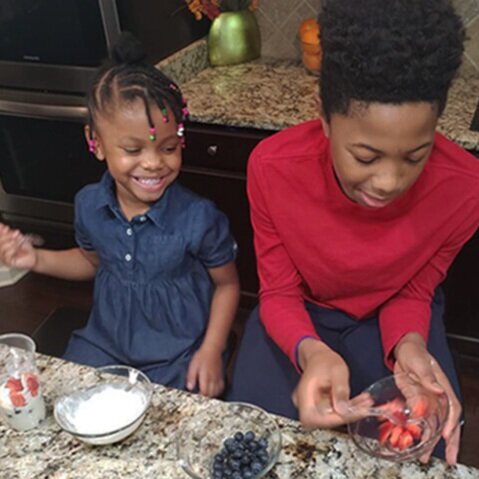
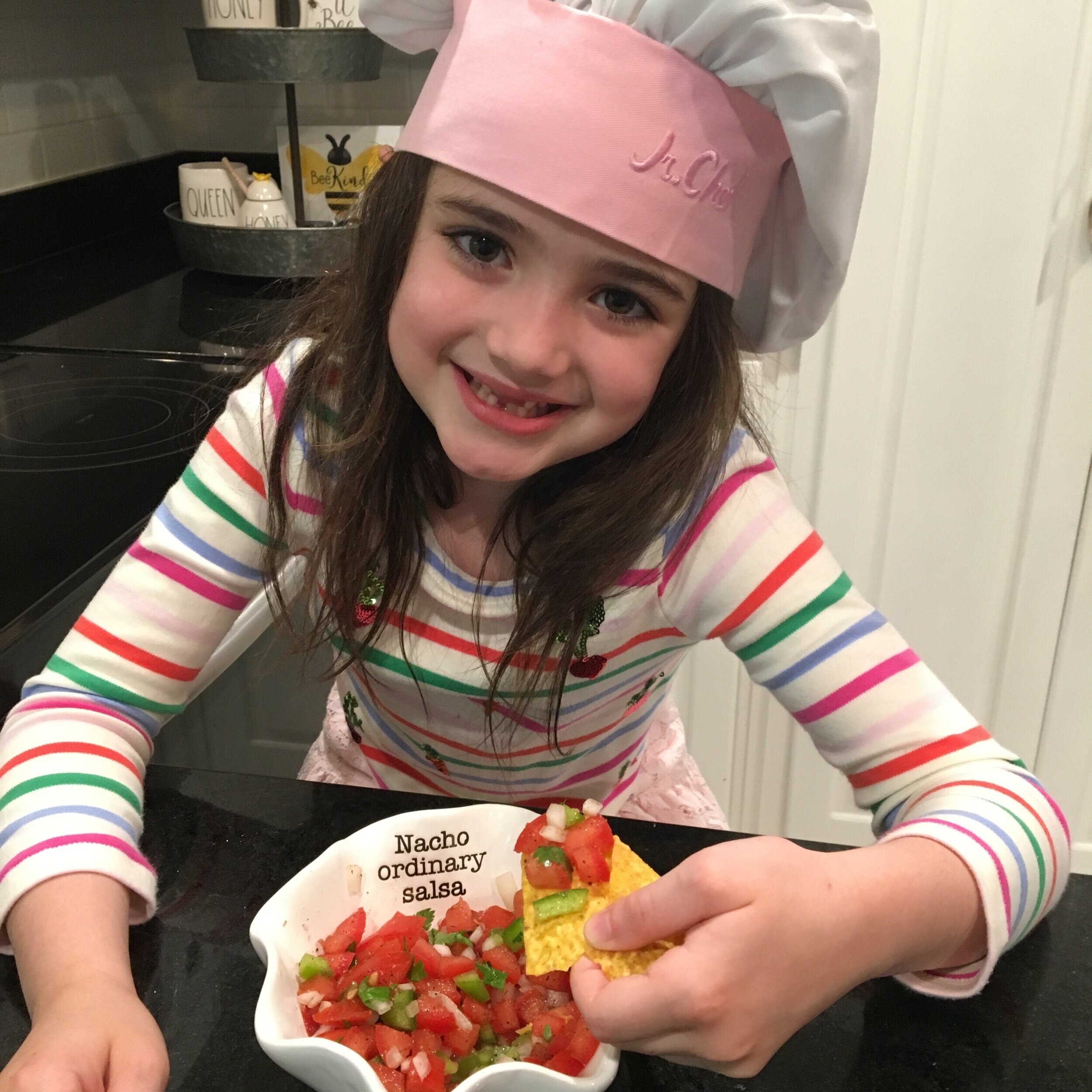
Young ones sharing their at-home food-focused learning. Photos courtesy of Kelley Toon.

Young ones sharing their at-home food-focused learning. Photos courtesy of Kelley Toon.

Harvest of the Month (HOTM) is the Georgia Department of Education School Nutrition Program's farm to school initiative that highlights an item each month that can be sourced locally and served in Georgia's school meals.  This initiative encourages collaboration between School Nutrition Programs, farmers, teachers, and their communities. Resources to support Harvest of the Month promotions include customizable serving line signs, graphics, fact sheets, lessons for teachers, and 'punny' signs to use for photo ops or serving lines.

Harvest with Holly videos explores Georgia's Harvest of the Month initiative by discussing how these items grow, where they grow in Georgia, and how they get from the farms to school meals all across our state.  Episodes feature examples of how items are used in School Meals and ideas for enjoying them at home.

‘Toon’ In with Toon on Tuesday videos share ways to engage with food-based learning opportunities at home and school. Be sure to 'Toon' in at two on Tuesdays.

Taste and Talk resources feature fun questions prompts that encourage conversation during mealtime. Whether students are eating in the cafeteria, in the classroom, or at home, these prompts encourage conversation about food and fun. Learning doesn't stop in the classroom, it continues during mealtime.

You can find these and other resources on our website. Thanks for all that you are doing to Fuel Georgia's Future.


Kelley Toon is the Academic Nutrition and Support Manager at the Georgia Department of Education. To learn more about the Georgia Department of Education School Nutrition Program, visit https://snp.gadoe.org/ and follow us on Instagram @gadoe_snp, Twitter @GaDOENutrition, and at www.Facebook.com/gadoenutrition/.


Meet Dan Glenn of Deep Grass Graziers, Ben Hill’s Soil Steward

By Porter Mitchell

Dan Glenn's family farm is located in one of the country’s poorest counties, located right in the middle of South Georgia. Over one-third of people in Ben Hill County have lived below the poverty line for at least the past three decades. The sun is blazing hot, the humidity is intense, and the weeds grow so fast you can practically sit and watch them take over your fields in a single day. But the heavy rain and warm winters mean you can grow there year-round, and cattle can graze on pasture 365 days a year.   

The family farm, founded by Dan’s grandparents in the 1960s, is a powerful example of how a farm can nurture both people and the land. The farm provides jobs in one of the poorest counties in the country. It honors the skill of farming, providing seasoned hands a way to showcase their craft and new farmers a way to learn. The farm provides food. The farm nurtures ecosystems and even draws down carbon from the atmosphere.   

And it all starts with the soil.   

Ben Hill and Back   

Dan Glenn grew up on family land in Ben Hill County, about ninety minutes north of Valdosta. The farm belonged to his grandparents, conventional farmers who grew corn, soy, cotton, peanuts, tobacco, and raised some cattle on their 800 acres.    

Courtesy of Deep Grass Graziers

Courtesy of Deep Grass Graziers

 Like many people who grew up in rural areas, Dan didn’t intend on staying there. In his early twenties, he developed a keen interest in permaculture and organic farming, and relocated to St. Croix to work on a sustainable farm. Eventually, he and some like-minded farmers founded the Virgin Islands Sustainable Farm Institute, a research and training farm. The institute not only taught new farmers but also fueled Dan’s passion for regenerative agriculture.   

Then Dan’s grandparents passed away. In 2009, Dan was called back home to help his mother manage the farm. “I had to square my interest and passions in soil health, permaculture, and organic farming with a very conventional operation,” explains Dan. The family farm was doing well. Transitioning away from conventional farming takes years and carries a hefty financial risk for the farmer. Dan knew he couldn’t take a gamble on his family’s farm, but he also knew that for the farm to survive long-term, they had to change. They couldn’t just keep doing what Dan’s grandparents had done. They had to start taking their soil seriously.    

Living Soil   

“I thought it was about the cow, but it was about the forages. I thought it was about the forages, but it was about the soil.” Dan Glenn   

Like a coral reef or a rainforest, soil has its own diverse ecosystem. Healthy soil is full of microscopic organisms, different types of fungi, and invertebrates like earthworms. Like any other ecosystem, all the different components work together in harmony to benefit both the soil ecosystem and the plants growing in it. Healthy soil is better able to hold water, making it resistant to both drought and flooding. Healthy soil makes it easier for plant roots to absorb the nutrients they need. Healthy soil provides a habitat for organisms that keep plant diseases and pests in check. And healthy soil takes carbon from the atmosphere and changes it into a solid form stored in the ground. In fact, healthy soil can store between 25 and 50 tons of carbon per acre.* If you have seen healthy soil, you’ll see it’s very dark in color—this color comes from the carbon.  

Many common agricultural practices harm the soil ecosystem and therefore the plants that the ecosystem supports. Tilling releases carbon stored into the soil into the atmosphere and exposes the soil organisms to heat and sunlight, killing them. Synthetic fertilizers create weak plant root systems that can’t take up nutrients well, meaning more and more fertilizer is needed. These weak root systems also create weak plants that are worse at fending off pests and disease, which means they require more pesticides, fungicides, and herbicides. Unhealthy soil is very different in physical structure to healthy soil and is poorly able to store water and nutrients, leading to the farmer using more water and more nutrients. It’s a vicious cycle that creates a heavy burden for both the farmer and the land.  

But rebuilding the soil takes years--too long to for a farmer to wait when bills come every month. Farming is notorious for its razor-thin profit margins and fluctuating markets. Add in the unpredictability of the weather, and you’ve got a business that can collapse after a few bad seasons. For farming families like Dan’s that depend on the farm, they literally can’t afford to wait until their soil is restored.   

To offset this risk, Dan made changes very slowly, weaning the depleted soil microbiome off of its dependence on conventional fertilizer, building the health of the land. Dan employed natural fertility practices like planting soil-building crops such as clover, peas, and buckwheat, known as cover cropping. Dan had to slowly change the attitudes of some people on the farm too. “I had to twist some arms for sure,” laughs Dan.  

Reviving an Old Practice for the New Millennium  

Dan became fascinated in how livestock can be used to nurture depleted soil back to health. Rotating livestock into crop fields is a very old practice found in agricultural traditions around the world. For example, in Ireland sheep, cows, and horses spend the winter in crop fields, readying the soil for spring planting. But this ancient practice had been forgotten by the average farmer in the United States. “We separated the animals from the farm here,” remarks Dan.  

Livestock, especially ruminating animals like cows and sheep, provide urine and manure that fertilizes the soil and nourishes its ecosystem. Grazing grass encourages roots to grow stronger and deeper into the soil, locking it in place. Livestock can clear what’s left over after harvest and they eat many invasive weeds, making room for native plants. And livestock can make money too, helping offset financial risk.   

Dan went to see Will Harris of White Oak Pastures, a cattle farmer using the animals to restore soil that had been reduced from a living ecosystem to dead dust by decades of abuse. White Oak is about as close to a household name as a farm can get, but Dan went to Will Harris long before he was on magazine covers and his expertise was sought after worldwide.   

He met Will in his small church-turned-office in the not-even-a-one-stoplight hamlet of Bluffton, Georgia. Dan was excited and full of energy. He had big plans for his family’s farm, incorporating not only cattle but chickens, sheep, goats, and a whole Noah’s Ark of animals.   

Will hit the brakes. “Whoa, whoa, whoa, boy! Just concentrate on one thing and do it well.” Dan took his advice to heart, focusing on cattle. He worked to develop a clear plan. He focused on finances to figure out how the cattle were going to restore the land and keep the family farm in business. And then Dan got to work.   

A Man and His Pivot  

Getting the right mix of grass and plant species at the right time is key to providing the cow with the nutrients they need. While pasture cattle ranchers in other areas of the country have a broad body of research and best practices to turn to, Dan found almost nothing for the specific climate, conditions, and plants of South Georgia.  

So he started conducting his own research.   

Dan set up a 90-acre center pivot irrigation system. Center pivots work like the hand on a clock. A center anchor holds a long arm that rotates in a circle, while a line of sprinklers along the arm provide water. If you’ve been on an airplane and seen perfect circles in cropland, that’s the work of a center pivot.   

Dan divided the area covered by the pivot into eight parts, fencing each of them in to create eight pastures. His cattle rotate around the pastures, moving to a new pasture almost every day. The cattle follow the irrigation arm so every time they go into a new pasture there’s well-watered and healthy forage for them.   

Dan uses the different pastures to conduct trials on different mixes of forage crops. He’s experimenting to try and find the perfect blend that provides nutrition to his cattle, requires little if any maintenance, and builds soil quickly.    

The Perfect Cow   

Not only did Dan have to find the right mix of forage for South Georgia, he had to find the right type of cow too. The most common breeds were adapted for a diet of corn, not a diet of grass and plants. Dan got to work, selectively breeding his herd to create the perfect cow for his farm.   

“I want a cow that doesn’t need a diet of corn to fill out. I want healthy cows, ones that are resilient and don’t need a lot of inputs. I want a mama cow that has a healthy calf every year for a long time. These are the traits that produce a profit,” explains Dan.   

Georgia’s Newest Cash Crop   

Dan, along with his business partner, has begun growing hemp and building out the infrastructure to dry and process it. They recently purchased an old sewing factory in Ben Hill Country that they’re converting to a CBD processing facility, bringing both jobs and outside investment to the county. Dan’s hemp business will be vertically integrated from growing the hemp transplants to processing the plants into CBD oil. Dan is a huge proponent of vertical integration and advises other farmers to follow his lead. “It’s been the difference between breaking even and making money for me,” he explains.   

Dan’s venture into hemp and CBD also serves to create a more sustainable business. “My grandpa had cattle, row crops, and a tractor dealership. Because he diversified his income sources, he was less vulnerable.”    

But Dan cautions against taking on too many ventures at once. “Don’t bite off a big bite and try to do too many things. Add more enterprises as your other enterprises become successful.” 
Dan’s Vision 

Dan’s vision for his farm is one in which the forages, the crops, and the cattle all work together to create a system that benefits the environment and is financially sustainable. “I want to have good genetics and create perennial and polyculture (meaning many different species) systems that work to produce cattle that are efficient and hands-off.”   

Dan’s reconciled with his home too. He’s no longer the twenty-something trying to get as far away from rural Georgia as he could. “Growing up and coming home here, I know it in my bones. I know the people. I’m in my community here”   

Dan Glenn is the incoming president of the Georgia Forage and Grassland Association and is a member of the following organization’s Board of Directors: American Forage and Grassland Committee, National Grazing Land Coalition, and Southern SARE. (SSARE). Dan is also part of our inaugural Farmer Accelerator Program cohort. You can learn more about the program here.   


Porter Mitchell is a Farmer Services Coordinator at Georgia Organics. To learn more about Georgia Organics, visit www.georgiaorganics.org and follow us on Instagram@GeorgiaOrganicsTwitter @GeorgiaOrganics, and at www.Facebook.com/GeorgiaOrganics.