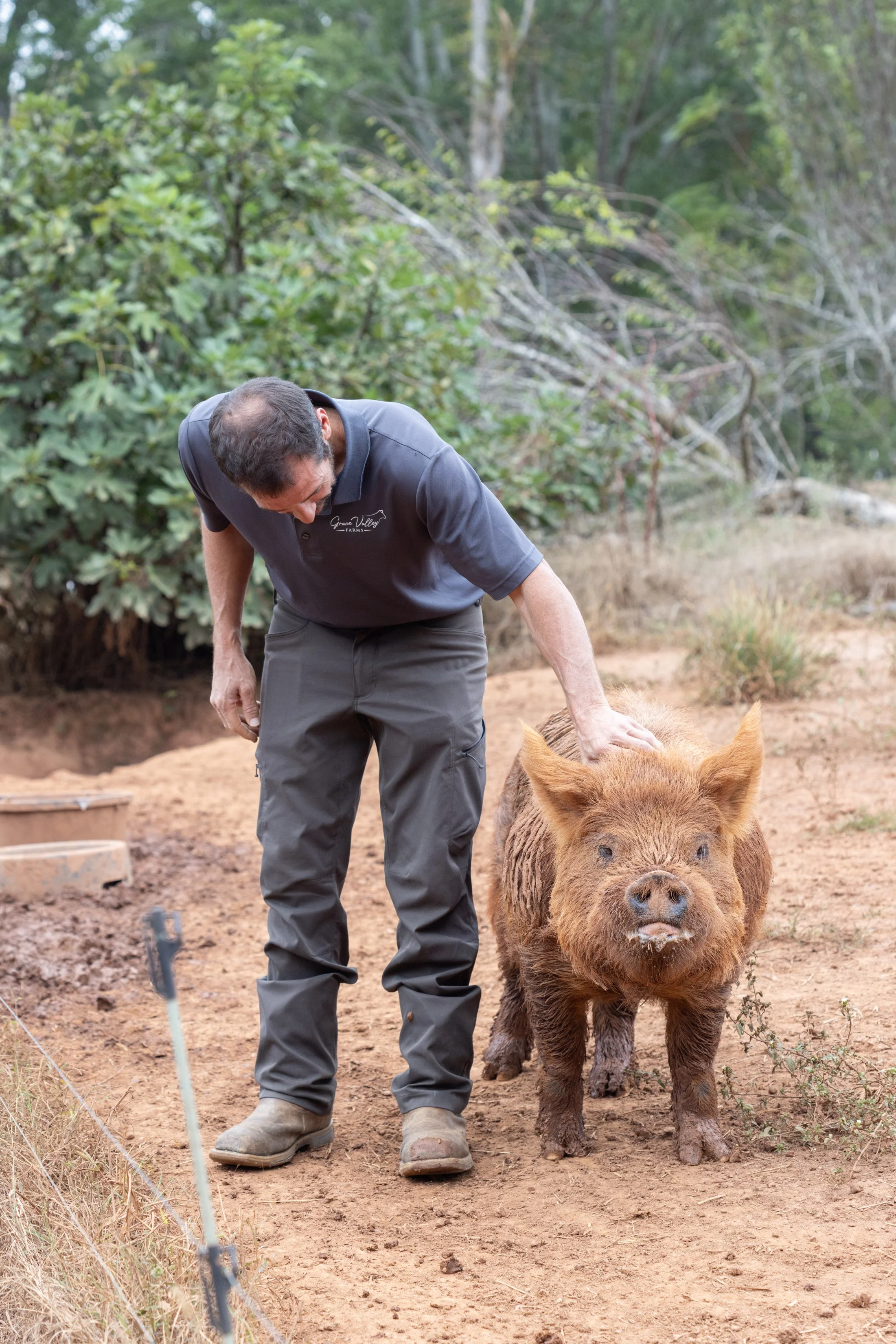
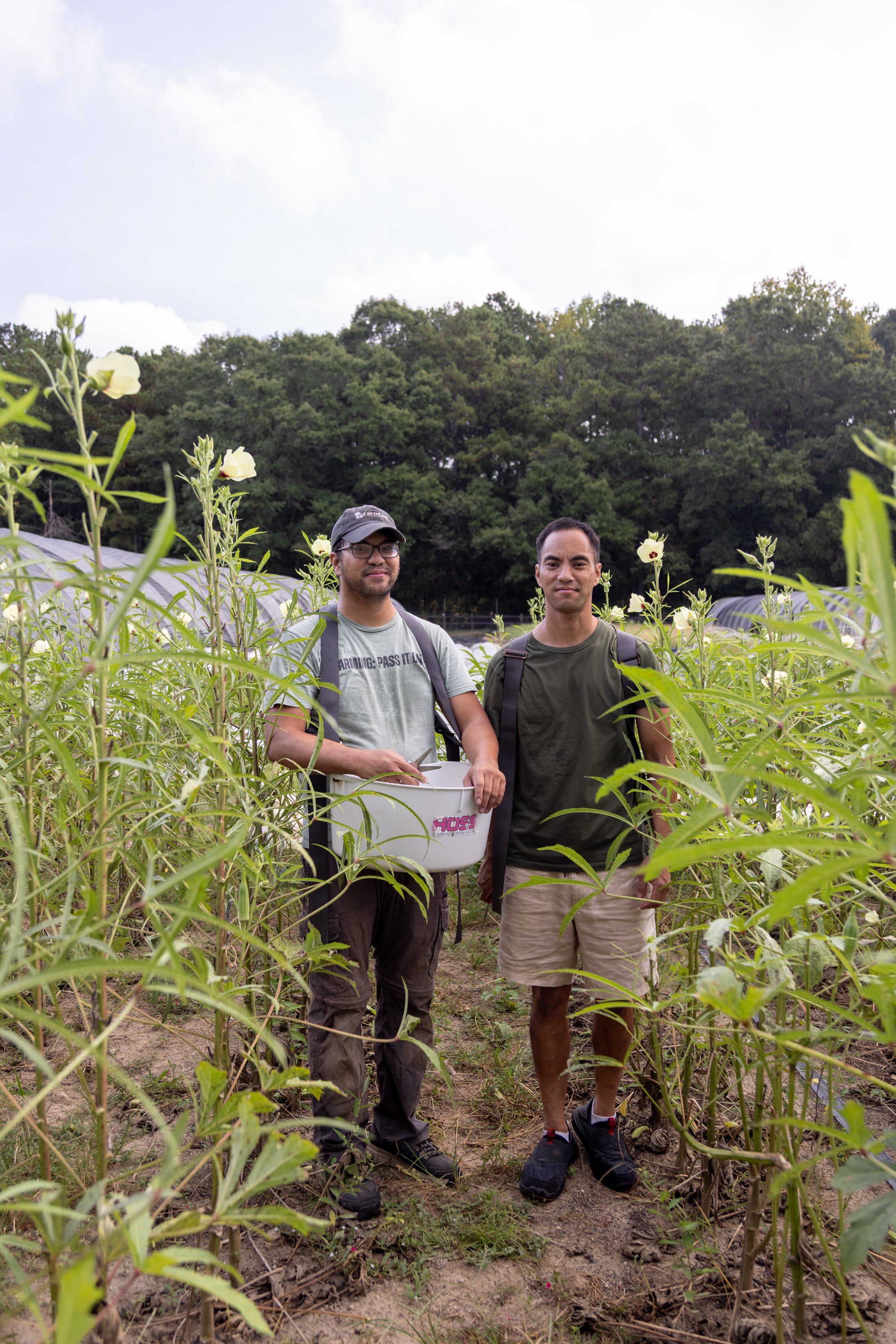
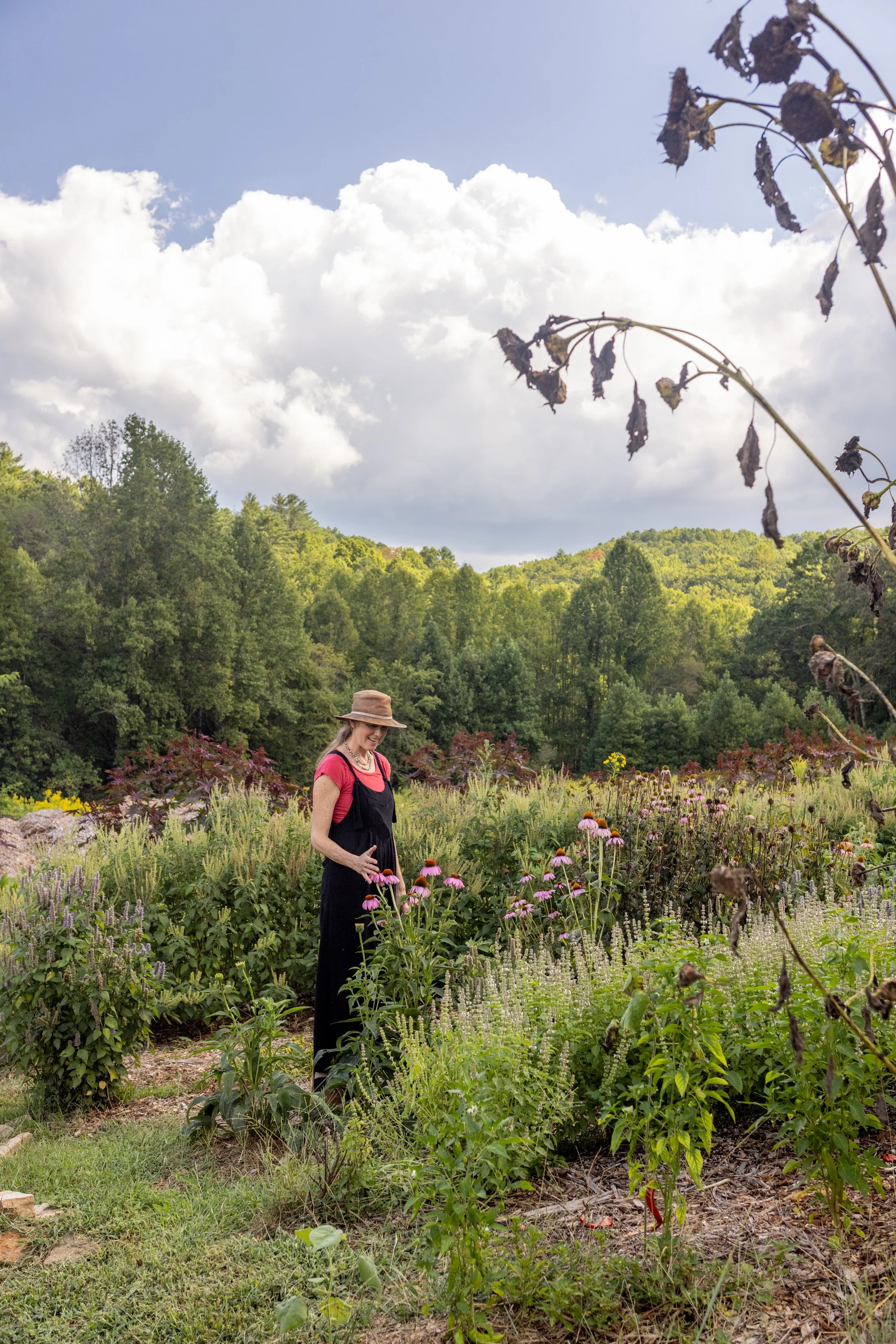
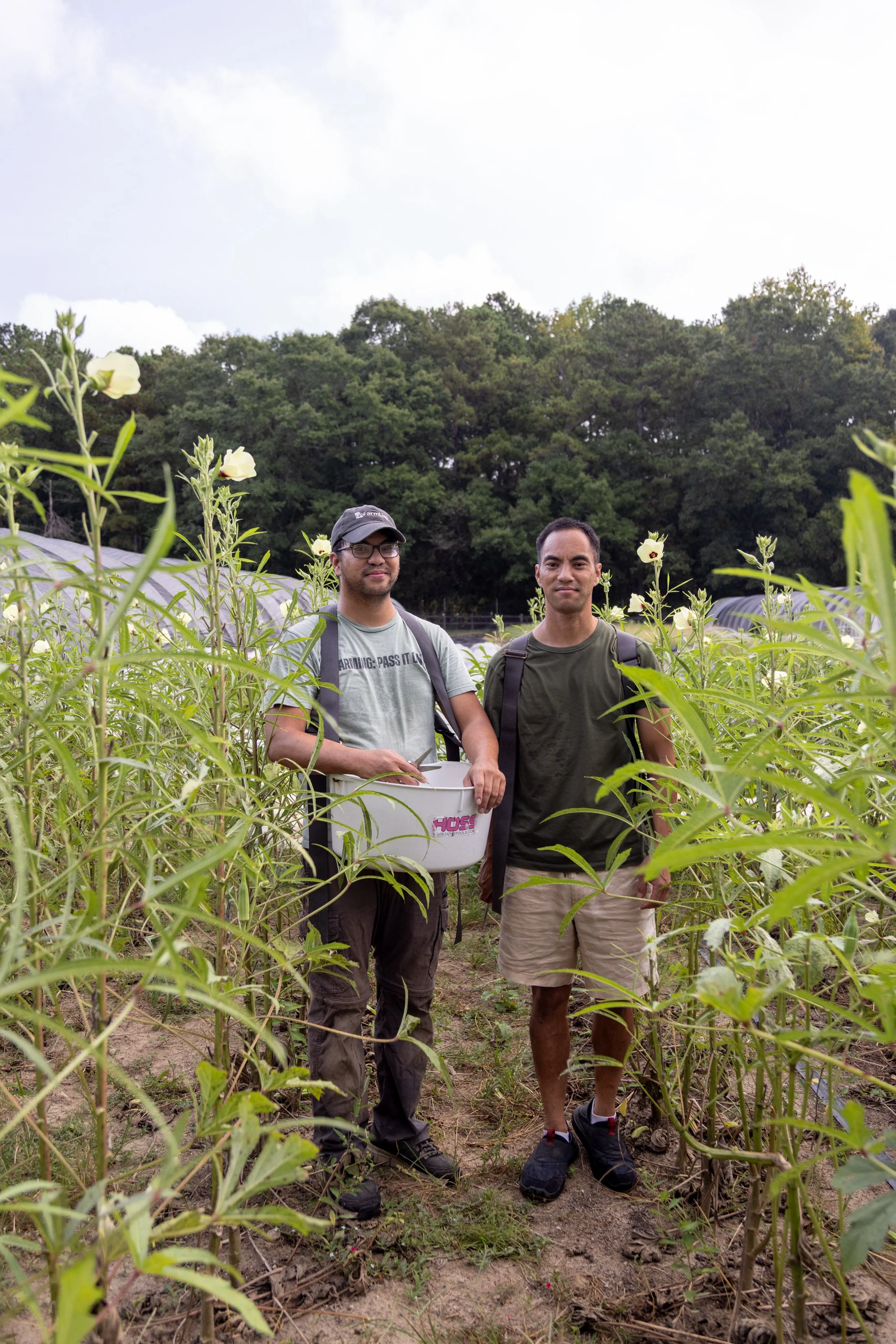
From left to right (Justin Davis, Grace Valley Farms; Reggie and Roger Ramos, Grow With The Flow; Lindsey Sita-Mann, Stellar Roots Herb Farm all photographed by Kate Blohm Photography
Over the past four years, Georgia Organics has had the opportunity to work alongside and support farmers across the Southeast as they’ve explored and navigated the transition to organic production.
Through mentorship connections, technical assistance, educational workshops, farmer field days, and community-building opportunities, the Southeast TOPP program has strengthened organic farming networks and provided farmers with practical tools, trusted guidance, and meaningful peer support throughout their transition.
Southeast TOPP's approach centered on the collective efforts of regional partners, for Georgia, that looked like SAAFON (Southeastern African American Farmers Organic Network), Oxford College Farm , GOPA (Georgia Organic Peanut Association), the Rodale Institute, and the Global Growers Network. Each partner supported FOG (Florida Organic Growers) in connecting producers with experienced organic mentors while fostering collaboration and workforce development across the organic sector.
As we reflect on the impact of nearly four years of work and celebrate the relationships built along the way, we wanted to hear directly from the farmers who participated in this program.
The following Q&A features three Southeast farms that engaged with TOPP programming, sharing their experiences, lessons learned, and perspectives on transitioning and maintaining organic certification. Their stories offer a firsthand look at how mentorship, education, and most of all community can help farmers build resilient operations and move confidently toward their goals.
Stellar Roots Herb Farm (Tiger, Georgia)
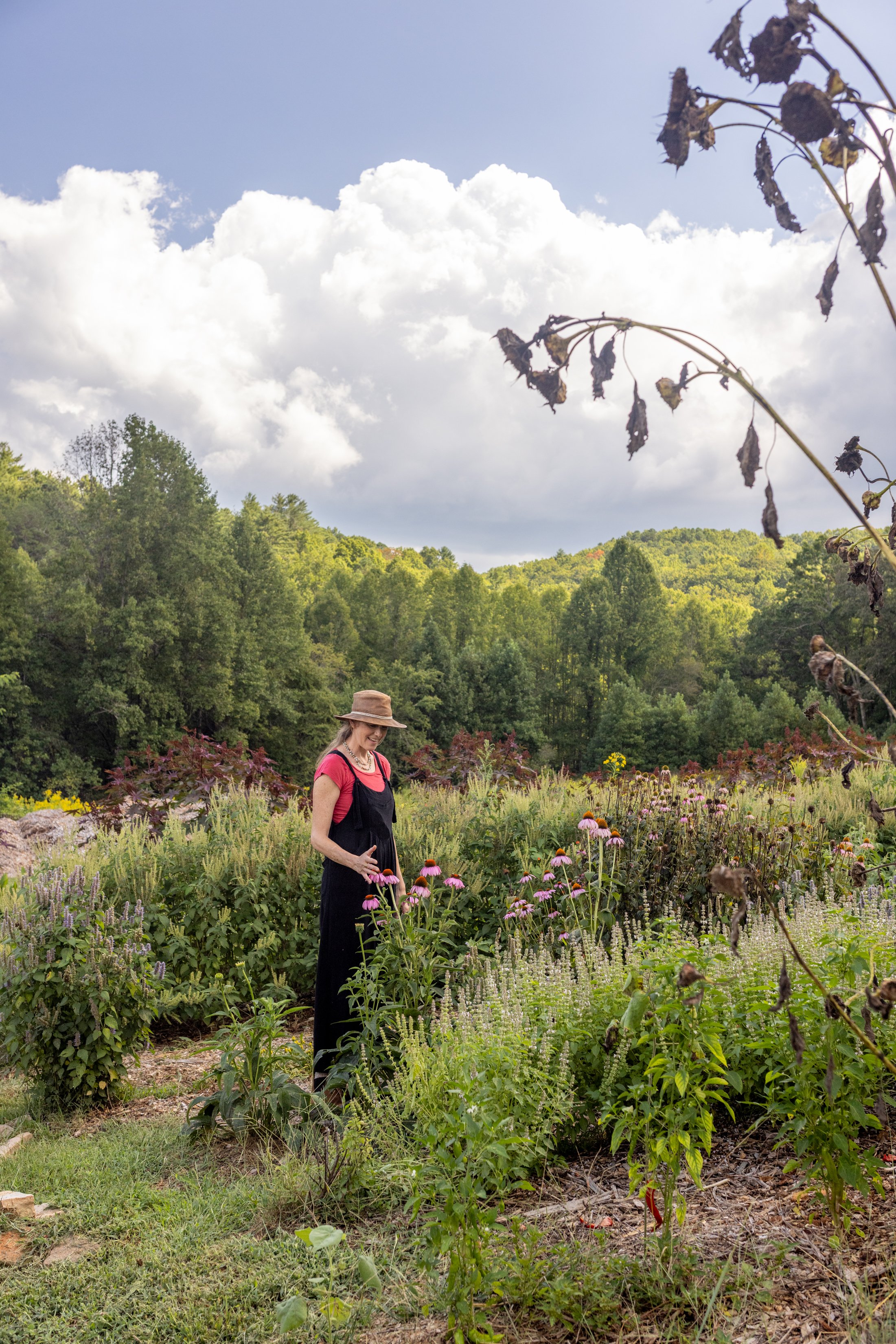

Programming Participant Spotlight: Stellar Roots Herb Farm's Lindsey Sita-Mann
For Lindsey Sita-Mann of Stellar Roots Herb Farm, organic farming is more than a production method. It's a lifelong passion rooted in ecological stewardship, education, and providing high-quality medicinal herbs to her community. As she worked toward USDA Organic Certification, Lindsey utilized SE TOPP programming for guidance, mentorship, and practical support in navigating the certification process.
Through organic technical assistance, farmer-to-farmer mentorship, and educational field days, Lindsey gathered the tools and confidence needed to strengthen her recordkeeping systems, better understand her farm's financial performance, and successfully achieve certification. In the Q&A below, she shares her journey to becoming a Certified Organic farmer, the value of learning from fellow growers, and how these experiences are helping position Stellar Roots Herb Farm for future growth.
-
Tell us about Stellar Roots Herb Farm. What do you grow and what inspired you to start the farm?
We grow Certified Organic medicinal herbs using regenerative growing practices. There is a resurgence of Western herbalism happening, with people realizing they can turn to herbs for things modern medicine doesn't always do well, such as immune support and stress mitigation.
Our mission is to grow and provide the highest-quality herbs for retail and wholesale markets while making a net-positive impact on our local ecology by increasing biodiversity, building soil, and managing water and carbon responsibly. We also offer education and hands-on experiences in herbalism, foraging, and farming.
What drew you to organic farming?
It's a passion and a deep calling, my life's purpose. It's all I've ever really wanted to do, and I reached nearly 50 years old before finally having the courage and resources to dive into the deep end, full-time and fully committed.
-
Before participating in SE TOPP programming, where were you in your organic journey?
I was already growing organically, but I had no idea how to approach the Certified Organic process. The farm is an incredibly rewarding and beautiful place to experience, and I wanted to scale up the operation and invite more people to participate and learn.
Organic certification was a way for us to expand our reach into new markets and demonstrate our values. The TOPP program helped me move through the application process with more ease and less overwhelm.
What challenges or questions were you facing as you worked toward organic certification?
Certified Organic requirements involve a lot of bureaucracy that doesn't always translate into intuitive, practical steps on an individual farm. I had specific questions about meeting standards while maintaining my values, such as my desire to work with trusted local growers rather than sourcing products out of state simply because they were Certified Organic.
Can you describe your experience transitioning from non-certified production to becoming Certified Organic?
While our growing practices haven't changed much, the Certified Organic pathway has greatly improved our recordkeeping and our understanding of the business.
We now have statistics and data that we didn't have before, allowing us to see clear production trends over time. To maintain certification, we keep harvest logs and sales records for everything, which translates into valuable business knowledge.
The recordkeeping helps with field planning, allows us to understand productivity in real time, and helps us estimate production for future years. For example, we know that each Tulsi plant yields about one pound per harvest and dries to approximately 8% of its fresh weight after handling. That information helps us project wholesale orders, determine how many seeds to start, estimate plant numbers in the field, and plan for packaging the final dried herb products.
Because we track these numbers, along with labor hours, we've been able to evaluate our pricing and determine whether we're actually making money. Before certification, I had no true understanding of how productive we were. Now, I'm confident that I know exactly how the business is performing from season to season.
-
You participated in Organic Technical Assistance, the Mentorship Program, and the "Consider This" Field Day series. How did each of these opportunities support your goals as a farmer?
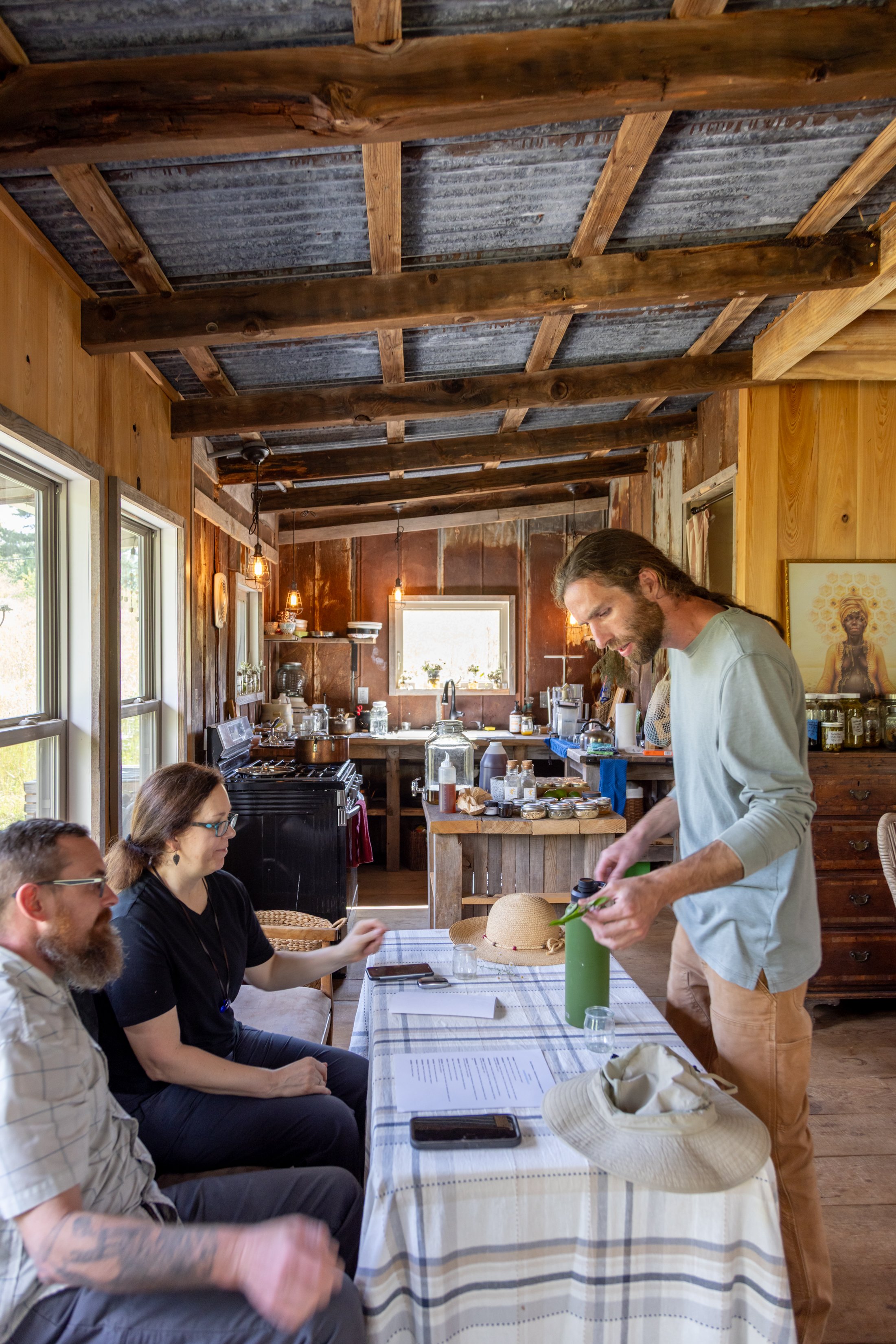
We hosted about 22 participants on our farm for a field day in partnership with Georgia Organics and the Rodale Institute. We toured the herb fields, shared our soil-building practices and passive irrigation systems, including berms, swales, and rain gardens, and discussed harvesting before moving into the drying and processing areas to provide a complete picture of herb farming.
I openly discussed expenses and farm financial performance, answered many questions, and we enjoyed a beautiful lunch prepared with farm produce by a local herbalist. It was a wonderful day, and we received excellent feedback from participants.
It's important to share real-world experience with aspiring growers. Herb farming, especially, requires a bit of a rogue spirit because there aren't many standard practices or specialized pieces of equipment. We're all figuring things out as we go. That's why sharing information and building standards regionally is so valuable. We need to focus on collaboration and building collective success rather than fearing competition.
The TOPP mentorship program has been essential to my success as a farmer. Farming requires financial management that is every bit as challenging as the fieldwork itself. I was mentored by a farmer with decades of experience analyzing financial records, and she shared methods that have been critical to understanding the farm's fiscal sustainability, which is by far one of the most challenging aspects of farming.
I'm grateful to learn from a more experienced farmer and equally happy to share my own expertise with newer and younger farmers.
What knowledge or skills did you gain through these programs that you still use today?
Every day, I use the bookkeeping, inventory, and analysis skills and frameworks I developed with my mentor to assess the financial strength of the business, understand current and past productivity, and plan for future expansion.
-
How did participating in these programs help you achieve Certified Organic status?
The Certified Organic label requires specific and diligent recordkeeping, and even with a master's-level education, the paperwork was overwhelming at first. The mentorship program helped me organize the process and tackle it one piece at a time.
Have you made changes to your farm management, recordkeeping, production practices, or business planning because of what you learned?
Absolutely. Our recordkeeping was mediocre at best, and now it's excellent. Knowledge is power. Recordkeeping has been the greatest benefit of the Certified Organic process for my farm.
What does Organic Certification mean for your farm, business, or future goals?
Certification allows us to expand into regional and even national markets and reach customers we may not have direct contact with. Our commitment to quality products and regenerative practices is communicated through the most rigorous label we can pursue: USDA Organic.
Looking back, what was the most valuable outcome of participating in these programs?
Working with other farmers has been essential to my mental and emotional well-being, in addition to strengthening my business practices. The camaraderie that comes from connecting with others who understand the purpose, drive, and challenges of farming helps me stay committed and continue moving forward.
-
What are your goals for Stellar Roots Herb Farm over the next few years?
We have several goals. We plan to increase production and sales of dried single-herb products for wholesale markets. We also plan to expand agritourism opportunities through on-farm experiences and local value-added products.
With the help of a grant, we're also planning to develop one part of the business into a regenerative organic, farm-grown herbal tea company. There are lots of exciting plans ahead.
How do you see Organic Certification helping you reach those goals?
The Certified Organic label provides the foundation for other meaningful labels, such as Demeter Biodynamic and Regenerative Organic. These certifications demonstrate a commitment to farming practices that enhance local ecology.
People are often willing to pay more for superior products and environmentally positive practices. We price our products at the top of the market because our products and practices are top-notch, and these certifications help communicate that value.
What advice would you give to another farmer considering organic certification?
Do the math and determine whether certification makes financial sense for your business. Regardless of the answer, I recommend doing the recordkeeping and paperwork anyway, even if it requires additional effort and even if you ultimately decide not to certify.
What further support is needed in order for others to follow in your footsteps?
One-to-one mentoring is an incredibly effective way for newer farmers to receive direct, tailored support for their specific challenges. Farmer-to-farmer networking, meetups, and troubleshooting opportunities are also invaluable.
-
Complete this sentence: "Participating in SE TOPP programs helped me..."
"...achieve Certified Organic certification, connect with other farmers for much-needed camaraderie, and establish a detailed bookkeeping system that is essential to the financial health of my business."
Is there anything else you'd like people to know about your farm or your experience?
I'm grateful, always.
Grow With the Flow (Conyers, Georgia)
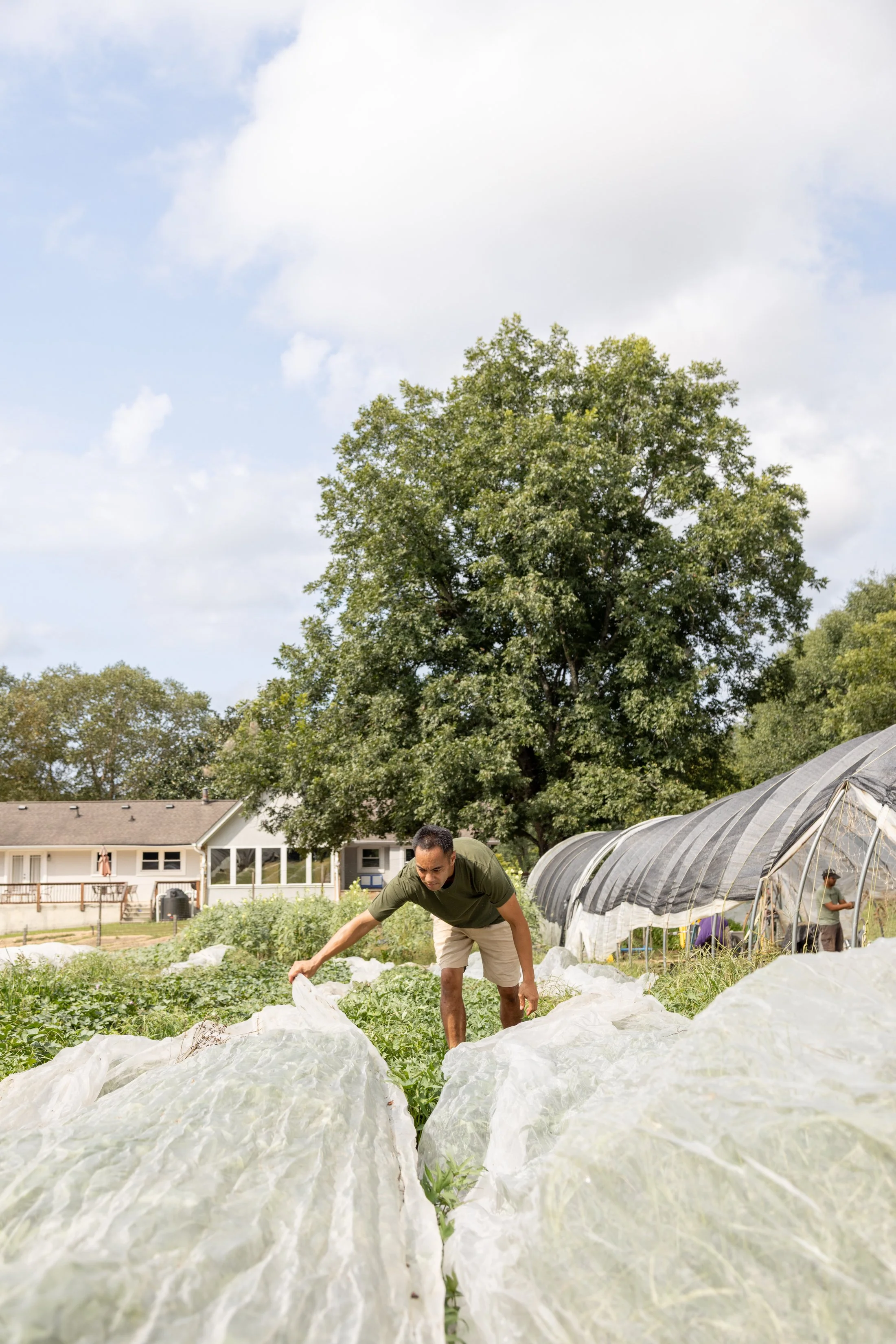
Program Participant Spotlight: Grow with the Flow's Reggie and Roger Ramos
For Reggie and Roger Ramos of Grow with the Flow, learning is an ongoing part of farming. Through Georgia Organics and SE TOPP programming, they continue to participate in field days, workshops, and networking events that connect them with fellow farmers, introduce new ideas and tools, and create opportunities to share their own experiences.
From visiting farms across Georgia to building relationships within the organic farming community, these experiences have reinforced the value of peer-to-peer learning at every stage of a farming career. In the Q&A below, Reggie reflects on their operation, the importance of farmer-to-farmer connections, and the impact these programs have had on their journey.
-
Tell us about Grow with the Flow and your role on the farm Reggie.
I mainly focus on the day-to-day operation of the farm. I make sure the soil is amended as best we can, plants and seeds are in the ground with adequate water, weeds are under control, beds are prepared for the next rotation of crops, and the produce is of high quality for market sales.
What products do you grow, and what inspired you to become involved in organic agriculture?
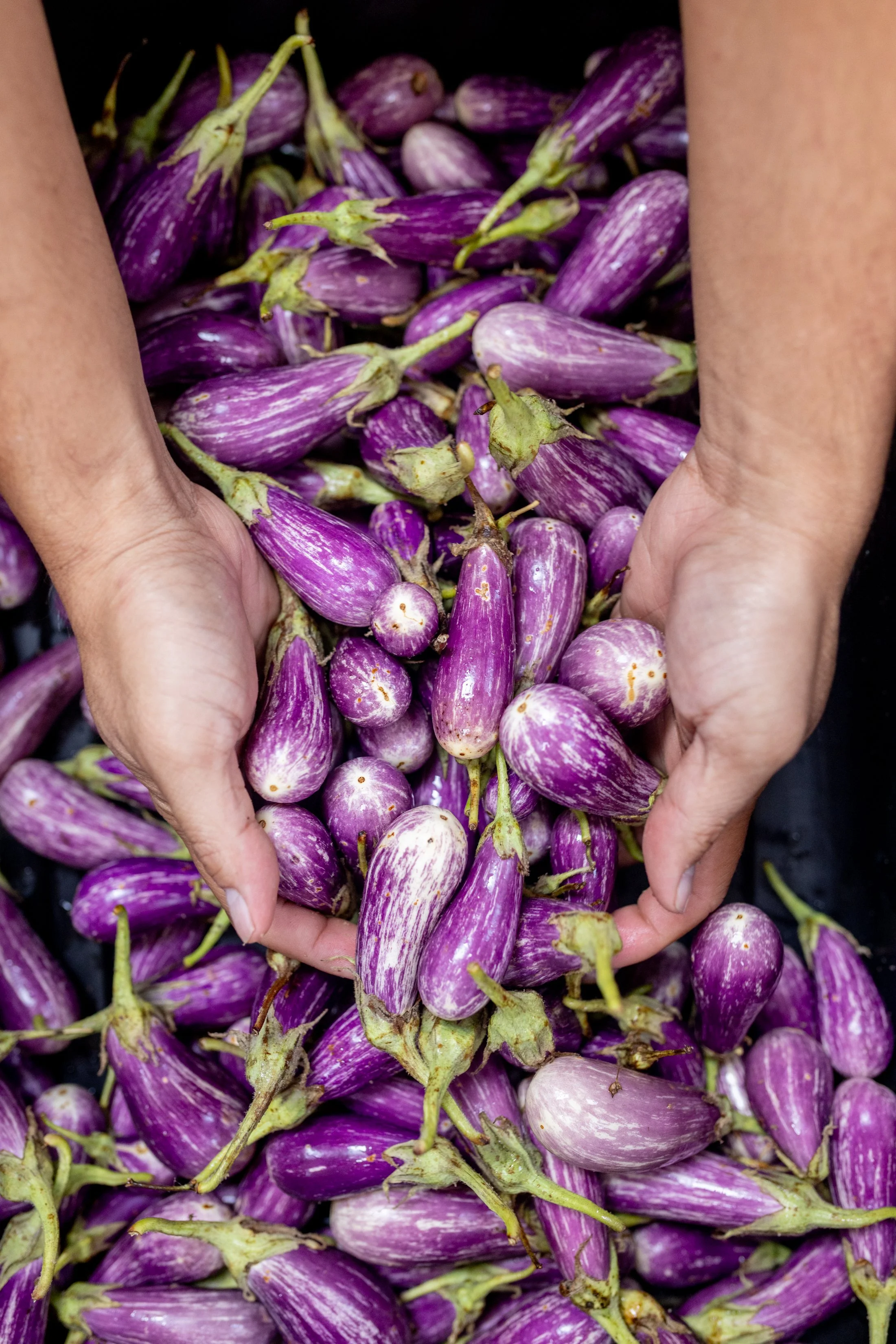
We grow certified organic, diversified, seasonal fruits and vegetables. We became involved in organic farming because, to be part of the co-farm, we were required to follow certified organic standards while growing on the property. Fortunately, our transition from Certified Naturally Grown helped us quickly find our footing in the certified organic realm. We also already maintained historical sales and harvest records.
As a co-farmer working within a shared farming space, what makes your operation unique?
Being the most experienced operation on the organic co-farm, we consider ourselves the anchor farmers. We are able to informally guide other farmers by sharing lessons learned from our own mistakes and experiences. At the same time, we continue to learn from our peer farmers as well.
-
Your farm was already Certified Organic before participating in these programs. What motivated you to remain engaged in educational and networking opportunities?
I participate mainly for the continued networking opportunities and to stay connected with farmers we have met throughout the years. Another goal of ours is to provide educational opportunities for the next generation of farmers.
What are some of the opportunities and challenges of operating within an established organic system?
The biggest challenge is juggling everything. We have to keep records, maintain production, and troubleshoot unexpected issues while keeping the business profitable.
-
You participated in several farmer field days and networking events through Georgia Organics. What initially drew you to these opportunities?
I am always drawn to field days to see if I can discover new, more efficient tools and methods.
How did the Global Growers Farmer Field Day, Rag and Frass Farmer Field Day, and networking sessions contribute to your growth as a farmer?
I learned a great deal of information specific to each workshop and had the opportunity to meet new farmers and advocates.
Were there any specific conversations, farm tours, demonstrations, or connections that left a lasting impression on you?
Attending the Rag and Frass Farmer Field Day left a lasting impression because I first visited Julia's farm while apprenticing at my first farm more than 10 years ago. Seeing the farm today and all the improvements that have been made was truly inspiring.
What did you learn from other farmers that you have applied or hope to apply in your own operation?
I would like to use more reflective shade cloth and landscape fabric after seeing them successfully used at Rag and Frass Farm.Description text goes here
-
How has participating in these events expanded your network within Georgia's organic farming community?
It has expanded the network of farmers and advocates I am connected with.
Have these connections influenced your farming practices, business decisions, or future goals? If so, how?
Yes, all three. The workshops I attend provide new information that influences how I farm, make business decisions, and think about future goals.
What value do you see in learning directly from fellow farmers?
I find learning most valuable and memorable when I am either doing the work myself or seeing it done firsthand.
In what ways have these programs helped strengthen your confidence, knowledge, or sense of belonging within the organic farming community?
They have helped me learn new techniques and discover new tools to implement. It is also reassuring to know that many farmers face similar challenges, even though they may solve problems in different ways.
Looking back, what has been the most valuable outcome of participating in these events?
Networking.
-
What are your goals for Grow with the Flow in the coming years?
We want to:
Continue improving the soil conditions on parts of our plot.
Learn more efficient techniques.
Find ways to spend less time on the farm while maintaining or increasing production and improving our quality of life.
Make more investments, whether in retirement, savings, or equipment that reduces physical labor, increases income, and improves our quality of life as we get older.
How do you plan to continue learning and growing as an organic farmer?
We will continue learning by doing the work, keeping an open mind, and accepting constructive criticism.
What advice would you give to other farmers about the importance of networking and peer-to-peer learning?
It is important to be around other farmers so we can learn from one another rather than reinventing the wheel. Sharing knowledge with the next generation of farmers is equally important.
-
Complete this sentence: "Participating in SE TOPP programming has helped me..."
"...improve my mentoring skills."
What makes Georgia's organic farming community special from your perspective?
It is a tight-knit community that supports one another.
Is there anything else you'd like people to know about your farming journey?
I'd like to mention a few things about Georgia Organics as an organization. We participate in every farming-related opportunity we can, including conferences, workshops, field days, networking events, volunteer activities, and programs such as the Bridge Program, Mini Coaching, farm tours, and hosting apprentices. We regularly provide feedback to Georgia Organics, and I can honestly say the organization has followed through on much of that feedback. It is becoming harder to complete evaluations because many of the suggestions I've made have already been addressed. My hope is that the next generation of farmers will continue to have access to the same, or even greater, opportunities and benefits that we have experienced through Georgia Organics.
Grace Valley Farms (Buckhead, Georgia)
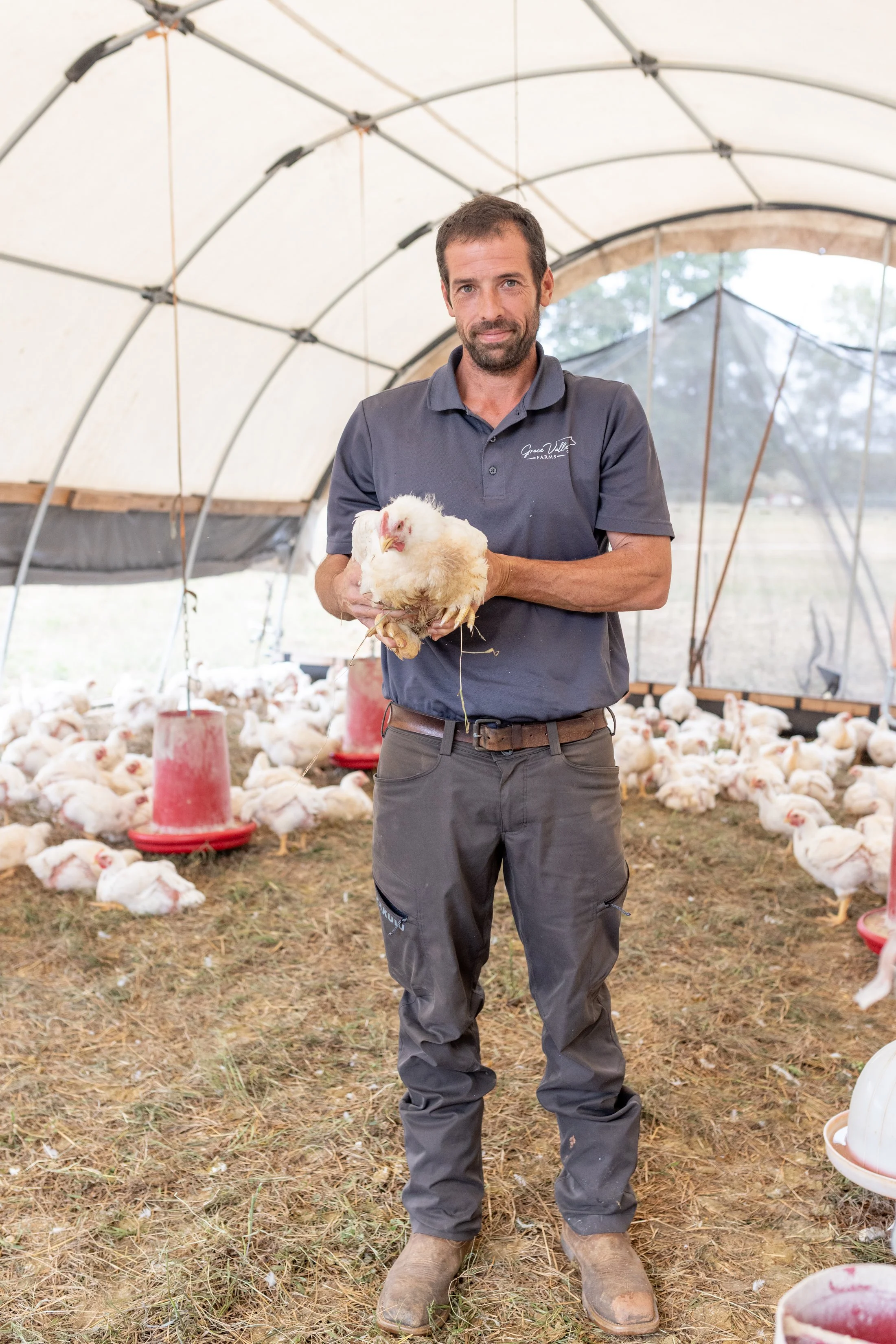
Programming Participant Spotlight: Grace Valley Farms' Justin Davis
For Justin Davis of Grace Valley Farms, producing high-quality meat starts with a commitment to responsible land stewardship and animal care. As he explored the possibility of organic certification, Georgia Organics programming provided the guidance and practical support needed to begin navigating the process.
Through organic technical assistance and the Grateful Pastures Farmer Field Day, Justin gained valuable insights into organic livestock production, recordkeeping, and certification requirements. In the Q&A below, he shares how these experiences helped move Grace Valley Farms from considering certification to achieving it, while strengthening the farm's future and building customer trust.
-
Tell us about Grace Valley Farms. What does your farm produce, and how did you get started in farming?
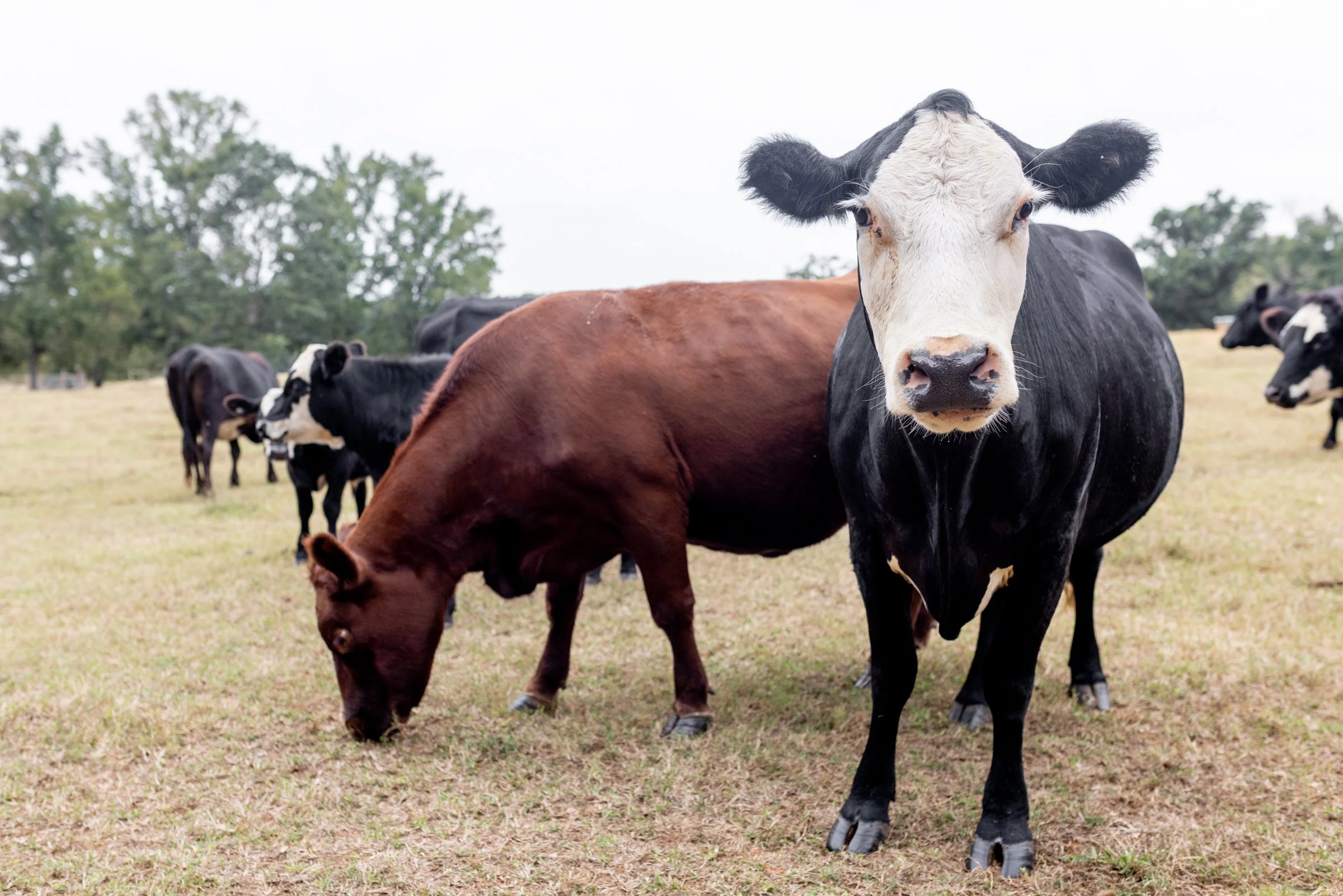
We raise beef cattle, pasture-raised pork, and chicken. I grew up farming, and we wanted to provide high-quality meat for our family.
What led you to pursue or take interest in organic livestock production?
We wanted to produce a "clean" product compared to what is typically available.
What values guide how you raise your animals and manage your land?
We try to raise our animals in a manner that allows them to live as naturally as possible while rotating them to fresh pasture daily.
-
Before participating in Georgia Organics programming, where were you in your organic transition journey?
We had only talked about it.
What were the biggest challenges you faced in pursuing Organic Certification?
The immense volume of paperwork.
What motivated you to take the next step toward becoming Certified Organic?
We wanted a certification that represented the quality of our product above all others.
-
You participated in Organic Technical Assistance and the Grateful Pastures Farmer Field Day. How did these experiences support your goals?
We gained valuable information from knowledgeable people who were very willing to help.
What insights, tools, or resources from these programs were most valuable to you?
The guidance from Georgia Organics on the next steps to get started was very helpful.
Was there a particular conversation, farm visit, or lesson that helped you better understand organic livestock production?
The farmer field day at Grateful Pastures was very informative, and many of our questions were answered.
-
How did these programs help you successfully achieve Organic Certification?
They provided guidance on how to begin the organic certification process.
Did you make any changes to your grazing, pasture management, recordkeeping, animal health practices, or business operations as a result of what you learned?
We started keeping more detailed records.
What benefits have you seen since becoming Certified Organic?
Many customers purchase from us because of our organic certification, and it has increased customer trust.
Looking back, what was the most valuable outcome of participating in these programs?
Getting to meet knowledgeable people in the organic industry.
-
What are your goals for Grace Valley Farms over the next several years?
To continue growing and providing high-quality products to the surrounding community.
How does Organic Certification help position your farm for future success?
I think it gives people peace of mind that they are receiving a healthy product.
What advice would you give another livestock producer considering Organic Certification?
Georgia Organics provides valuable insight throughout the organic certification process.
-
Complete this sentence: "Participating in Georgia Organics programming helped me..."
"...begin navigating the organic certification process."
What does being a Certified Organic livestock producer mean to you personally?
It is a testament to raising our animals in a way that is sustainable for both our farm and the livestock that live here.
The experiences of Grow with the Flow, Stellar Roots Herb Farm, and Grace Valley Farms highlight the impact of mentorship, technical assistance, and farmer-to-farmer learning across the organic farming community. Whether navigating organic certification to improving recordkeeping, expanding professional networks, or sharing knowledge with others, these farms demonstrate the many ways SE TOPP programming has supported their growth and success. And as we reflect on four years on programming, their experiences underscore the power of investing in relationships, education, and community to build a stronger future for organic agriculture across the Southeast.
This project is supported through the United States Department of Agriculture (USDA) Transition to Organic Partnership Program (TOPP). TOPP is a program of the USDA Organic Transition Initiative and is administered by the USDA Agricultural Marketing Service (AMS) National Organic Program (NOP).